Category: Teacher resources

Subscriber Special: April

April 24th-30th:
Coaching or Mentoring
BOGO — Buy one month; get the second free
Do any of these sound like you?
- Your kindergartners don’t know what ‘enter’, ‘spacebar’, ‘click’ or many other techie words mean but you need to teach them to keyboard, internet, and become digital citizens. How do you start?
- You have new students in your class who haven’t had technology training. The rest of the class has. How do you catch them up?
- Your principal wants you to teach the technology class but you’ve never done it before. What do you do on the first day?
- You’ve been teaching for twenty years but now your Principal wants technology integrated into your class. Where do you start?
- You have a wide mix of tech skills among students in your class. How do you differentiate between student geeks and students who wonder what the right mouse button is for?
- You’ve been tasked with organizing a Technology Use Plan for your school. Where do you start?
- You and colleagues are expected to create a Curriculum Map. How does technology fit into that?
- You love being an edtech professional but what’s your career path?
More and more teachers–both new and experienced–are looking for coaching or mentoring to fill gaps in their learning, keep up to date on the latest teaching strategies, and solve problems they didn’t expect. Many turn to the personalized approach we offer in a collaboration between Ask a Tech Teacher, Jacqui Murray, and Structured Learning. Coaching is completed via Google Hangout with email available for quick questions. After only a short time, teachers find they are better prepared with tech-infused lesson plans, able to teach to standards more fluently, can integrate tech into core classroom time, easily differentiate for student needs with tech, and more.
“Once a month, pick my brain. I’ll share what I’ve learned and what works from 25 years of teaching.” –Jacqui Murray
Normally, we charge a $150 per month with a two month minimum (for a total of $300). This month between the 24th and 30th, get both months of coaching or mentoring for only $150.
Click our PayPal Me here. Add $150.00 to the line.
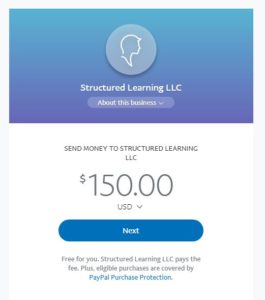
Because it’s PayPal, you can enter as a guest with any credit card–no PayPal account required.
We wrote the books. We’ll help you deliver on keyboarding, integrating tech into your curriculum, digital citizenship, Common Core, and more. Questions? Ask Jacqui Murray at askatechteacher at gmail dot com.

Ways to use a movie for language teaching
Today, we have a guest post from Philip Perry, founder of Learnclick.com, an online quiz tool lots of teachers use to create and share quizzes. It is also ideal for teaching language as it has many options for asking questions in context. Here, Philip addresses the use of movies in teaching:
 Movies are a great way for learning a language as it helps getting used to the real-life usage. If you are teaching English or any other language you should consider occasionally having your class watch a movie. In this article, we will explore some ways to get the most out of it.
Before you watch a movie together, take some time to introduce it to the class. Start by watching the opening scene and then stop the movie and discuss who the main characters are and summarize the plot.
The following ideas are things you can either do while watching the movie or after having watched the whole movie.
Dialogue: Asking questions about movies is an excellent way to get your students talking. Even the shy ones will be more likely to open up. For example, stop the movie and ask them to predict what will happen next.
moviesheets.com has a database with worksheets for a lot of movies. It can help you with coming up with questions. For example, if you are watching “Oliver Twist” together, you could ask “How were the conditions in the orphanage?”. Or have a more general discussion about what beliefs Dickens was trying to challenge with this story.
Observation: Ask the students to look out for specific items or listen for specific vocabulary words. The first student who sees/hears it, stands up and mentions what he found. As a reward, he gets a candy. Or if you prefer, you can give them a worksheet where they have short phrases and they need to check who said what while they are watching.

6 Options for Polls and Forms in Your Class

Collecting class data, asking for feedback on activities, and pushing out quizzes used to be laboriously accomplished by passing out paper documents, collecting them as they dribbled in, and then collating the data into a spreadsheet where you could sort and shake to come up with the useful information.
These days, all of those tasks are accomplished much more easily with one of the many free/fee webtools designed to create and curate information. Uses include but are not limited to: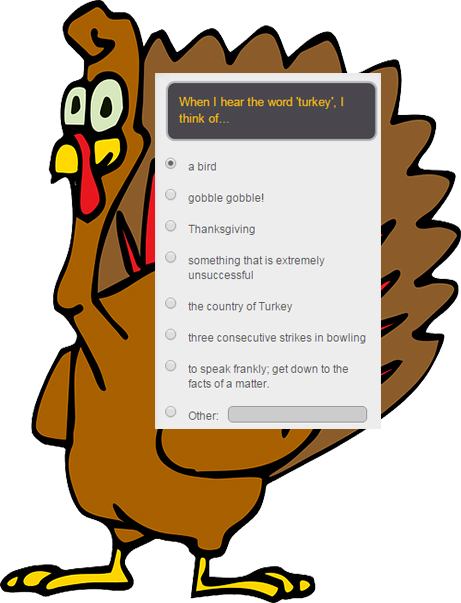
- volunteer sign ups
- feedback on events
- class enrollments
- donations and payments
- consent forms for school activities
- polls and surveys on upcoming or past events
- data on parents and students
- collection of student projects
- sign-ups for student class presentations
- signups for afterschool activities or summer classes
- registrations for a Professional Development workshop
- quizzes that are automatically evaluated providing students with their score and you with metrics
Besides the ease of use and their digital nature, students love forms because they are anonymous. This means when forms are used to collect feedback, input, and projects, students can participate at their own pace, as quietly as they’d like, with only the teacher being aware of their identity.

Best-in-Class Resources–You Decide
 Every year, I review a large number of websites, apps, and resources that help educators blend technology into their classrooms. I get lots of feedback from readers sharing their experiences, asking questions, and clicking through to see if a particular tool will serve their needs.
But, I often don’t hear how the product worked in the fullness of time.
Starting last year, I sought out your opinions:

End of Year Maintenance: Update Your Online Presence
 This week, I’ll share three holiday activities that will get your computers, technology, and social media ready for the new year. Here’s what you’ll get:
A note: The links won’t work until the articles publish!
Today: Update Your Online Presence
For most teachers I know, life zooms by, filled with lesson planning, meetings, classes, collaborations with their grade-level team, parent meetings, and thinking. There are few breaks to update/fix/maintain the tech tools that allow us to pursue our trade.
But, that must happen or they deteriorate and no longer accomplish what we need them to do. Cussing them out does no good. Buying new systems takes a long time and doesn’t fix the problem that the old one wasn’t kept up. If they aren’t taken care of, we are left wondering why our teacher blog or website isn’t accomplishing what it does for everyone else, why our social media Tweeple don’t answer us, and why our TPT materials languish. There’s a short list of upkeep items that won’t take long to accomplish. The end of the calendar year is a good time to do these:

New Year, New Mindset

Every year, I make New Year resolutions and ignore them. I don’t promise to fulfill them. I don’t even check my progress and revise as needed. I make-and-forget, check it off the New Year’s To Do list and move on.
This year, I’m trying something different: resolutions that aren’t quantified, that won’t take extra time from my too-busy schedule. Resolutions that will, instead, are more about my teaching mindset. Here’s my list:
I will learn one new tech tool a month
There are so many. I get massive lists of webtools, websites, apps, extensions, and links in my inbox, mostly proclaimed as “the tool I can’t do without”. Every month, I’ll pick one and try it.
Just to be clear: Today’s tech ed tools aren’t like they used to be. The ones I’m interested in are easy-to-use, intuitive, easily differentiated for varied student needs, and free or inexpensive. Anything that requires a time commitment to learn and buckets of creativity to use is off the list. My schedule is too packed for that sort of commitment. And, I’ll unpack them with the students, authentically, as part of a project we’re doing. An example: I use Padlet to curate and share projects. Instead, I’ll use Tozzl at least once.
To get me started, would you add a comment with your favorite tool — the one I should start with in January.

12 Fresh Ways to Assess Student Learning
 Assessing student learning used to be as simple as giving a test that consisted of multiple choice, True/False, short answer, and/or essay. How many answers students got right told the teacher how much they knew. No need to look further. Simply grade, record, and move on to the next chapter.
Educators have come to realize that there are lots of reasons why a test score doesn’t reflect student knowledge. Maybe the student had a bad day; maybe s/he isn’t good at memorizing (and the test was mostly memorized facts); maybe education researchers are right that doing well on tests isn’t a predictor of student success.
Tossing tests makes a teacher’s job more difficult. I’ll stipulate to that. Habits, templates, and routines are much easier than reinventing the assessment wheel but a tool that results in passionate students committed to lifelong learning gets my attention.
That’s what the next twelve options are: assessment strategies that inspire student interest and allow them to share what they know in ways compatible with their personal communication style. These can be used formatively or summatively and can be created by teachers or students-as-teachers. Decide what works best for your circumstances. The uniting characteristics are that all assess:

What is #Unschooling?
 The first time I read about Unschooling, I ignored it. Surely, it was a fad that would go away.
When that didn’t happen and I read about it a thousand more times, I dug into it. Inspired by the teachings of John Holt (1923–1985), this free range branch of homeschooling promotes learning through nonstructured, child-led exploration. There’s no set curriculum or schedule; students learn what interests them with guidance from involved adults. There are no worksheets, tests, or structure to provide evidence of learning or templates for teaching. The children pick what to learn, when, at what pace. The result — according to unschoolers, is a love of learning, tenacity to a task, and independent thought that prepares them for college and career better than traditional methods. In fact, if you look at the list of traits valued in popular education programs such as Habits of Mind and Depth of Knowledge, the reasons why parents unschool their children mirror the traits included in these lists.
What is it
According to Dr. Peter Gray of Freedom to Learn:
“Unschooling parents do not … do at home the kinds of things that are done at school. More specifically, they do not establish a curriculum for their children, do not require their children to do particular assignments for the purpose of education, and do not test their children to measure progress. Instead, they allow their children freedom to pursue their own interests and to learn, in their own ways, what they need to know to follow those interests. They may, in various ways, provide an environmental context and environmental support for the child’s learning. In general, unschoolers see life and learning as one.”

What is WittyWe and Why You Want to Use it
There seems to be a limitless supply of online education content. In fact, my email box and social media explodes with them. But often, these offerings are too basic, a lite version of a paid program that isn’t terribly robust, confusing, or created by people who don’t really understand how to blend technology and education. As a busy teacher, I want resources that are clear, easy-to-use, accessible by all types of students, scalable, and fun.
I found that.
Understand, finding a reliable source is a big deal to me. I give potential new sites the seven-second test: If I’m not engaged and excited in seven seconds, I move on. If I have to work too hard to figure out how to use it, I move on. If it requires more than three clicks to access content, I move on.
WittyWe had none of these problems.
WittyWe is a K-9 learning environment that inspires students to become passionate about meaningful learning through engaging video content. Using techniques such as storytelling, resolving real-life cases, learning through play, and self-teaching, WittyWe covers academic topics such as science, social studies, law, economics, entrepreneurship, and engineering as well as life skills like time management, learning, money management, social awareness, healthy living, goal-setting, and leadership. The videos are arranged as themes, online courses, and/or guided suggestions through Ask the Professor. In this last option, students tell the Professor what they’re interested in by theme, grade, and difficulty level, and he suggests appropriate videos.

2017 Teachers Pay Teachers’ July Conference — Overview
 One of the largest online marketplace for teachers is Teachers Pay Teachers. If you haven’t heard of this estore, you are either new to teaching or long since retired. This vibrant educator community hosts teacher-authors who wish to sell their original lessons and ideas to other teachers, district administrators, homeschoolers, and unschoolers. Since its start in 2006 by a former teacher, it’s grown to over 3.4 million teachers buying or selling over 2.7 million education-oriented Pre-K through High School lesson plans, curricula, videos, classroom activities, assessments, books, bulletin board ideas, classroom decorations, interactive notebooks, task cards, Common Core resources, and more. Teacher-authors have earned more than $330 million since TpT opened its doors with about a dozen making over $1 million dollars and nearly 300 earning more than $100,000. There’s no set-up charge, no cost to join, and no annual fee unless you choose to become what’s called a Premium seller.
TpT 2017 Conference Observations
Every year, TpT holds a conference to share ideas with teacher-authors on how to build their stores, develop their platform, and make money off of their passion. It’s more like an Amway convention than an IBM shareholder meeting. Or, if you’re a football fan, think Pete Carroll’s amazing college football success attributed in no small part to his high-energy positive way of motivating players, an approach that earned him the nickname “the poodle” from arch-rival Notre Dame.
This year, I trundled my way up to Anaheim, California, home of Disneyland and the National Hockey League’s Anaheim Ducks, ready to be wowed by the expertise of fellow teachers and eager to make a whole lot of new connections. I wasn’t disappointed. From start to finish, this event was a rowdy affair filled with energy and enthusiasm, networking and new friends. The first day, as we rode up the elevator to the Welcome event, the TPT folks cheered and high fived all of us teacher-authors. Buzzwords like “shout out”, “ecosystem”, “safe space”, “self-publishing”, “data analysis” were part of every conversation. A favorite phrase was “That’s OK”. Rarely was Common Core mentioned and never did politics come up (thank goodness!). Teachers raved about their “unicorn husbands”, unbelievable spouses who did the housework, childcare, and cooking so their entrepreneurial wives (90% of the teachers I saw in attendance were female) could work on their TpT store.