Tag: 169 tech tips

Tech Tip #140: 10 Ways to Become a Better Geek

In these 169 tech-centric situations, you get an overview of pedagogy—the tech topics most important to your teaching—as well as practical strategies to address most classroom tech situations, how to scaffold these to learning, and where they provide the subtext to daily tech-infused education.
***
If you’re the tech teacher, this is a must. If you’re a classroom teacher trying to infuse your class with technology, here are ten steps to help you geek out:

Sign up for a new tip each week or buy the entire 169 Real-world Ways to Put Tech into Your Classroom.
What’s your favorite tech tip in your classroom? Share it in the comments below.

Tech Tip #27: My Taskbar Disappeared
As a working technology teacher, I get hundreds of questions from parents about their home computers, how to do stuff, how to solve problems. I share those with you. They’re always brief and always focused. Enjoy!
Q: My taskbar disappeared. What do I do?
A: Push the flying windows key (it’s located between Ctrl and Alt on the bottom left of your keyboard). That brings up the start button
Need more?
Windows 11
- Step 1: Check Taskbar Settings to see if the taskbar is set to auto-hide.
Open Settings by pressing “Windows + I” on your keyboard. Navigate to “Personalization” and then click on “Taskbar.” Ensure the “Automatically hide the taskbar” option is turned off.
- Step 2: Restart Windows
Press “Ctrl + Shift + Esc” to open Task Manager. Look for “Windows Explorer” in the list, click on it, and then click “Restart” at the bottom right. This action will refresh the taskbar, bringing it back if it was unresponsive.
Windows 10
Tech Tip #88: Use Shortkeys with Students
In these 169 tech-centric situations, you get an overview of pedagogy—the tech topics most important to your teaching—as well as practical strategies to address most classroom tech situations, how to scaffold these to learning, and where they provide the subtext to daily tech-infused education.
TODAY’S TIP
Q: When tech gets difficult, my students stop trying. What do I do?
A: After well over a decade of teaching K-12, I know kids will try harder if it’s fun. The challenge for us teachers: How to make a multi-step skill that they may rarely use ‘fun’.
The answer is keyboard shortcuts–aka shortkeys. My students love them. I start in kindergarten with easy ones–like Alt+F4 to exit a program–and build each year. Throw in a few quirky ones and you’ve won their hearts and minds. Here’s a starter list:

Sign up for a new tip each week or buy the entire 169 Real-world Ways to Put Tech into Your Classroom.
What’s your favorite tech tip in your classroom? Share it in the comments below.
Tech Tip #73–7 tips for Netiquette
 In these 169 tech-centric situations, you get an overview of pedagogy—the tech topics most important to your teaching—as well as practical strategies to address most classroom tech situations, how to scaffold these to learning, and where they provide the subtext to daily tech-infused education.
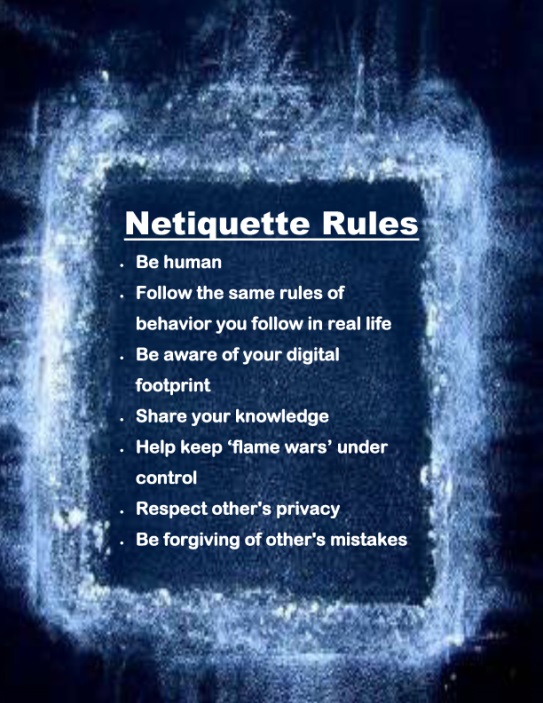
Today’s tip: 7 Netiquette Tips
Category: Internet
Sub-category: MS Office, Keyboarding
Q: What are the most important netiquette tips for students when using the Internet?
A: Here’s a poster:
Sign up for a new tip each week or buy the entire 169 Real-world Ways to Put Tech into Your Classroom.
#digcit
Tech Tip #125: Basics in Every Lesson Plan
In these 169 tech-centric situations, you get an overview of pedagogy—the tech topics most important to your teaching—as well as practical strategies to address most classroom tech situations, how to scaffold these to learning, and where they provide the subtext to daily tech-infused education.
Today’s tip: Basics in Every Lesson Plan
Here are four skills to be included and reinforced in every lesson plan. Don’t teach them! Blend them into your core lessons, as part of the workflow. Include them as you do when you teach reading (in non-reading classes), using a pencil, and handwriting:
- Keyboarding
- Digital citizenship
- Vocabulary
- Problem solving
For the other two, watch this video:

–summarized by NoteGPT
Summary
In this informative video, Jacqui Murray discusses effective technology integration in K-8 classrooms, highlighting the current supportive landscape for using technology in education. Murray emphasizes that this is an ideal time to be involved in teaching technology, whether or not one considers themselves a tech expert. The discussion begins with an introduction to Murray’s extensive experience in education, focusing on technology’s role in lesson delivery and integration into the curriculum. She introduces six key topics or “strands” that are essential for creating engaging lessons that reflect modern educational standards, blending subjects together rather than treating them in isolation.
The six strands include digital citizenship, keyboarding skills, problem-solving, research skills, vocabulary expansion, and publishing and sharing. For each topic, Murray offers practical strategies for teaching and integrating them into existing lesson plans. She talks about how to establish a foundation of digital citizenship by making students aware of online safety and etiquette from early grades. Murray discusses the necessity of keyboarding skills in today’s tech-driven world and how to incorporate them seamlessly into instruction.
Murray further explores the importance of problem-solving skills, encouraging students to troubleshoot and find solutions independently. She emphasizes safe and effective research tactics, urging students to critically evaluate sources. Expanding vocabulary through digital tools is highlighted, as is the critical element of sharing and publishing student work for collective learning and empowerment. Ultimately, Murray encourages teachers to view these strands as a cohesive framework that enhances learning and prepares students for future academic challenges.
Highlights
- 🎓 The importance of blending subjects to create cohesive lessons that reflect modern educational standards.
- 💻 Digital citizenship is essential from an early age, requiring ongoing discussions about online safety and etiquette.
- ⌨️ Keyboarding skills should be integrated into lessons, enhancing students’ competency with technology.
- 🛠️ Problem-solving skills transform students into independent learners who can troubleshoot tech issues.
- 🔍 Research skills empower students to critically evaluate sources, making them more informed consumers of information.
- 📚 Vocabulary expansion is essential in education, encouraging students to actively engage with words and definitions.
- 🔗 Publishing and sharing student work creates a sense of community and enhances collaborative learning.
Key Insights
- 🌐 Digital Citizenship is Essential: Murray highlights that it’s crucial to integrate discussions about digital citizenship into lessons at every grade level. This approach trains students to navigate the online world safely and responsibly, emphasizing that education about digital behavior is continuous and should evolve as students progress in their understanding of technology.
- 💡 The Role of Keyboarding Skills: Teaching keyboarding isn’t merely an added layer; it’s essential for enhancing classroom efficiency. By embedding keyboarding education into daily lessons, teachers equip students with necessary tools for success across subjects. This practice fosters dexterity that will serve students well in their digital interactions, allowing them to focus more on the content rather than the act of typing.
- 🔄 Encouraging Problem-Solving: Murray’s emphasis on fostering problem-solving abilities reflects a shift toward student autonomy in learning. By guiding students to find solutions independently, teachers streamline classroom management and empower students to take control of their learning experiences, ultimately making the educational process more dynamic.
- 🔍 Effective Research Skills: Educators must emphasize the importance of teaching students how to ascertain reliable information online. By preparing them to discern reputable sources from biased or misleading content, students become not only consumers of knowledge but also critical thinkers capable of navigating the complexities of information on the internet.
- 📖 Vocabulary Matters: The intentional teaching of vocabulary through multiple mediums can enhance comprehension and engagement. Murray suggests that using technology to aid vocabulary acquisition allows students to seek definitions and gain deeper understanding dynamically, rather than superficially glossing over complex content.
- 🌐 Collaborative Learning Through Sharing: Emphasizing the importance of publishing and sharing work transforms how students interact with their learning. In fostering an environment where students contribute to a collective body of knowledge not only democratizes learning but also leverages peer feedback for continuous growth, helping students to learn from one another.
- 🤝 Integration Across Subjects: Murray’s call for the integration of the six strands across disciplines underlines education’s interconnectedness. Teachers should consider these elements as intertwined rather than isolated, optimizing educational outcomes by enhancing student engagement and contextual understanding across subjects.
To finish up, read this article:
“What is the 21st Century lesson plan”
Sign up for a new tip each week or buy the entire 169 Real-world Ways to Put Tech into Your Classroom.
What’s your favorite tech tip in your classroom? Share it in the comments below.
Tech Tip #144: 11 Ways X/Twitter Improves Education
In these 169 tech-centric situations, you get an overview of pedagogy—the tech topics most important to your teaching—as well as practical strategies to address most classroom tech situations, how to scaffold these to learning, and where they provide the subtext to daily tech-infused education.
Today’s tip: How Twitter improves learning
Here are 11 ways X/Twitter improves education:
- Students learn to be focused.
- Students learn to share.
- Writing short messages perfects “headlining”.
- Tweets are written knowing tweeple @reply.
- #Hashtags develop community.
- Students learn tolerance for all opinions.
- It breaks down barriers to talking to other people.
- Students are engaged.
- Twitter acts as the class notepad.
- Twitter is always open.
- Twitter isn’t intimidating.
A note: Before using X, get the buy-in of involved parties such as administration and parents. You don’t want them surprised by what they might think of as a tool for socializing rather than teaching.
Sign up for a new tip each week or buy the entire 169 Real-world Ways to Put Tech into Your Classroom.
What’s your favorite tech tip in your classroom? Share it in the comments below.
Tech Tip #107: Ways to Avoid Phishing
In these 169 tech-centric situations, you get an overview of pedagogy—the tech topics most important to your teaching—as well as practical strategies to address most classroom tech situations, how to scaffold these to learning, and where they provide the subtext to daily tech-infused education.
Today’s tip: Email Phishing
Category: Parents
 Q: I got an email that looks legitimate, but I’m not sure. How do I check?
A: You’re right to take a step back. Email has become the most popular method of hacking individual computers—because most people use email and usually aren’t as vigilant as they need to be.
‘Phishing’ is an attempt to steal your personal information by posing as a trusted source (a friend, your bank–like that). Why is it so popular with crooks? Because it works.
As an educator, you want to teach students how to protect themselves as soon as they start using open email networks. Here are six suggestions:
- Don’t open attachments.
- Don’t click links in emails.
- Check the email address of the sender. Does it match the name? Does it fit the sender?
- Check for misspellings and mis-phrasings.
- If you know the sender, does the email sound like their communication style?
- Hover over the link to see the address. If it doesn’t match the text or look legitimate, don’t click.
- Don’t hesitate to email the sender and ask if they sent you the email.
Got those? Here are a few more:
-
Slow Down: Phishing often pushes you to act fast—“Your account’s locked, fix it now!” Take a second to think. If it’s urgent, contact the company directly using a number or site you already know.
-
Don’t Share Sensitive Info: No legit company will ask for your password or full credit card number over email or text. If they do, it’s a scam.
-
Use Two-Factor Authentication (2FA): Add an extra step (like a code sent to your phone) to logins. Even if they get your password, they can’t get in without the second piece.
-
Keep Software Updated: Hackers exploit old systems. Update your phone, apps, and computer regularly to stay protected.

Sign up for a new tip each week or buy the entire 169 Real-world Ways to Put Tech into Your Classroom.
What’s your favorite tech tip in your classroom? Share it in the comments below.
Tech Tip #156: How to Turn on Google and Duck Duck Go SafeSearch
In these 169 tech-centric situations, you get an overview of pedagogy—the tech topics most important to your teaching—as well as practical strategies to address most classroom tech situations, how to scaffold these to learning, and where they provide the subtext to daily tech-infused education.
Today’s tip:
Category: Parents
Here’s how to turn on SafeSearch on Google:
- Open https://www.google.com/ in a web browser.
- Click Settings at the bottom of the page.
- Check the box for Turn on SafeSearch.
- Click Save.

For those who use Duck Duck Go, here’s how to turn on safe search:
Use safe.duckduckgo.com: Searches always have safe search set to “strict”.
Three ways:
-
Using the Search Results Page:
-
After performing a search on DuckDuckGo, look below the search bar for settings options.
-
There should be a dropdown menu labeled “Safe Search.”
-
Select either “Moderate” or “Strict” from the dropdown menu to activate Safe Search. “Moderate” will filter out explicit content, while “Strict” will provide a higher level of content filtering.
-
-
Using the DuckDuckGo Settings Page:
-
Navigate to the DuckDuckGo website.
-
Click on the three horizontal lines in the top right corner of the page to open the menu.
-
Select “Settings” from the menu.
-
Under the “General” tab, find the “Safe Search” section.
-
Choose either “Moderate” or “Strict” from the dropdown menu to enable Safe Search.
-
-
DuckDuckGo Browser:
-
If you are using the DuckDuckGo browser app on mobile or desktop, go into the settings by clicking on the three horizontal lines or the gear icon.
-
Look for “More Search Settings” or a similar option.
-
Here you will find the “Safe Search” settings where you can choose “Moderate” or “Strict.”
-

Sign up for a new tip each week or buy the entire 169 Real-world Ways to Put Tech into Your Classroom.
What’s your favorite tech tip in your classroom? Share it in the comments below.
Tech Tip #150: Google as a Dictionary
In these 169 tech-centric situations, you get an overview of pedagogy—the tech topics most important to your teaching—as well as practical strategies to address most classroom tech situations, how to scaffold these to learning, and where they provide the subtext to daily tech-infused education.
Today’s tip: Google extras
Category: Parents
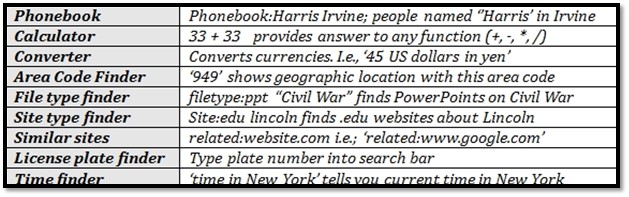
Google search can be used as lots more than a resource search tool. For example, use it to define words by typing the word you want defined and pushing enter:
- Define monarchy
- Define landform
Other tools:
Sign up for a new tip each week or buy the entire 169 Real-world Ways to Put Tech into Your Classroom.
What’s your favorite tech tip in your classroom? Share it in the comments below.
Tech Tip #138: 7 Ways to Evaluate Websites
169 tech-centric situations—tech topics most important to your teaching as well as practical strategies to address most classroom tech situations
Today’s tip: Evaluate websites
Category: Parents
When students use the internet to research a topic, likely they get hundreds—or thousands—of possible resources. Beyond selecting based on key words and extensions (such as selecting websites that end in .edu and .gov), how can they make choices that will inform their learning rather than misguide it?
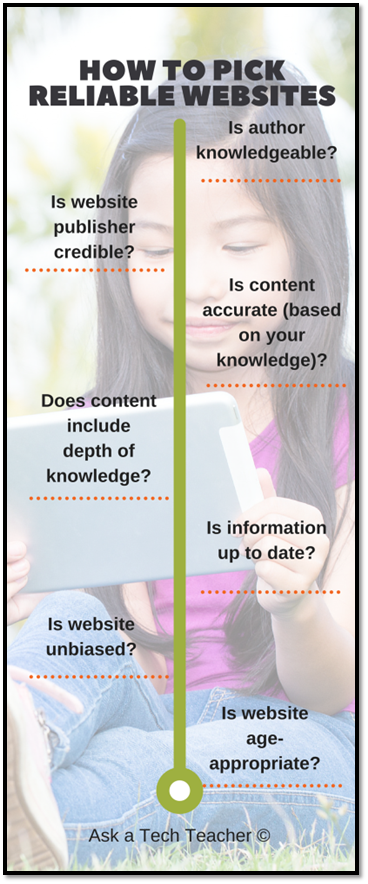
Here’s a poster with seven tips on how to evaluate websites:
- Is the author knowledgeable?
- Is the website publisher credible (one the student knows to be accurate)?
- Is content accurate (based on student knowledge)?
- Does the content include a depth of knowledge on the subject?
- Is the information included on the website up to date? The definition of ‘up to date’ will vary with the topic. History probably doesn’t change much, but science might (such as Pluto is no longer a planet).
- Is the website unbiased? Are they sharing information so readers can draw their own conclusion or trying to get them to agree with an agenda?
- Is the website age-appropriate? Does it use words and concepts that fit the age group that will be using it?
Sign up for a new tip each week or buy the entire 169 Real-world Ways to Put Tech into Your Classroom.
What’s your favorite tech tip in your classroom? Share it in the comments below.