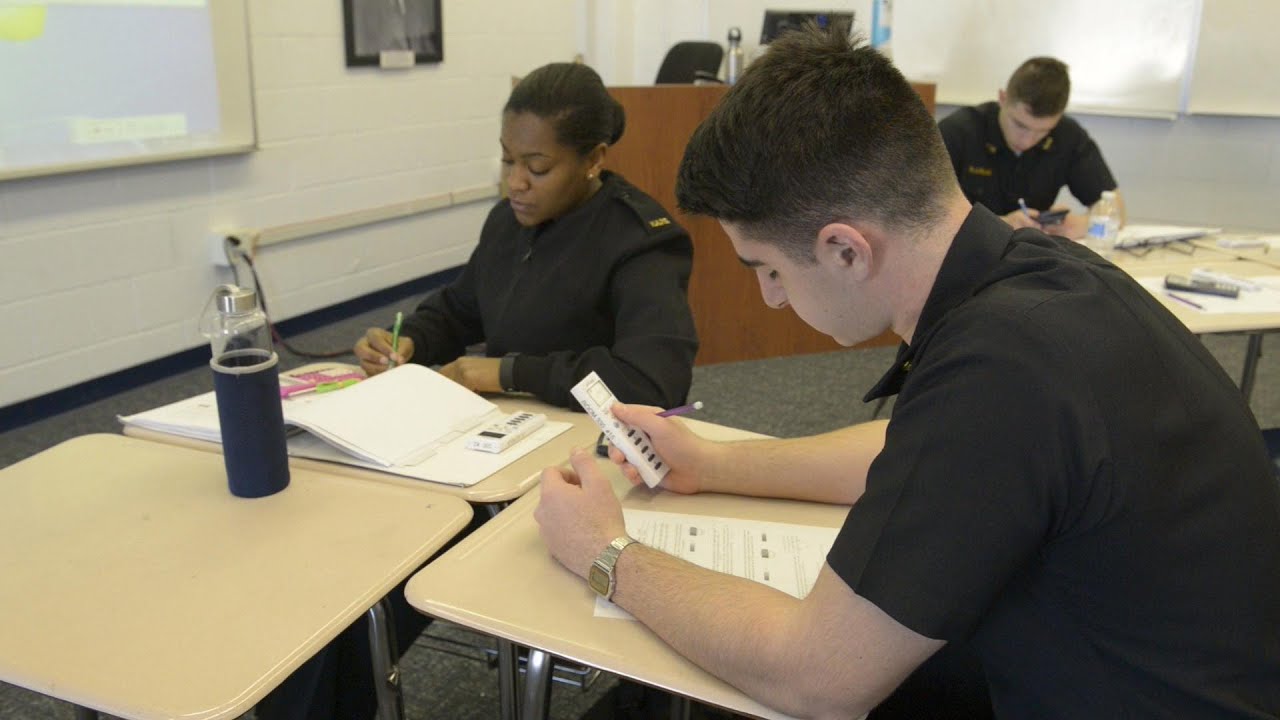

Tag: military careers

Your Daughter is Going to a Military Academy. What’s Ahead of her?

Your Daughter is Going to USNA (or another Military Academy). What’s Ahead of her?

If you are one of the 1,000+ who got an offer, and you accepted, you’re wondering what to do with yourself until I-Day at the end of June. This webpage on USNA.edu will provide black and white details, but there’s so much more. A question I often get from women concerns women in a male world. How’s that work?

meag

I asked my daughter to help me with this. She graduated in 2008, served on the USS Bunker Hill and the newly-commissioned USS San Diego for her two sea tours, then assigned to Washington DC for her stateside tours. Along the way, she was promoted from Ensign to Commander and is on track to become Captain. She has a responsible position, lots of decision making, makes a difference in the lives of those around her and the future of the nation. When she retires, it will be with a solid pension, continuing health care, the feeling that she did something good for twenty years, and still young enough to start a second career.

Here’s her advice to women preparing to attend USNA or another Military Academy:

Ok, you got in!  Cheer up, that wasn’t the hard part.  There are a million ways to mess it up now.  You’re not a big fish in a small pond anymore.  Everyone is Type A and out to succeed.  We operate like a team and look out for each other, but we all need to individually get through the same obstacles, too.  It’s unfortunately common these days for women to play dumb.  DON’T!  No one respects dumb people at USNA.  People who earn the greatest respect are the ones who get the grades, run the fastest, tell the funniest stories, ooze charisma, and seem to do it all effortlessly.  Basically, at USNA we are so used to operating in a world where you out perform the people around you that the way to earn respect is to outperform the out performers.  You have to be more than a jack of all trades; you have to be a master of all trades.  But trust me, you’ll be better for it!  Never settle.  Always look for your deficiencies (won’t have to try hard because the upperclassmen will be there to point them out to you) and ALWAYS fix them before they snowball.

Women also have leverage over men with their femininity.  DON’T USE IT.  While the man is under your spell, he still knows he’s under you spell.  Don’t dilute your righteous accomplishments with your femininity.  Guess what?  You’re feminine without any extra effort on your part.  God made you that way.  Leverage your intelligence, wit and knowledge of trivia—NOT your sexual organs for which you cannot take credit.  Enough said.

Don’t forget to smell the roses.  It’s hard to remember when you’re being yelled at and bells are going off for classes you’re not prepared to attend, but the Naval Academy is a beautiful, historic place.  There are tons of opportunities to maximize your time there and you’ll really regret it if you don’t make the effort.  Go to the museum, read the plaques on all the statues, go to church, put up a huge sign for Army/Navy week in T Court, play sports on Hospital Point, try to jump the wall one time (don’t get caught), visit the cemetery, take the sailboats out.  People don’t get to do this stuff in regular college.  You do, so don’t abuse the opportunity by ignoring it.

Above all, have fun!  Get that diploma and start tailgating in the alumni tent at the football games.  It’s way more fun on the outside!

Taken from Building a Midshipman This college-and-career series delves into making the military part of college career choices. All the links are there but some for future dates:


Copyright ©2025 askatechteacher.com – All rights reserved.

Here’s the sign-up link if the image above doesn’t work:

https://forms.aweber.com/form/07/1910174607.htm

“The content presented in this blog are the result of creative imagination and not intended for use, reproduction, or incorporation into any artificial intelligence training or machine learning systems without prior written consent from the author.”


Jacqui Murray has been teaching K-18 technology for 30 years. She is the editor/author of over a hundred tech ed resources including a K-12 technology curriculum, K-8 keyboard curriculum, K-8 Digital Citizenship curriculum. She is an adjunct professor in tech ed, Master Teacher, freelance journalist on tech ed topics, and author of the tech thrillers, To Hunt a Sub and Twenty-four Days. You can find her resources at Structured Learning.

Is a Military Academy Right for You?

It is not the critic who counts; not the man who points out how the strong man stumbles, or where the doer of deeds could have done them better. The credit belongs to the man who is actually in the arena, whose face is marred by dust and sweat and blood; who strives valiantly; who errs, who comes short again and again, because there is no effort without error and shortcoming; but who does actually strive to do the deeds; who knows great enthusiasms, the great devotions; who spends himself in a worthy cause; who at the best knows in the end the triumph of high achievement, and who at the worst, if he fails, at least fails while daring greatly, so that his place shall never be with those cold and timid souls who neither know victory nor defeat.

Man in the Arena,  a speech by Theodore Roosevelt

 You didn’t even know the US Naval Academy existed until your brother decided to attend a Service Academy Night at the School District. He’s a year younger and a passionate student of military history. Mom joined him and when they returned, pronounced, “It’s you.”

(more…)

Preparing for the College Interview

The College Interview is intimidating and usually only applies to the Ivy League schools. If you’re considering the US Naval Academy, it’s called a Blue and Gold Interview. They will put you through a rigorous test of thinking on your feet, fast, and without ‘umms’.

Here’s what you should know:

The B&G (Blue and Gold) Interview is one of several opportunities for the Naval Academy to insure they appoint candidates who will make it through the next nine years.

[caption id="attachment_2361" align="alignright" width="246"]blue and gold interview Questions your B&G Officer may ask[/caption]

Few colleges invest the time and money in a personal in-home interview. For the Naval Academy, it’s a mandatory step, and an important nod in the approval process. The BGO (Blue and Gold Officer) knows you better than any other person involved in the selection process. His/Her opinion of you will weigh heavily as they review your application. Make sure by the time of this interview, you have developed a good rapport with yours. You chatted with him/her at several Academy Nights, emailed him/her at critical junctures in the application process, and updated him/her on your progress.

Here’s how it went for my daughter:

He arranges a coffee meeting at a local restaurant. You decide to wear khaki pants and a  collared shirt—conservative, respectful, but not a tie-and-jacket-pretentiousness. His questions remind you of those at the Congressional Interview—why do you want to attend the Naval Academy? What will you do if they don’t select you? Nothing tricky. By now, you’ve passed the Naval Academy’s physical test so he commends you on that. His lone suggestion reminds you to continue increasing your SAT scores, currently at 1350. He suggests a review course. Your time restraints make this difficult: Although it’s senior year, you have eight classes (including four APs). You’ve dropped the violin lessons, practice time reserved for Orchestra at school (where you are the Concertmaster) and the Youth Symphony Sunday sessions (where you are 1st violin). You know  yourself. If you overload your schedule, you implode. You’ve learned this from Freshman Year experiences. You do commit to taking advantage of the free Princeton Review SAT course offered at school for IB (International Baccalaureate) applicants.

All in all, a stress-free interview. It ends with you returning home to study Calculus. You send a thank-you note to your BGO, and sign it “Go Navy Beat Army!” You start checking the CIS website to see when it shows up as completed. Not yet, but it’s only been six hours….

–Taken from Building a Midshipman 

This series delves into making the military part of college-career choices. All the links are there but some for future dates:

(more…)

Applying for a Military Academy

Military academies offer benefits most high school students and their parents don’t realize:

  • the quality of education is comparable to an Ivy League
  • they not only provide you with an education, but provide a job when you finish–no job hunting, no rejections,
  • they pay you to go to school–that’s right, each of the four years, you are paid more to attend classes and complete the other activities required to graduate
  • they are free–no charge for classes, books, room and board; they even pay for your summer school

But they are picky. Applying pits you against a huge pool of highly-qualified applicants. It’s not just about who has the best GPA and SAT scores. Admissions weighs:

  • scholastics
  • physical
  • moral
  • personal drive

To gain acceptance requires something different than the usual preparation. Here’s one book to prepare you:

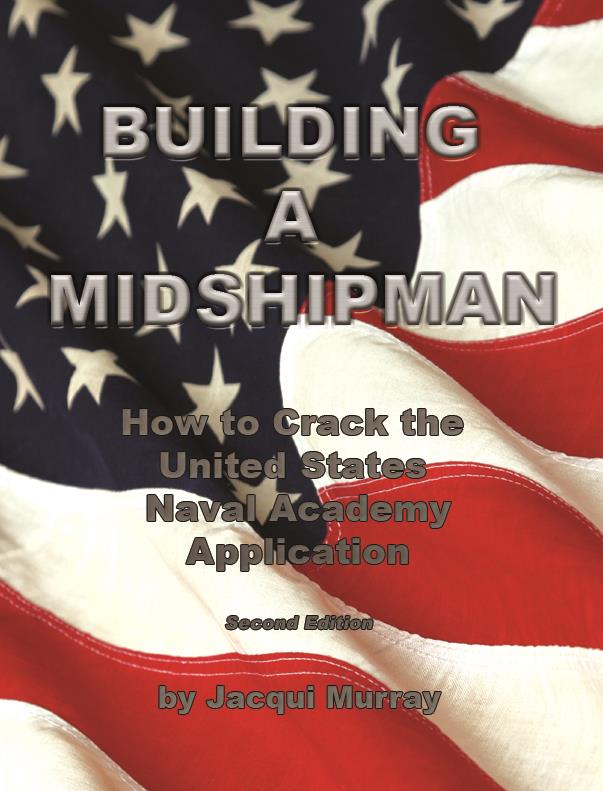
Building a Midshipman

by Jacqui Murray

Available: Amazon

You don’t have to be a miracle-worker to the 10% of applicants accepted to a military academy, but you do need a plan. For the thousands of students who apply every year–and slog through the numbing concatenation of decisions preceding a nomination–there is no greater discouragement than the likely event that they will fail. This, though, is the Board’s peek into an applicant’s moral fiber and an important ingredient to the go/no go decision.

In the words of James Stockdale, USNA ’46 and Medal of Honor Winner: “The test of character is not ‘hanging in there’ when you expect a light at the end of the tunnel, but performance of duty and persistence of example when you know that no light is coming.”

This is the true story of Maggie Schmidt, an All-American kid who dreamt of attending the Naval Academy when her research into the typical Midshipman uncovered a profile alarmingly like herself. This book describes her background and academic interests, her focus, as well as her struggle to put together a winning admissions package. Along the way, you gain insight into the moral fiber that grounds everything she does and the decisions she must make that some consider impossible for an adolescent, but are achievable for thousands of like-minded teens. This workbook walks you through the long process, provides check lists of everything required, decision making matrices, goal-setting exercises to determine if USNA is a good fit for you, and a mix of motivation and academic advice to balance a decision that rightfully might be the biggest one most teens have ever made.

(more…)

Summer STEM at USNA

Summer STEM (Science, Technology, Engineering & Mathematics), is a week-long, overnight camp at USNA each year for students currently in the 7th-10th grades. Here’s information from the USNA website:

Engineering is all about creating, building, and making things better! So what does it take to be an engineer? If you like math and science, you are off to a great start. If you enjoy discovering new things, solving problems, and learning how things work – even better! Creativity, persistence, and the desire to make the world a better place are also important qualities. Becoming an engineer requires hard work and a good education. Our summer program will be a great start to your career in science and engineering.

The schedule:

Monday: Travel and Check-in

Tuesday: Air and Space Museum/DC Tour

Wednesday – Friday: Stem modules and presentations (Students will visit all science and technology majors at the US Naval Academy)

Saturday: Open House and DemonstrationsShare your new skills with your parents and friends. End the week by putting your projects on display.

Didn’t Get in College? Interested in the Military? Try NAPS

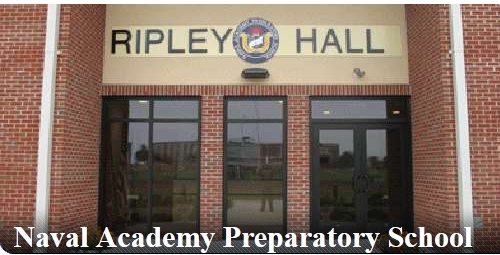
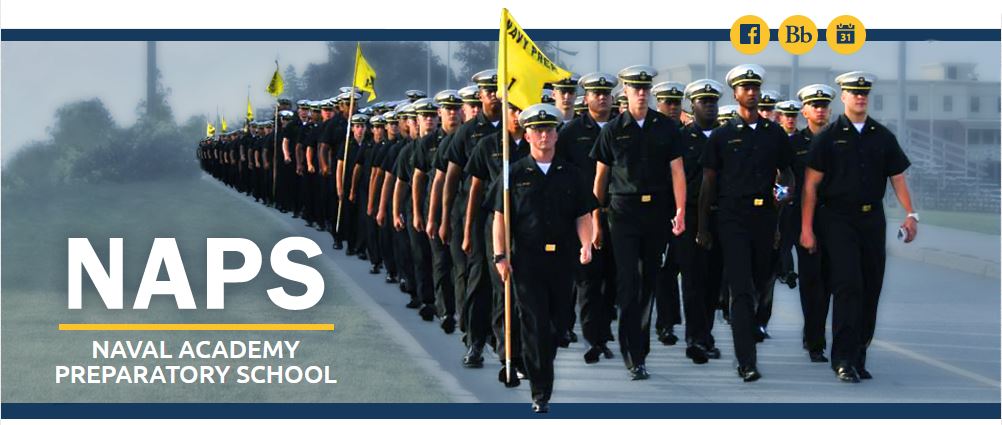
The Naval Academy Preparatory School (NAPS) is located on Naval Station Newport in historic Newport, Rhode Island. The Naval Academy Preparatory School is the Navy’s fourth oldest school; only the Naval Academy, Naval War College, and Naval Post Graduate School are older.

naval academy prep school

The mission of the Naval Academy Preparatory School is to enhance midshipman candidates’ moral, mental, and physical foundations to prepare them for success at the U.S. Naval Academy. The ten-month course of instruction at NAPS, lasting from August through May, emphasizes preparation in English Composition, Mathematics, Chemistry, Physics, and Information Technology.

Demanding military, physical and character development programs complement the academic preparation to fully prepare students for the challenges of life at a service academy. As part of the physical development program, NAPS offers a varsity athletic program that competes against other preparatory schools, junior colleges and college junior varsity teams.

The Naval Academy Preparatory School (NAPS), located in Newport, Rhode Island, is a one-year program designed to prepare selected candidates for success at the United States Naval Academy (USNA) in Annapolis, Maryland. Established in 1915, NAPS serves as a critical stepping stone for individuals who need additional academic, physical, or leadership development before entering the highly competitive environment of the USNA.

Curriculum

The curriculum includes:
  • Academics: Core courses like mathematics (typically pre-calculus or calculus), English, chemistry, and physics. These mirror the foundational subjects at USNA, giving students a head start.
  • Physical Training: Intense physical conditioning to meet the fitness standards of the Naval Academy, including swimming, running, and strength exercises.
  • Military Training: Leadership development, naval customs, and discipline to instill the ethos of a future naval officer.
Classes are small, and the environment is highly disciplined, with a focus on time management and study skills. The academic year typically runs from late July to May, aligning with a traditional school calendar.

Admissions

Admission to NAPS is not something individuals can directly apply for. Instead, it’s offered to candidates who have applied to the USNA but are identified by the Admissions Board as needing additional preparation. Most attendees are “sponsored” by the Navy or Marine Corps, often coming from the enlisted ranks, though some are civilians with strong potential who didn’t fully meet USNA’s competitive entry criteria (e.g., SAT/ACT scores, grades, or extracurriculars).

Life at NAPS

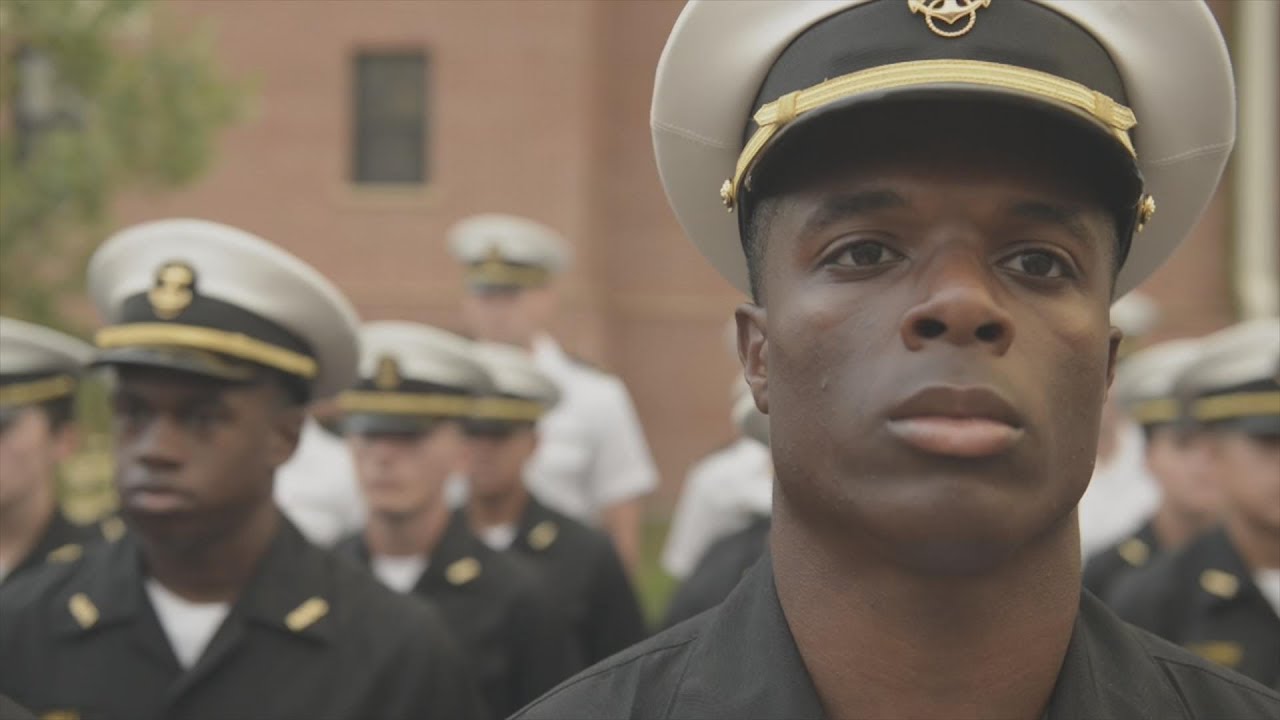
Students live in a military-style setting at Naval Station Newport, wearing uniforms and adhering to a strict schedule. They’re organized into companies and platoons, fostering teamwork and camaraderie. The experience is designed to simulate aspects of USNA life, though with more academic support and mentorship.

Outcomes

Upon successful completion, NAPS graduates earn an appointment to the Naval Academy, assuming they meet all final requirements (e.g., passing the Physical Aptitude Exam and maintaining good conduct). Historically, NAPS has a high success rate, with most students transitioning to USNA and eventually commissioning as officers in the Navy or Marine Corps.
x
Want more? Check these videos out:

(more…)

New Series on Military Careers for High School Students

This is a new Ask a Tech Teacher series on College and Career with a focus on military options. 

High school students contemplating a military career should research extensively, speak with recruiters, and perhaps participate in preparatory or introductory military programs to make an informed decision. Each branch of the military has unique offerings, so aligning personal goals with the branch’s culture and opportunities is crucial. There are several pathways for post-HS: opportunities for personal development, education, and professional training. Here’s an overview:

  • Join directly from High School:
    • Enlistment: Students can enlist in one of the six branches of the U.S. military: Army, Navy, Air Force, Marines, Coast Guard, and Space Force. This path typically requires passing the Armed Services Vocational Aptitude Battery (ASVAB) to determine suitability for specific roles. High school graduates can start as enlisted personnel, gaining hands-on experience in various military occupations.

    • Benefits: Enlisting offers benefits like tuition assistance, health care, housing, and retirement benefits. The military provides training in over 150 career fields, many of which only require a high school diploma or GED.

    • Programs for Experience: Programs like the Junior Reserve Officers’ Training Corps (JROTC) in high schools can provide students with early exposure to military life, teaching leadership, citizenship, and discipline.

  • Attend college before entering the military:
    • Service Academies: High school students can apply to one of the U.S. military academies (e.g., West Point for Army, Naval Academy for Navy, etc.), which offer a combination of college education and military training. These are highly competitive and require congressional nomination. Graduates earn a commission as officers.

    • ROTC (Reserve Officers’ Training Corps): This program allows students to attend college and receive military training simultaneously. Upon graduation, ROTC participants commit to a period of service as an officer. The program offers scholarships that can cover tuition, fees, and other expenses.

This series delves into making the military part of college-career choices. All the links are there but some for future dates:

Copyright ©2025 askatechteacher.com – All rights reserved.

Here’s the sign-up link if the image above doesn’t work:

https://forms.aweber.com/form/07/1910174607.htm

“The content presented in this blog are the result of creative imagination and not intended for use, reproduction, or incorporation into any artificial intelligence training or machine learning systems without prior written consent from the author.”


Jacqui Murray has been teaching K-18 technology for 30 years. She is the editor/author of over a hundred tech ed resources including a K-12 technology curriculum, K-8 keyboard curriculum, K-8 Digital Citizenship curriculum. She is an adjunct professor in tech ed, Master Teacher, freelance journalist on tech ed topics, and author of the tech thrillers, To Hunt a Sub and Twenty-four Days. You can find her resources at Structured Learning.

Why the USNA

Why the US Naval Academy?

 Some people live an entire lifetime and wonder if  they have ever made a difference in the world, but the Marines don’t have that problem. —Ronald Reagan

How do you precipitate from eighteen years of growing and learning that your perfect college is spelled ‘USNA’?  What should you consider to be sure this unique approach befits your future? Without a doubt, the Naval Academy sounds great:  It’s prestigious and highly competitive, putting you shoulder to shoulder with those who will decide the future. It offers undergraduates world-class, cutting edge facilities and equipment.

(more…)

Five Must-Do Skills to Accomplish During High School

Lou Holtz, the University of Notre Dame’s erudite ex-coach, entrusted with turning UND football players into graduates, once exhorted, “How you respond to the challenge in the second half will determine what you become after the game, whether you are a winner or a loser.”High School is like the second half, and you’re about to find out if you’re a winner. At the starting line, all students are equal, crossing the freshman threshold with the same opportunities, and same possibilities for their future. The 4.0 student stands shoulder to shoulder with the star athlete, and the C student who aspires to nothing more than minimum wage work has an equal chance that inspiration will strike. Every one approaches the starting line, not knowing if the race will be won with brains, hard work, willpower, or intensity of desire.

But you’re different. You know what you want: USNA. There are five general skills you’ll have to learn over the next three years (if you don’t have them by the time applications go out, prior to senior year, it’ll be too late).

08graduation_0251

Maybe you’re thinking, that’s easy. I do it every day. Or maybe you’re wondering: How do I make this happen? I can answer both: It’s not easy or everyone would do it. The only thing easy is the instructions for making it happen. (more…)

Goal Setting for a Fourteen-year old

Can a high school freshman be goal-oriented?  Should they—or is this too early?  Though many deliberate, no one yet has invented a time machine to unring the proverbial bell. And high school requires the ringing of many academic, social and economic bells. Many future-shaping decisions become final based on these four years.

Zoe, like your sons and daughters, is thinking about which college she wants to attend. Some value just academics, and others academics and sports/fine arts/community service/a passionate involvement in something. Often contradictory, choices must be made early in the high school regarding ambitions, focus, and intents.

‘No goals’ means decisions are made for you. If you don’t commit yourself to “do” high school (work hard, take challenging classes, never never never give up even one extra-credit point on a test), then you have made a choice. It’s passive, but effective. Each time you make the decision to skip studying for one test, or make the decision to not put the extra time into one project, you shorten the height of your grasp on the future.  Too many compromises, and goals become dreams for someone ‘luckier’ than you. (more…)