It’s hard to run an inquiry-based classroom. Don’t go into this teaching style thinking all you do is ask questions and observe answers. You have to listen with all of your senses, pause and respond to what you heard (not what you wanted to hear), keep your eye on the Big Ideas while stepping in when needed, aside when required. You aren’t a Teacher, rather a guide. You and the class find your way from question to knowledge together.
Because everyone learns differently.
You don’t use a textbook. Sure, it’s a map, showing how to get from here to there, but that’s the problem. It dictates how to get ‘there’. For an inquiry-based classroom, you may know where you’re going, but not quite how you’ll get there and that’s a good thing. You are no longer your mother’s teacher who stood in front of rows of students and pointed to the blackboard. You operate well outside your teaching comfort zone as you try out the flipped classroom and the gamification of education and are thrilled with the results.

And then there’s the issue of assessment. What your students have accomplished can’t neatly be summed up by a multiple choice test. When you review what you thought would assess learning (back when you designed the unit), none measure the organic conversations the class had about deep subjects, the risk-taking they engaged in to arrive at answers, the authentic knowledge transfer that popped up independently of your class time. You realize you must open your mind to learning that occurred that you never taught–never saw coming in the weeks you stood amongst your students guiding their education.
Let me digress. I visited the Soviet Union (back when it was a nation) and dropped in on a classroom where students were inculcated with how things must be done. It was a polite, respectful, ordered experience, but without cerebral energy, replete of enthusiasm for the joy of learning, and lacking the wow factor of students independently figuring out how to do something. Seeing the end of that powerful nation, I arrived at different conclusions than the politicians and the economists. I saw a nation starved for creativity. Without that ethereal trait, learning didn’t transfer. Without transfer, life required increasingly more scaffolding and prompting until it collapsed in on itself like a hollowed out orange.
 So how do you create the inquiry-based classroom? Here’s advice from efriend teachers:
- ask open-ended questions and be open-minded about conclusions
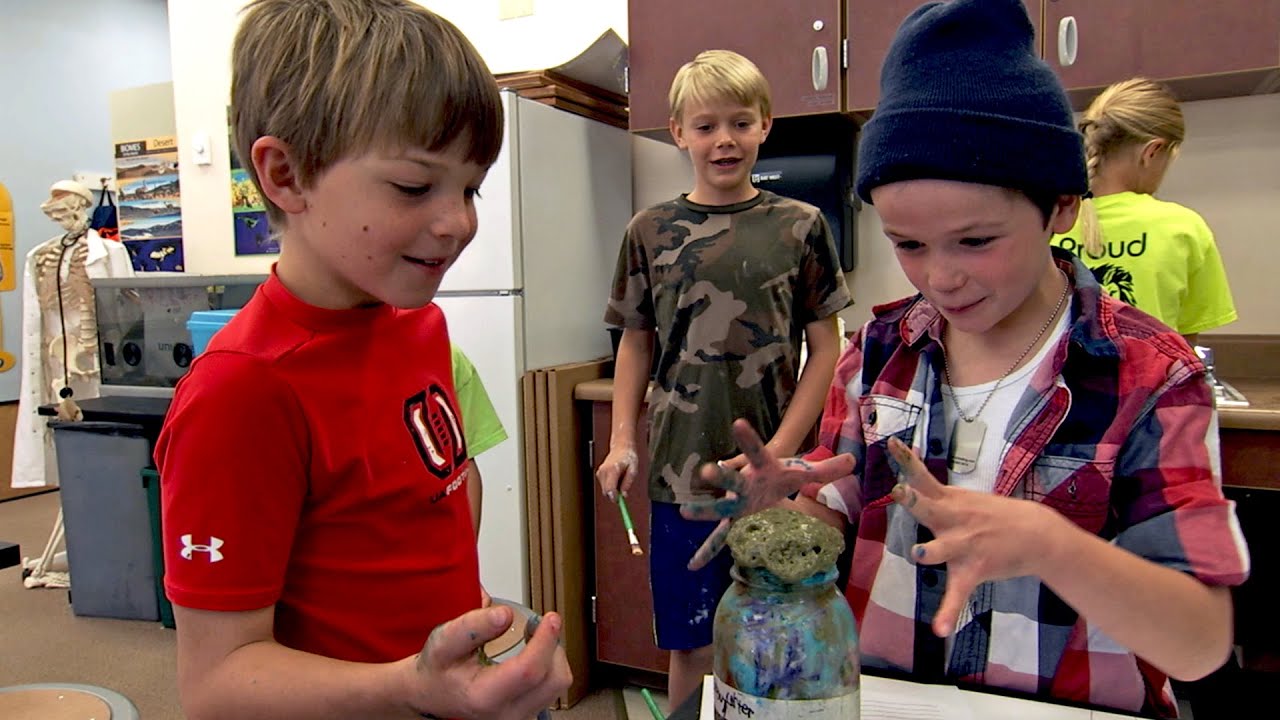
- provide hands-on experiences
- use groups to foster learning
- encourage self-paced learning. Be open to the student who learns less but deeper as much as the student who learns a wider breadth
- differentiate instruction. Everyone learns in their own way
- look for evidence of learning in unusual places. It may be from the child with his/her hand up, but it may also be from the learner who teaches mom how to use email
- understand assessment comes in many shapes. It may be a summative quiz, a formative simulation, a rubric, or a game that requires knowledge to succeed. It may be anecdotal or peer-to-peer. Whatever approach shows students are transferring knowledge from your classroom to life is a legitimate assessment
- be flexible. Class won’t always (probably never) go as your mind’s eye saw it. That’s OK. Learn with students. Observe their progress and adapt to their path.
- give up the idea that teaching requires control. Refer to #8–Be flexible
- facilitate student learning in a way that works for them. Trust that they will come up with the questions required to reach the Big Ideas
In the end, know that inquiry-based teaching is not about learning for the moment. You’re creating life-long learners, the individuals who will solve the world’s problems in ten years. How do you ensure they are ready?
Here are a few videos that visually show this great approach to learning and teaching:

Here’s the list of articles in this series. If the link isn’t live, the article isn’t yet published:
Copyright ©2026 askatechteacher.com – All rights reserved.

Here’s the sign-up link if the image above doesn’t work:
https://forms.aweber.com/form/07/1910174607.htm
“The content presented in this blog are the result of creative imagination and not intended for use, reproduction, or incorporation into any artificial intelligence training or machine learning systems without prior written consent from the author.”
Jacqui Murray has been teaching K-18 technology for 30 years. She is the editor/author of over a hundred tech ed resources including a K-12 technology curriculum, K-8 keyboard curriculum, K-8 Digital Citizenship curriculum. She is an adjunct professor in tech ed, Master Teacher, freelance journalist on tech ed topics, and author of the tech thrillers, To Hunt a Sub and Twenty-four Days. You can find her resources at Structured Learning.