Category: Websites

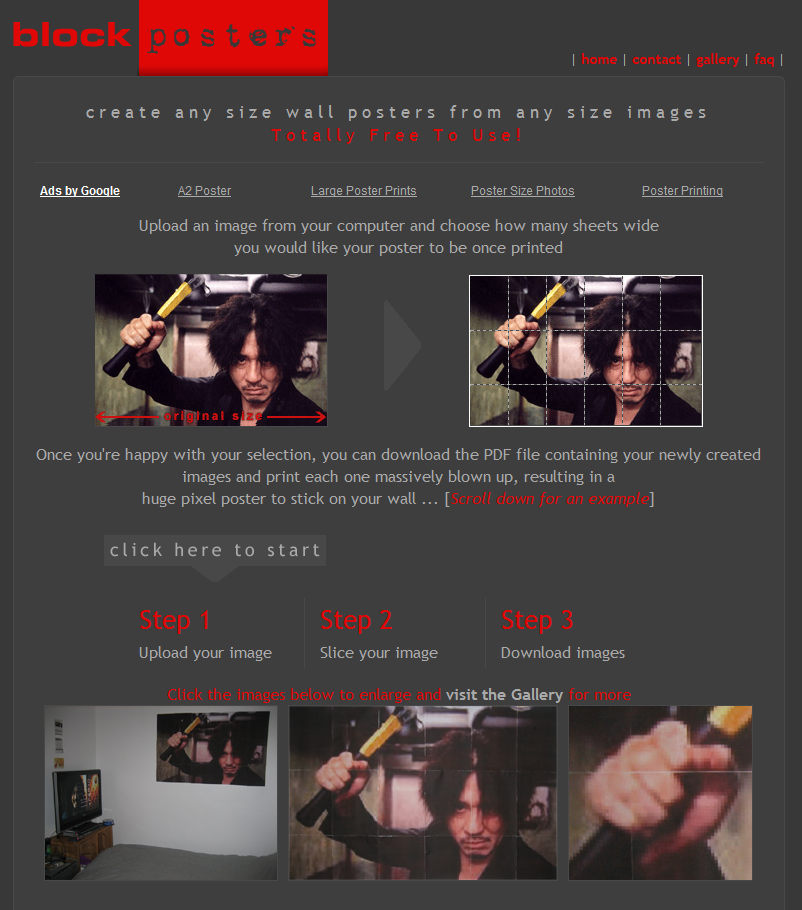
Weekend Website #34: Block Posters
Drop by every Friday to discover what wonderful website my classes and parents loved this week. I think you’ll find they’ll be a favorite of yours as they are of mine.
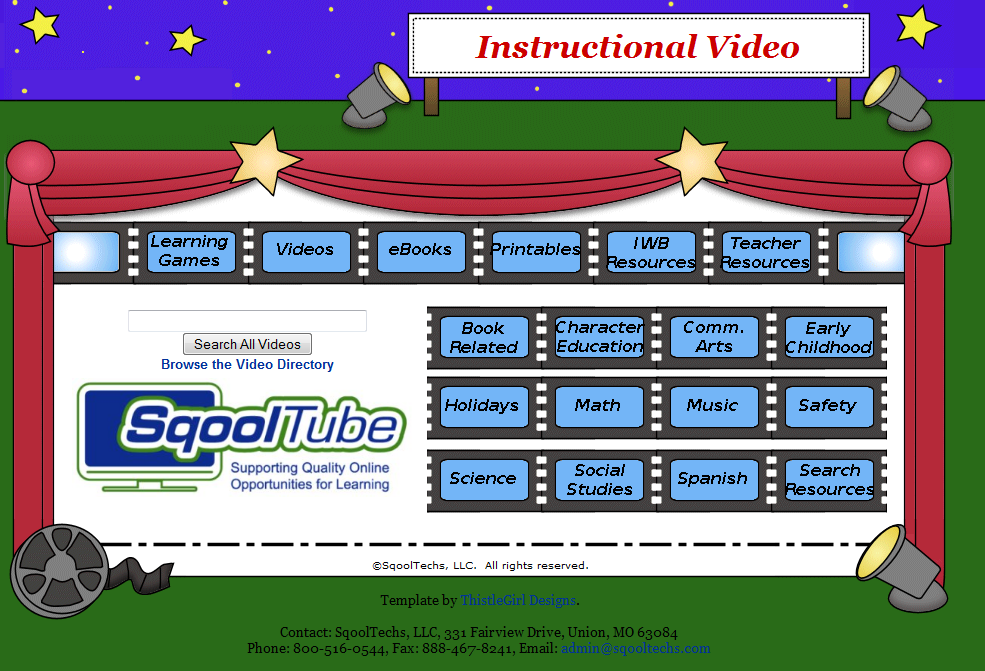
Weekend Website #32: SqoolTube
Drop by every Friday to discover what wonderful website my classes and parents loved this week. I think you’ll find they’ll be a favorite of yours as they are of mine.

Five More Must-have Freebies For Your Computer
A lot of you read the post about ten must-have Free apps for a new computer. If you’re a parent, you might like my post on five great Free apps for kids here.
Here’s a list of programs I often recommend to the parents I teach (with the exception of Get Social–most of my parents aren’t bloggers). These are picked because they are simple to download, simpler to install and they work as advertised:
GIMP
Checks your computer and removes a lot of the adware that comes with surfing the internet. The free version has an excellent reputation and should be an integral part of your arsenal for fighting off malware. the install is easy and using it easier. You push a few buttons and let it do its thing, trolling your computer for problems. I run it weekly. Do it more often if you go to a lot of music download or heavily-advertised sites. Donwload.com offers this video for more information.
Lavasoft Ad-aware
Checks your computer and removes a lot of the adware that comes with surfing the internet. The free version has an excellent reputation and should be an integral part of your arsenal for fighting off malware. the install is easy and using it easier. You push a few buttons and let it do its thing, trolling your computer for problems. I run it weekly. Do it more often if you go to a lot of music download or heavily-advertised sites. Donwload.com offers this video for more information.
Spybot
Use this Free program to get rid of spyware that is usually installed on your computer without your permission. If you notice new toolbars that you haven’t installed, if your browser crashes inexplicably, or if your home page has been “hijacked” (changed without your knowledge), your computer is most probably infected with spyware. It is one of the most popular out there, part because it’s Free and a big part because it works.
Every year it receives a bunch of awards because it’s excellent at its job and the price is right.
Printkey
The free version (you can get it free with the link above) is unsupported by the creator. To get technical support, you have to go to the website.I have the free version and have absolutely no problems with it. It activates with the ‘PrtScn’ key (yours might spell it out as ‘Print Screen’) which is intuitive. What’s not intuitive is how that key works without Printkey–Bill Gates should change that.
I digress. You push the key. It provides the option of selecting a portion of the screen or all. You can copy to the clipboard or save. What could be simpler?
There is a competitor version called Jing. It’s free, allows the same options with the addition of video (you can take a video of what you’re doing on your screen–great for training). But, it requires a few more steps and isn’t activated by the ‘prtscn’ key.
GetSocial
Jacqui Murray has been teaching K-18 technology for 30 years. She is the editor/author of over a hundred tech ed resources including a K-12 technology curriculum, K-8 keyboard curriculum, K-8 Digital Citizenship curriculum. She is an adjunct professor in tech ed, Master Teacher, webmaster for four blogs, an Amazon Vine Voice, CSTA presentation reviewer, freelance journalist on tech ed topics, contributor to NEA Today, and author of the tech thrillers, To Hunt a Sub and Twenty-four Days. You can find her resources at Structured Learning.

9 of the Best Math Websites Out There
There are an awful lot of math sites on the internet and too often, they are filled with distracting ads that make it difficult to find the learning material, or too many games that don’t so much teach math skills as babysit kids.
Here are some I’ve found useful in my technology lab. They’re straightforward, with an uncluttered interface (mostly) and a focus on teaching not entertaining:
Math and Virtual Manipulatives and Tessellations –well organized, using a whiteboard with shapes and colors as the virtual manipulatives.
Math website—popular, a standard 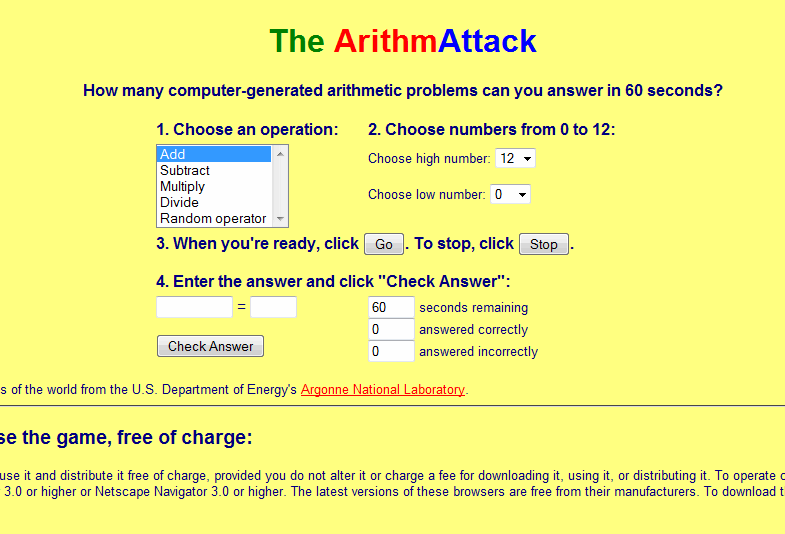
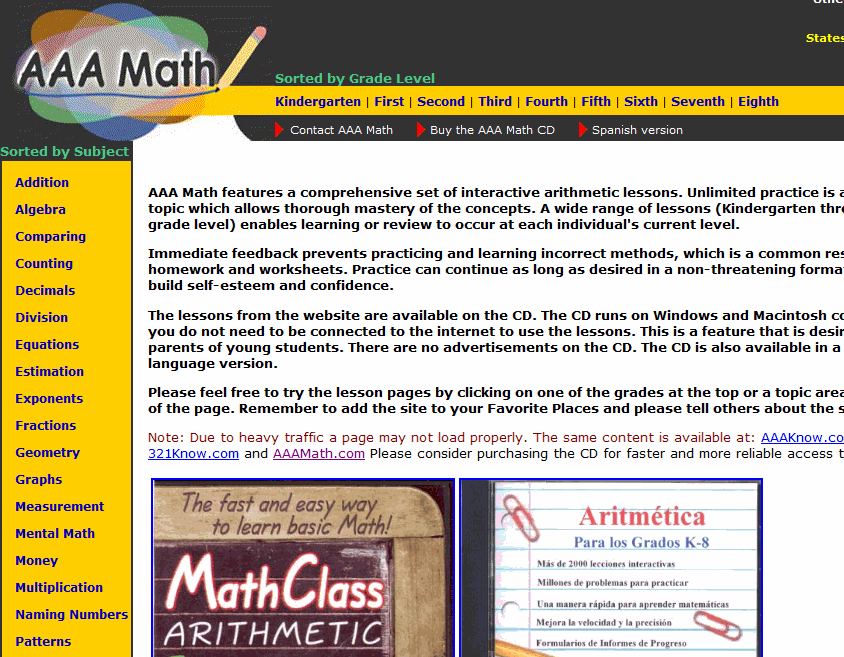
Math—by Grade Level–a longtime favorite that reinforces basics, math facts and speed math
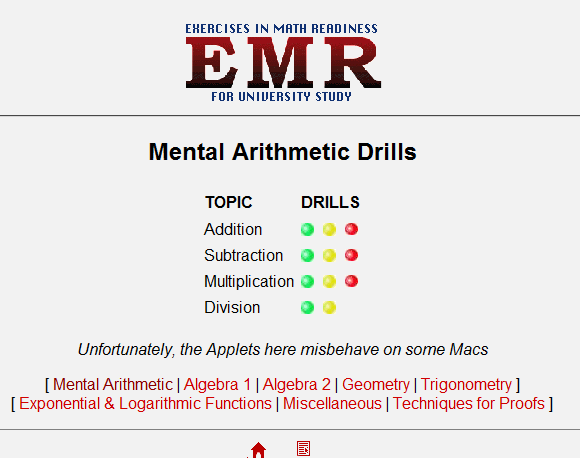
Math–Mental Math –traditional mental math practice. Well done.
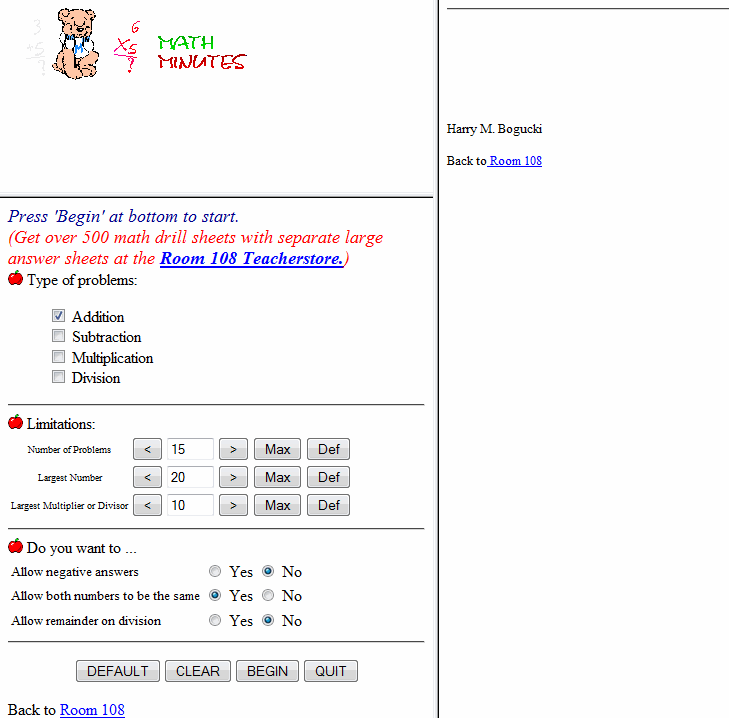
Math–Minute Math –Mad Minutes
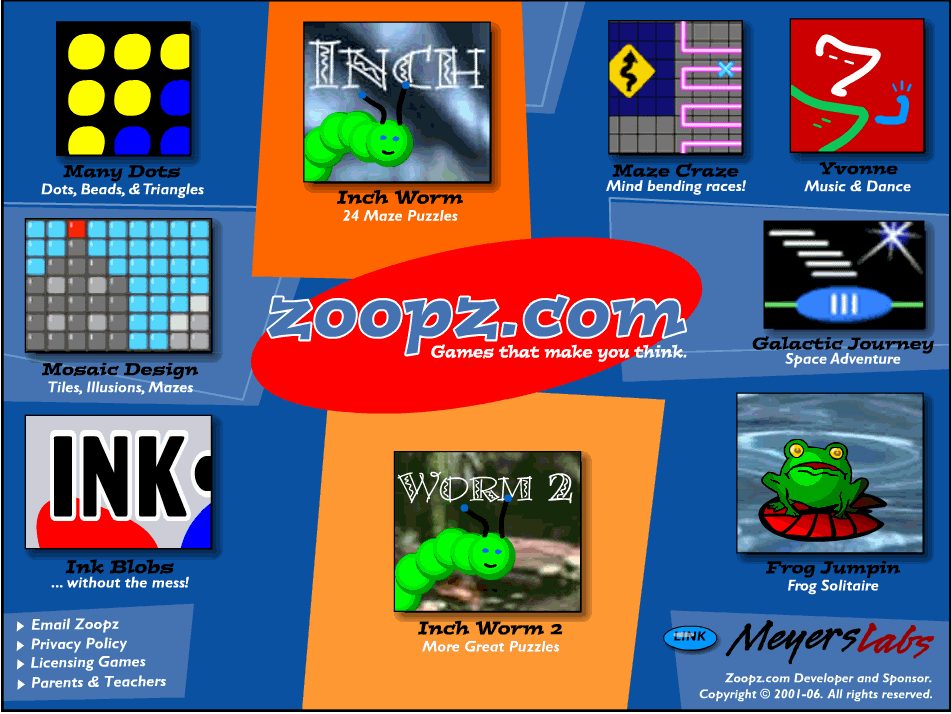
 Games that make you think –logic, for K-3
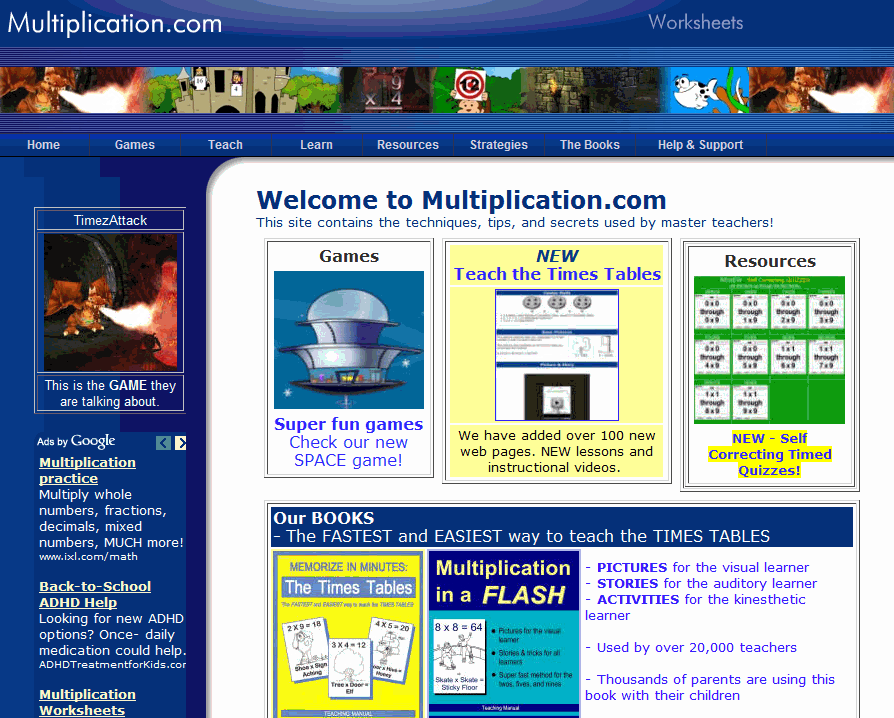
Multiplication.com–lots of multiplication problems, lessons, games, with a few on addition and subtraction
Interactive Math Lessons–lots of them. You’ll find everything you need here.
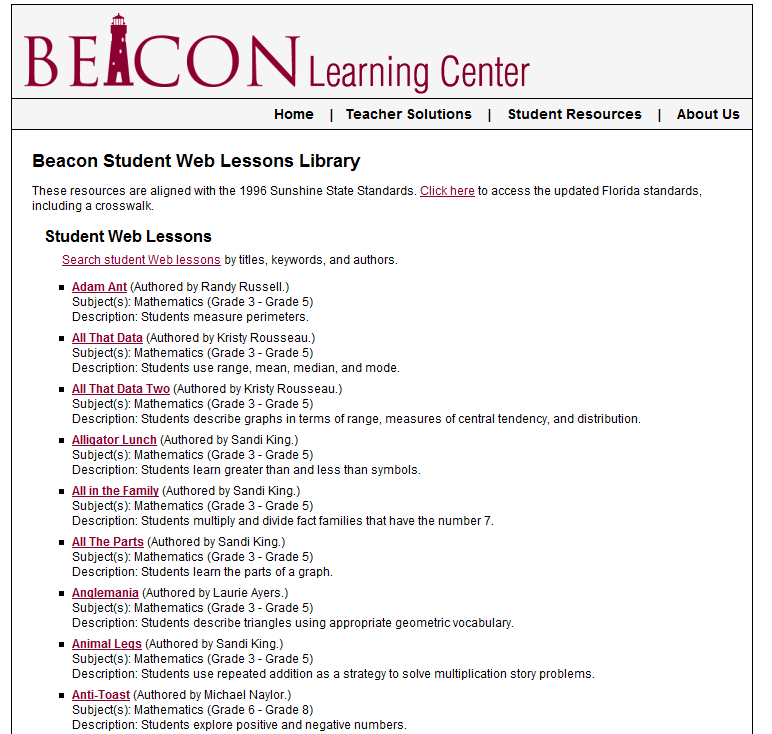
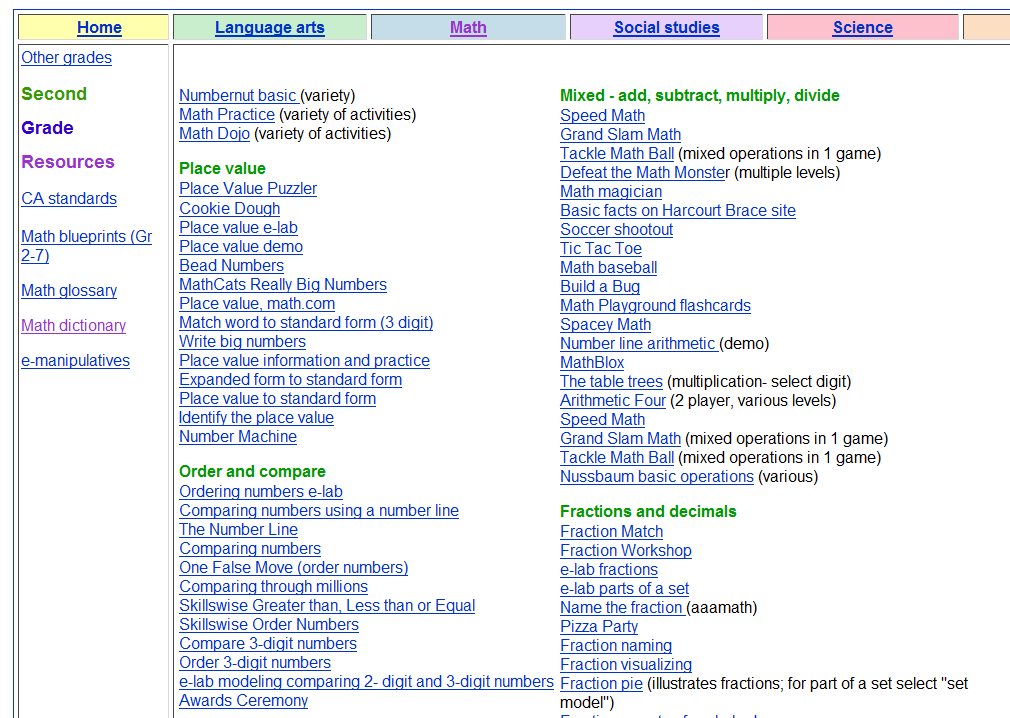
Math problems by skill and grade
Jacqui Murray has been teaching K-18 technology for 30 years. She is the editor/author of over a hundred tech ed resources including a K-12 technology curriculum, K-8 keyboard curriculum, K-8 Digital Citizenship curriculum. She is an adjunct professor in tech ed, Master Teacher, webmaster for four blogs, an Amazon Vine Voice, CSTA presentation reviewer, freelance journalist on tech ed topics, contributor to NEA Today, and author of the tech thrillers, To Hunt a Sub and Twenty-four Days. You can find her resources at Structured Learning.
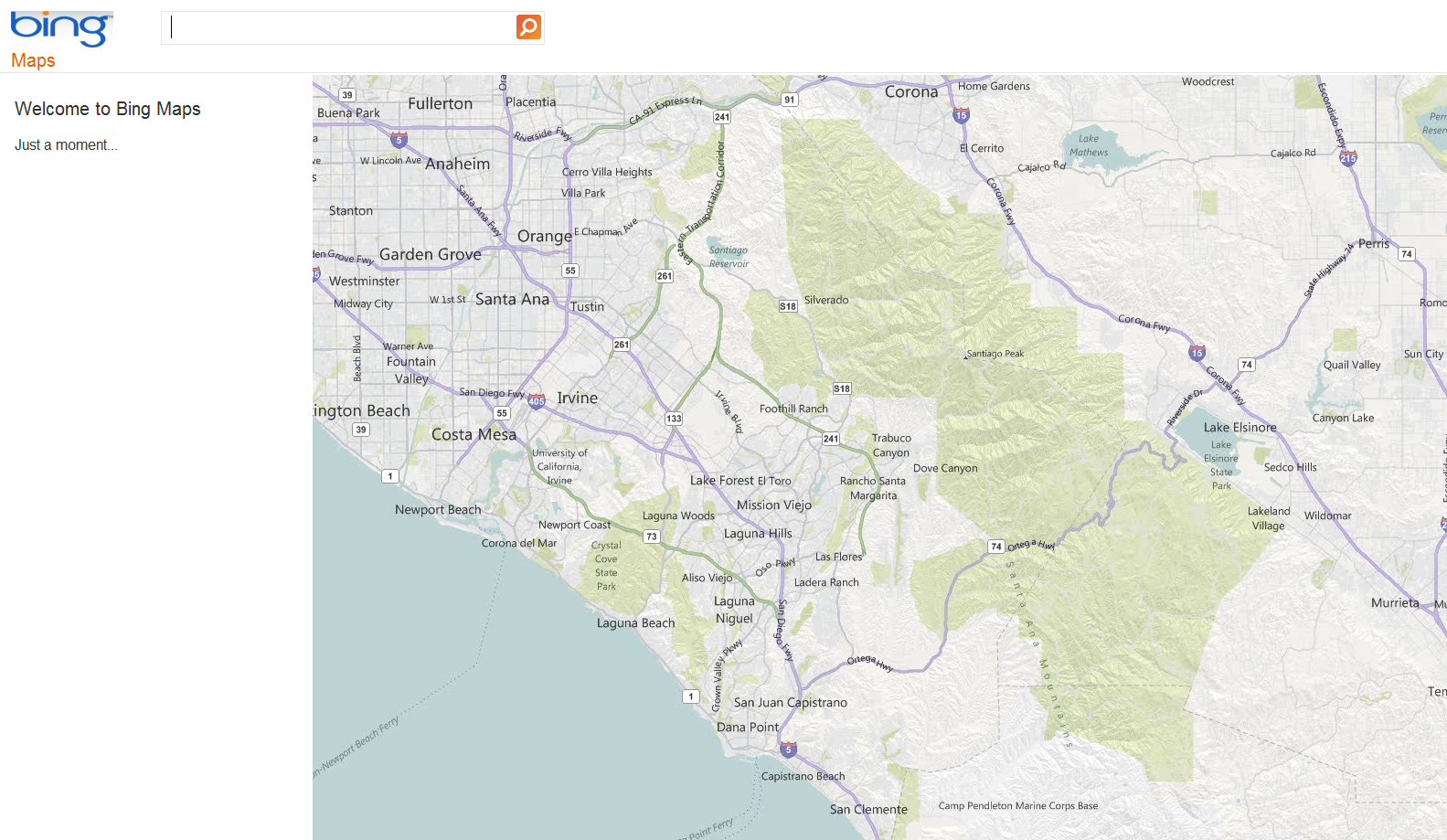
Weekend Website #28: Bing Maps
Drop by every Friday to discover what wonderful website my classes and parents loved this week. I think you’ll find they’ll be a favorite of yours as they are of mine.

Weekend Website #27: TED
Drop by every Friday to discover what wonderful website my classes and parents loved this week. I think you’ll find they’ll be a favorite of yours as they are of mine.

(more…)

Where Would You Like to Go Today?
Are you here for a lesson plan… Tech tips… Humor? Click the category below and you’re there.
[caption id="attachment_1055" align="aligncenter" width="154"] 52 weeks of tech tips[/caption]
[caption id="attachment_1057" align="aligncenter" width="150"]
52 weeks of tech tips[/caption]
[caption id="attachment_1057" align="aligncenter" width="150"] KidPix lessons for K-2[/caption]
[caption id="attachment_1058" align="aligncenter" width="150"]
KidPix lessons for K-2[/caption]
[caption id="attachment_1058" align="aligncenter" width="150"] Google Earth lesson plans[/caption]
[caption id="attachment_1059" align="aligncenter" width="150"]
Google Earth lesson plans[/caption]
[caption id="attachment_1059" align="aligncenter" width="150"] Photoshop lesson plans[/caption]
[caption id="attachment_1063" align="aligncenter" width="150"]
Photoshop lesson plans[/caption]
[caption id="attachment_1063" align="aligncenter" width="150"] Web 2.0 lesson plans[/caption]
[caption id="attachment_1064" align="aligncenter" width="150"]
Web 2.0 lesson plans[/caption]
[caption id="attachment_1064" align="aligncenter" width="150"] MS Word lesson plans[/caption]




 Mouse lesson plans[/caption]
[caption id="attachment_1072" align="aligncenter" width="150"]
Mouse lesson plans[/caption]
[caption id="attachment_1072" align="aligncenter" width="150"] Take a break[/caption]
-
Jacqui Murray has been teaching K-18 technology for 30 years. She is the editor/author of over a hundred tech ed resources including a K-12 technology curriculum, K-8 keyboard curriculum, K-8 Digital Citizenship curriculum. She is an adjunct professor in tech ed, Master Teacher, webmaster for four blogs, an Amazon Vine Voice, CSTA presentation reviewer, freelance journalist on tech ed topics, contributor to NEA Today, and author of the tech thrillers, To Hunt a Sub and Twenty-four Days. You can find her resources at Structured Learning.

14 Websites to Learn Everything About Landforms
If your third grader has to write a report about landforms, try these websites:
- About Rivers www.42explore.com/rivers.htm
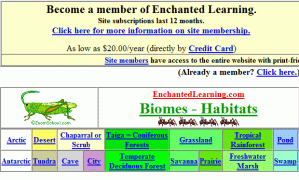
- Biomes/Habitats http://www.allaboutnature.com/biomes/
- Deserts http://www.42explore.com/deserts.htm
- Explore the Colorado http://www.desertusa.com/colorado/explorriver/du_explorrv.html
- Geography Activities—for teachers www.enchantedlearning.com/geography/
- Geography Quiz Game www.quia.com/pop/114591.html
- GeoNet Game www.eduplace.com/geonet/
(more…)

16 Great Research Websites for Kids
Please see the update here with more websites, kid-friendly browsers, citation resources, how to research, and a poster!
Quick, safe spots to send your students for research:
- BrainPop–with the BrainPop characters, a launchpad to curiosity
- CoolKidFacts–kid-friendly videos, pictures, info, and quizzes–all 100% suitable for children
- Dimensions–academic research geared for college-level
- Fact Monster–help with homework and facts
- Google Earth Timelapse–what changes to the planet over time
- Google Trends–what’s trending in searches
- History Channel–great speeches
- How Stuff Works–the gold standard in explaining stuff to kids
- Info Please–events cataloged year-by-year
- Library Spot–extensive collection of kid’s research tools
- National Geographic for Kids
- Ngram Viewer–analyzes all words in all books on Google Books
- SqoolTube Videos–educational videos for preK-12
- TagGalaxy–search using a cloud
- Wild Wordsmyth–picture dictionary for kids
- World Book–requires membership
More
Use Unconventional Research Sites to Inspire Students
How do I teach Inquiry and Research in Middle School
updated 3-22-21
Jacqui Murray has been teaching K-18 technology for 30 years. She is the editor/author of over a hundred tech ed resources including a K-12 technology curriculum, K-8 keyboard curriculum, K-8 Digital Citizenship curriculum. She is an adjunct professor in tech ed, Master Teacher, webmaster for four blogs, an Amazon Vine Voice, CSTA presentation reviewer, freelance journalist on tech ed topics, contributor to NEA Today, and author of the tech thrillers, To Hunt a Sub and Twenty-four Days. You can find her resources at Structured Learning.

Weekend Website #21: Test Your Typing Speed
Drop by every Friday to discover what wonderful website my classes and parents loved this week. I think you’ll find they’ll be a favorite of yours as they are of mine.