Tag: stringer

Learn How to Play a Musical Instrument on Your Smart Phone
 AATT contributer, Sara Stringer, is looking at digital music tools this month. This is a topic I don’t say enough about so I’m thrilled Sara’s sharing her thoughts with you. There are at least three tools below I’ve never tried. After you read this, I’d love to hear your thoughts on her choices and any she didn’t mention you love.
Do you want to learn how to play an instrument or sing? Your smartphone or tablet is your gateway to the world of music. There are plenty of apps that can help you get started, and help progress your musical interest and talent. In addition to the apps listed below, you could also find a music teacher to help advance your artistic abilities.
Note Perfect!
Note Perfect! makes a game of learning to read notes. It is a timed game testing the student’s ability to recognize written notes, which is a crucial skill for all musicians. The game design is both fun and intuitive for easy learning. The app allows play in four different clefs, and in three different levels of difficulty. You can even play with friends to try and capture the high score.
GuitarBots
According to the GuitarBots website, “The future of guitar learning starts here.” The app allows the use of either an electric or acoustic guitar, and it employs the tablet or phone’s microphone to hear what the student plays to assess progress. Awards are given to induce practice and development. Subscriptions allow the student to dig deeper into the content and features for a greater experience. The FCC has parental control guidelines and information to keep children safe online, with this app, controls can be activated to protect younger students from accessing inappropriate content through the app on the internet.
Sing Sharp
Don’t let the name fool you; Sing Sharp will help you sing in tune. It is a game learning platform that gauges your pitch accuracy in real-time. This will help you learn to find the right note as you go. There are ten game levels with over a thousand ear training and vocal exercises. Warm-ups at the beginning of each session get your voice ready to sing. The app learns your vocal range and tests it each time to make you a stronger singer.
GarageBand
Garage Band can make a complete novice sound like a virtuoso, but still has functionality that an experienced musician can use. Mac owners should read cultofmac.com’s, How to get all the awesome extra sounds for GarageBand 10 to get the most out of the app. The touch instruments and loops can have a newbie composing and recording in no time. A more experienced musician can plug in their instrument, and a guitarist can choose amps and effects to capture the perfect sound. The Inter-App Audio feature allows third party apps to combine with GarageBand so you can add in your favorite drum machine and effects.
Find a Teacher
There is nothing better to take you to the next level than to find a teacher. Learn from their experience as they tailor your training to your natural ability. Lessonrating.com can help you find a teacher close to you to help further your musical interests. Just enter your area of interest and zip code to find the teachers close to you. Check the reviews to locate the right mentor, then contact them and get started.
Technology has given many resources to musicians all around
the world. They can help the beginner master their instrument and the advanced player hone their skills. Get started with an app or use it to augment the learning you get from a music teacher. Either way it is a win-win situation for the student wanting to become a better musician.
Sara Stringer is a former medical and surgical assistant who now does freelance business consulting. She enjoys blogging and helping others. In her spare time (translation: the time spent doing what’s most important), she enjoys soaking up the sunshine with her husband and two kids.
Jacqui Murray has been teaching K-8 technology for 15 years. She is the editor/author of dozens of tech ed resources including a K-8 technology curriculum, K-8 keyboard curriculum, K-8 Digital Citizenship curriculum. She is webmaster for six blogs, CSG Master Teacher, adjunct professor in tech ed, an Amazon Vine Voice book reviewer, Editorial Review Board member for Journal for Computing Teachers, CAEP reviewer, CSTA presentation reviewer, freelance journalist on tech ed topics, a tech ed columnist for Examiner.com, and a weekly contributor to TeachHUB. You can find her resources at Structured Learning.

Three Life Skills High School Students Should Learn–and Why
 What is the goal of education? If you ask ten people, you’re likely to get fifteen different answers. AEP Distinguished Achievement Award Winner Dennis Littky and Samantha Grabelle discuss this in their well-regarded book, The Big Picture: Education Is Everyone’s Business. They draw from classroom experience and postulate that education is expected to teach students to:
- be lifelong learners
- be passionate
- be ready to take risks
- be able to problem-solve and think critically
- be able to look at things differently
- be able to work independently and with others
- be creative
- care and want to give back to their community
- persevere
- have integrity and self-respect
- have moral courage
- be able to use the world around them well
- speak well, write well, read well, and work well with numbers
- truly enjoy their life and their work
Common Core succinctly summarizes K-12 education as
“…prepare students for college and career”
Ask a Tech Teacher contributor Sara Stringer focuses in on high school and shares her thoughts on three skills important to their future:

Challenges to Implementing Computer Technology in Education
 What no teacher ever says: “I had no problem using technology in my classroom.” Even if YOU understand the plethora of digital tools, that often isn’t true for parents, other teachers, your Admin. Which becomes a challenge.
Ask a Tech Teacher contributor Sara Stringer addresses some of the biggest problems even geeky teachers face when trying to build a technology-infused classroom:
Computers are more a part of education than ever before, be it classroom teachers using computer technology to get through to their students, or students attending classes entirely online. Computer technology has become the future of education, and yet there are still challenges that make technology less effective than it could be.
Technological Threats
With increased computer use also comes increased threats. Students and teachers who use public networks to access school resources are at greater risk from several different computer threats. While schools can make sure their internet security is up to date, individuals who connect with their personal devices can still end up loading infected files to the network.
One solution is to require that all outside machines meet certain specifications, such as having an up to date virus or internet security program installed. Even Macs are becoming more vulnerable to viruses and malware, and those users should install internet security or an antivirus for Mac that will send warnings if the machines are compromised.

What do you do when Little Johnny wants career, not college?
 Common Core promises college and career, either/or, but what if you as a parent have been thinking ‘college’ so long, that you’re unprepared when your darling selects ‘career’? Ask a Tech Teacher contributor, Sara Stringer, has some ideas for you. I think you’ll like this:
Every year, our school holds a Career Day, when people in our small-town community come and talk to our students about their careers. The trouble is, every year the careers represented are the same four or five careers that show up, like in a Richard Scarry book: teacher, banker, supermarket cashier. It’s no wonder that our kids grow up wanting to be movie stars and professional athletes, if these are the only other potential careers they see in person.
How can you teach your students about becoming a web developer if they’ve never met one? How can you teach your students about STEM careers in petroleum engineering — recently ranked on NPR as the college major that leads to the highest income — when there are no petroleum engineers within a 300-mile radius and, to be honest, you’re not quite sure what a petroleum engineer does?
Well, you’re a teacher. You have to think creatively.
Start by identifying interests, not careers

4 myths to bust about game-based learning
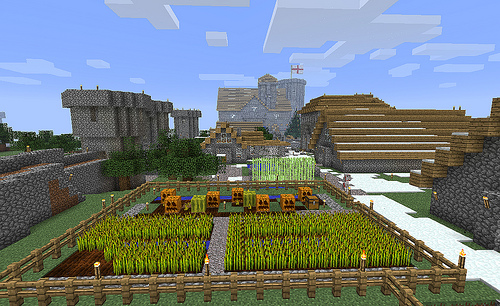 This is a hot topic with many of my teacher friends. Recently, I spent a wonderful hour chatting with efriend, Lindsey Hill (see her bio at the end) and found she had interesting ideas on game-based learning. I’ve been a fan of games in education since discovering Mission US (where students become actors in the American Revolution) and being schooled by students on the value of Minecraft. Lindsey shares my enthusiasm and took it a step further–facing head on the issues that are stopping teachers from using games in education. I think you’ll find her ideas fascinating:
Teachers have many hurdles to jump to begin using digital learning in their classrooms. One thing, among many, that we know about teachers is they don’t give up easily. As a veteran teacher of 14 years and current lead for reading engagement initiatives at Evanced Solutions, I’ve had numerous discussions with educators on best practices for today’s tech-savvy kids. They want to try game-based learning, but it has been stigmatized as “mindless” fun. Critics of game-based learning are unaware that the touchscreen taps, mouse clicks and joystick jiggles can help sharpen cognitive skills.
Integrating the right kinds of games in the classroom helps kids have fun while simultaneously engaging in the process. Yet, teachers are often criticized for pushing more screen time on today’s techno-obsessed children. That’s why I suggest this simple “A.P.E.” principle to help combat four common myths about the use of e-games in the classroom.
A: Authentic Integration
P: Purpose-Driven Usability
E: Engagement
Myth #1: Game-based learning does not meet Common Core State Standards and is difficult to assess.

Technology and Online Education Give Students Magical Possibilities
Sara Stringer has a great post that mixes the miracle of technologic tools–straight out of StarTrek (or Harry Potter) with the current trend toward online education. I took my first online class when I got my teaching credential–and now I’m teaching them. Sara brings up a few benefits I hadn’t even considered.
My students are from the Harry Potter generation; the kids who grew up with Harry and his adventures are now adults, after all. I like to tease them about how many of the items that seemed magical in Harry’s world now exist, thanks to technology.
Take the animated GIF. When “moving photographs” first appeared in J.K. Rowling’s wizarding world, they seemed magic. Now, they’re one of the most common forms of digital media, and every one of my students knows how to make them.
Or, if you prefer, the Marauder’s Map. Why did we think that a map showing us the real-time location of our family and friends was something that could only exist at Hogwarts?
We are in an unprecedented age of technology, when nearly anything we want to create can come true. Though none of my students are old enough to have seen Star Trek when it first aired, I like to tease them about how cell phones were originally designed to replicate Star Trek communicators. Now, we have phones that will let us video chat with people anywhere in the world. We have 3D printers that are replicating human liver cells. Anything is possible.

New Statistics Linking Music Education to Cognitive Development
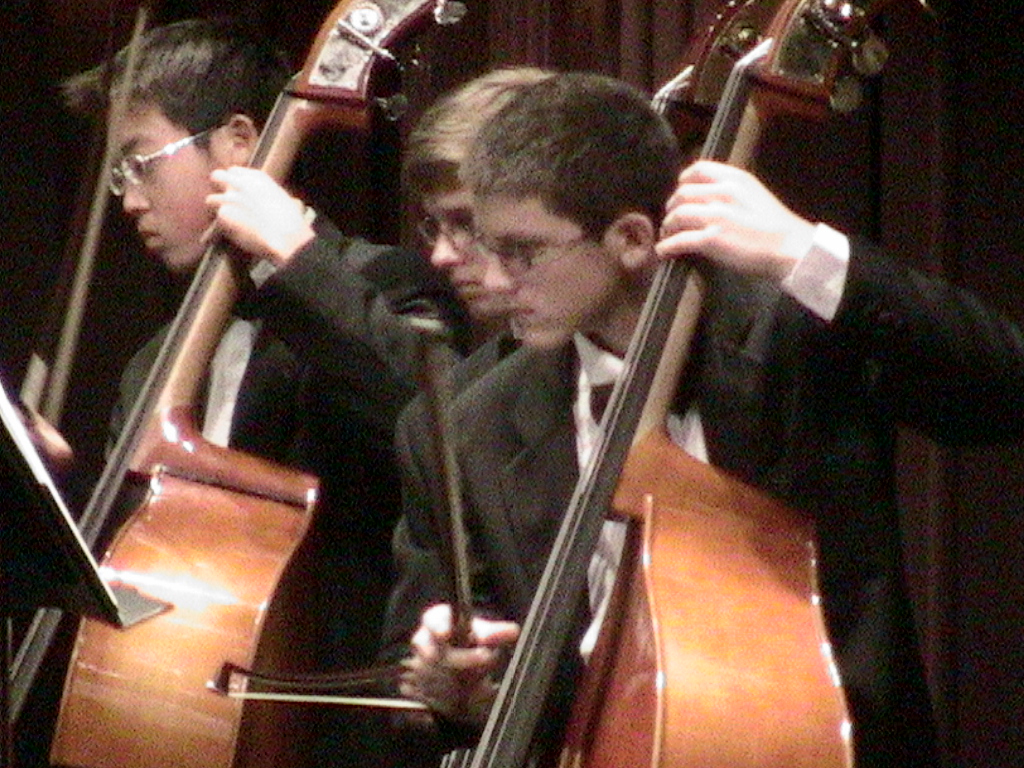 Cognitively, we all agree music, math and education are interwoven. Whether teacher or parent, stakeholders in the college- and career-readiness of students agree that understanding one begets success in the other. And still, in the real world of K-12 education administration, that relationship takes a back seat to politics and oxymorons (don’t get me started). Music programs always seem to be the first excised when budget cuts arrive. I have no idea what should go first, but it sure shouldn’t be music (anyone out there disagree–please share. I’d love to understand this phenonmena)
Here’s a guest post from Sara Stringer with proof and some solutions:
It’s long been accepted that music education helps students become more prepared for a lifetime of learning. New studies now show statistical evidence linking music lessons to measurable gains in focus, discipline, and critical thinking, meaning the connection between music and learning is now stronger than ever.
This year, for example, cognitive scientist Daniel Willingham presented the results of his research indicating that music literally helps children learn to read. Willingham’s study included a chart showing that music lessons “rhythmic skills training, tonal/melodic skills training and auditory discrimination of timbre and sound intensity” improved single word reading accuracy in 159 German first-graders. To test whether it was specifically the music education that was important, or if any arts education would bridge this gap, another group of German first-graders were given additional instruction in visual arts but not in music; their single word reading accuracy did not show the same gains. Willingham’s theory is that the rhythms involved in music help children more quickly understand similar rhythms in written and spoken language, which in turn helps to increase reading accuracy.

In My Opinion
 A Parent’s Perspective on education…
Parents do not always see things as we–the teacher–do. It is refreshing to have them voice their thoughts on prickly issues that are part and parcel to educating children.
Here’s Sara Stringer’s opinion. She is a former medical and surgical assistant who now does freelance business consulting. She enjoys blogging and helping others. In her spare time (translation: the time spent doing what’s most important), she enjoys soaking up the sunshine with her husband and two kids.
Instilling the Importance in Education
As adults we understand what is so important about going to school and doing the best we can. But sometimes kids just don’t see the point. Some of us are natural scholars and others have to be trained to be so. I have heard time and again that grades don’t count until high school anyway. This just isn’t true.
Sure colleges aren’t looking at what your child does in the 2nd grade, but it’s at a young age they will build the habits that they will carry with them the rest of their lives. Slacking in school is just not an option.
I am not saying that your child has to be the smartest or that learning disabilities aren’t real. The truth is we all have strengths and luckily we are more aware of this than we once were. But a child who has an extremely creative mind still has to learn math. As awful as it may sound, use the subjects they love as collateral for them to do the things that are harder for them.
But possibly what is most important is keeping it honest with your kids. If s/he loves the nurse at the doctors office because she helps and is really nice and your child wants to be like her when s/he grows up, explain the opportunities in healthcare. Let her know academically what that career requires and without doing well in school, s/he may not get to live that dream.