Category: Education reform

What is a Virtual HS?

Virtual high schools have become increasingly popular as technology has advanced and educational needs have evolved. Here is an overview of key data and trends associated with them:
Enrollment and Growth
- Enrollment Numbers: Virtual high schools have seen significant growth in enrollment. In the United States alone, millions of students are now taking at least one online course.
- Growth Rate: The growth rate for virtual school enrollments has been steady, with a marked increase during the COVID-19 pandemic, as traditional schools shifted to online formats.
Demographics
- Student Demographics: Virtual high schools serve a diverse range of students, including those who need flexible schedules, have health issues, are involved in professional sports or entertainment, or have experienced bullying in traditional schools.
- Geographic Reach: Students from urban, suburban, and rural areas are enrolling in virtual high schools, with significant growth in rural areas where access to advanced courses may be limited.

Academic Performance
- Performance Metrics: Studies show mixed results on academic performance in virtual high schools. Some students excel due to the flexibility and self-paced nature, while others may struggle without face-to-face interaction and structured environments.
- Standardized Test Scores: Virtual high schools often have varied results on standardized test scores compared to traditional schools, with some performing above and others below average.
Curriculum and Instruction

4 Critical Pieces of Every Lesson and How to Gamify Them–the video

Gamification of Education
This video is from a series I taught for school districts. It is now available for free, here on Ask a Tech Teacher:

–summarize with NoteGPT
Summary
Jacqui Murray discusses the integration of technology in K-8 education, focusing on gamification to enhance learning.
Highlights
- 🎮 Gamification enhances learning by incorporating game elements into education.
- 💻 Keyboarding skills are essential for students in a technology-driven world.
- 📚 Vocabulary building is crucial across all subjects for comprehension.
- 🌐 Digital citizenship teaches safe online practices for students.
- 🔍 Research skills promote inquiry and curiosity in students.
- 🏗️ Games like Minecraft and Sim City can teach complex subjects effectively.
- 📈 Engaging students through games can improve retention and understanding.
Key Insights
- 🎓 Gamification is a powerful tool that transforms traditional learning into interactive experiences, making education more appealing to students. This approach fosters engagement and motivation, which are essential for effective learning.
- ⌨️ Mastery of keyboarding is critical, as students will be tested on these skills. Teaching proper keyboarding habits at an early age helps ensure students can focus on content rather than mechanics, supporting their overall academic performance.
- 🔠 A strong vocabulary is foundational for academic success. By encouraging students to decode unfamiliar words in context, educators enhance comprehension and prepare them for standardized assessments.
- 🛡️ Digital citizenship education is essential as students navigate online environments. Teaching them about online safety and responsibility ensures they can engage positively and productively in digital spaces.
- 🔍 Encouraging research and inquiry through dedicated projects like Genius Hour fosters a sense of ownership in learning, allowing students to pursue their interests and develop critical thinking skills.
- ⚙️ Education-focused games must have narrative and character development to be effective. When students engage with games that require problem-solving and critical thinking, they learn necessary academic concepts in a fun way.
- 📊 Statistics show that a significant number of people engage with games regularly. Leveraging this interest in gaming can bridge the gap between entertainment and education, creating a dynamic learning environment that resonates with students.
This video is from a series I taught for school districts. It is now available for free, here on Ask a Tech Teacher. It includes videos on: (more…)

How to Teach Digital Citizenship in Kindergarten
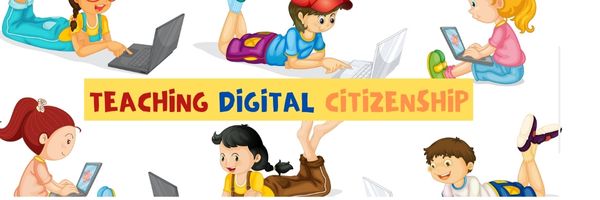
Understanding how to use the internet has become a cornerstone issue for students. No longer do they complete their research on projects solely in the library. Now, there is a vast landscape of resources available on the internet.
But with wealth of options comes responsibility for their use. As soon as children begin to visit the online world, they need the knowledge to do that safely, securely, responsibly. There are several great programs available to guide students through this process (Common Sense’s Digital Passport, Carnegie CyberAcademy, Netsmart Kids). I’ve collected them as resources and developed a path to follow that includes the best of everything.
Here’s Kindergarten–feel free to print this lesson. Use the lines in front of the steps to check off completed work:
Overview/Big Ideas
Students learn how to live in the digital world of internet websites, copy-righted images, and virtual friends who may be something different.
Essential Questions
- What is a ‘digital citizen’?
- How is being a citizen of the internet the same/different than my home town?
- What are the implications of digital citizenship in today’s world?
Objectives and Steps
The objectives of this lesson are:

Building Community in Virtual High Schools
In response to the challenges of COVID, a dissatisfaction with local in-person schools, and increasingly diverse needs of the high school student population, enrollment in US virtual schools is now over 300,000 with about 20% of students taking at least one online course. There are pros and cons of attending class via computer. You can learn on your own schedule, but what if you have connectivity issues? You have more independence in your learning, but what if the teacher isn’t inspirational?
One big issue among many is the importance of building community in virtual schools. The Ask a Tech Teacher team dug into this:

Building Community in Virtual High Schools
As educators, we often hear concerns about the lack of socialization in online learning environments. However, the reality of virtual high schools is far from the isolated, impersonal experience many imagine. In fact, with intentional effort and innovative approaches, an online high school can foster vibrant, supportive communities that rival those of traditional brick-and-mortar institutions.

The Importance of Community in Education
A sense of belonging enhances student engagement, improves academic performance, and supports mental health. In virtual settings, where students might otherwise feel disconnected, building community becomes even more critical.
Strategies for fostering student connection include: (more…)

Grade Assignments with PDF Tools
- Getting started
- Grading
- Providing feedback
- Saving and sharing

Grade Assignments with PDF Annotation Tools
As online learning and virtual classrooms gain popularity, educators are turning to new technologies to improve their teaching methods. This shift has led to a significant increase in digital grading tools, which help streamline the evaluation process and provide timely, valuable feedback to students, aiding their academic success.
A particularly useful technology in this realm is PDF annotation. This tool helps educators with text highlighting in order to leave feedback. It also allows them to strike through errors and add detailed notes directly on the student’s work. This eliminates the need for downloading and re-uploading assignments, enabling in-depth commentary.
In this blog post, we’ll explore the features of PDF annotation tools and their capabilities to transform assignment grading and student feedback. (more…)

How Digital Study Techniques Improve Exam Preparation

How Digital Study Techniques Improve Exam Preparation
Studying for exams can often feel like this huge, monumental task that causes not only stress but existential anxiety. But it doesn’t have to be this way – yes, the pressure is real, and yes, you may have an immensely demanding study schedule, but with the right tools and strategies, you can turn this daunting challenge into a manageable experience. Maybe even a rewarding one (yes, you read that right).
Here are some of the best digital study techniques that can make your study sessions more effective and help you ace all your exams.
Use Time-Management Tools
Let’s start with the basics: time management. To make sure your every study session is as productive as it can be, you need to learn to manage your time effectively. Meaning, when it’s time to study, you need to make every minute count.
Digital tools like calendar apps like Google Calendar or even Outlook, as well as task managers like Trello or Todoist, can help you organize your study schedule. Likewise, apps like Pomodoro can help you get more focused when studying by splitting your study sessions into 25-minute stretches of work and 5-minute breaks.

Invest in Quality Online Study Resources
There’s no reason to study like a monk – the internet is full of diverse study materials that cater to different learning styles, including yours. Websites like Khan Academy or Quizlet provide access to lectures, practice tests, and flashcards among other things.
For example, with Quizlet, you can create digital flashcards and practice tests tailored to your syllabus. If you’re preparing for a really demanding exam, like the bar exam, online resources like Quimbee offer everything you need to pass it.
Say you want to prepare effectively for the North Carolina bar test – they have multiple full-length practice MBEs and thousands of MBE practice questions, plus offer personalized feedback from an attorney for practice essays to help you succeed. Of course, all of the course material can be studied from your computer. (more…)

How to Help Students Run a Genius Bar
From the Ask a Tech Teacher team: ideas on a student-run genius bar:

How to Help Students Run a Genius Bar
Modeled after Apple’s popular tech support stations, a Genius Bar in a school setting is a student-run help desk where peers provide tech support, advice on digital tools, and assistance with various tech-related issues. Teachers play a crucial role in guiding students to run this service effectively, ensuring it becomes a valuable resource for the entire school community.
By providing the necessary support and structure, teachers can help students develop leadership, teamwork, and problem-solving skills through the Genius Bar. (more…)

AI has potential to upend student testing

AI has the potential to revolutionize education for better or worse–jury’s still out on that. No one denies it can make student testing more efficient, faster, possibly leading to better educational outcomes for all learners. Key positives:
- Tailor personalized learning paths
- Adapt testing to challenge students at their appropriate level of knowledge
- Provide instant feedback
- Reduce bias
- Analyze data quickly to find learning patterns and trends.
- Identify plagiarism or cheating
But there are drawbacks educators must watch for and may take time to resolve. Check out these concerns:
- Bias and fairness
- Privacy and data security
- Reliability and accuracy
- Dependency on technology
- Digital divide
- Loss of human connection
- Ethical considerations
Here’s a good article from The Hechinger Report that offers an overview of current thinking on how AI is likely to reshape student testing options:
AI has potential to upend student testing
As AI advances, student testing could become highly personalized and dynamic, offering scenarios like empathetic avatar interactions and adaptive questions. While experts acknowledge risks such as bias and access disparities, they foresee AI-driven assessments reshaping education by tailoring tests to individual needs and promoting deeper learning. (more…)

Key Digital Innovations for Today’s Education Professionals
6 Key trends in education to be looking at, from the Ask a Tech Teacher team:
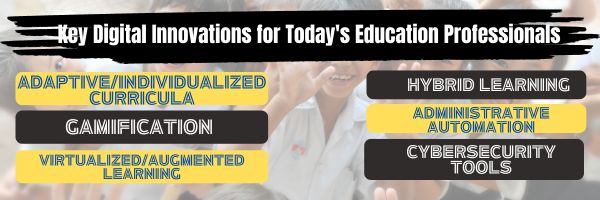
Key Digital Innovations for Today’s Education Professionals
The digital transformation is underway, and while its impact on society is undeniable, education is among the most disproportionately affected areas. It’s not just about ditching blackboards for tablets – education today is undergoing a paradigm shift in teaching methodologies.
It’s not far-fetched to claim that technology is reshaping the philosophical and practical underpinnings of education. This article brings an overview of key trends that are leading the charge. (more…)

Universal Design for Learning: What is it? Why use?
Education has come a long way since the focus on “reading, writing, ‘rithmetic”. In Ask a Tech Teacher posts, we’ve covered many teaching strategies:
- Behavior Learning Theory
- Depth of Knowledge (DoK)
- Flipped Classroom
- Frayer Model
- Growth Mindset
- Habits of Mind
- Mindfulness
- Orton-Gillingham
- Project-based Learning (PBL)
- Socratic Method
- Standards-based Grading
- Understanding By Design
- Unschool
- VARK model
- Visible Learning
- Whole Brain Teaching
Any of these might be perfect for your classroom. Today, we offer one more: Universal Design for Learning (UDL) (more…)