Author: Jacqui

Successful USNA Graduates
If you’re looking for a science background (everyone gets a BS), the US Naval Academy where everyone gets a BS is one of your best choices. Besides that, it includes a massive work load that must be done in a short amount of time (while holding down a part-time job–yes, you’re paid for the labor), the requirement to incorporate physical with mental calisthenics, a patriot’s approach to serving your countrypeople. The result often is a successful national leader. Specifically:
- 1 President of the United States
- 3 Cabinet Members
- 21 Ambassadors
- 32 Members of Congress
- 6 State Governors
- 10 Secretaries of the Navy
- 1 Secretary of the Air Force
- 5 Chairmen of the Joint Chiefs of Staff
- 4 Vice Chairmen of the Joint Chiefs of Staff
- 31 Chiefs of Naval Operations
- 9 Commandants of the Marine Corps
- 2 Nobel Prize Winners
- 72 Medal of Honor Recipients
- 56 NASA Astronauts
- 56 Rhodes Scholars
- 34 Marshall Scholars
- 4 Churchill Scholars
- 122 Olmsted Scholars
- 39 Fitzgerald Scholars
- 1 Beyer Scholar
- 43 White House Fellows
Who are some of these? (more…)

Tech Tip #152: Tips for the Inquiry-based Teacher

In these 169 tech-centric situations, you get an overview of the tech topics most important to your teaching as well as practical strategies to address most classroom tech situations, how to scaffold these to learning, and where they provide the subtext to daily tech-infused education.
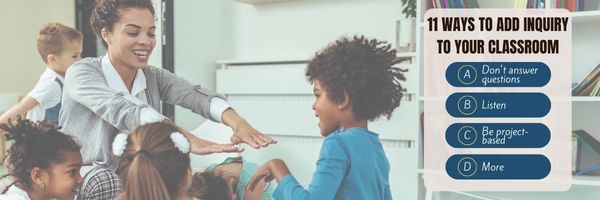
Today’s tip: Tips for the Inquiry-based Teacher
So how do you create the inquiry-based classroom? Here’s advice from a few of my e-friend teachers: (more…)

5 Favorite Activities to End the School Year
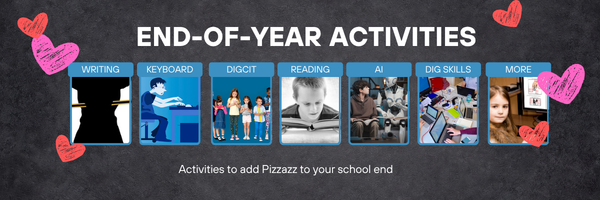
The end of the school year is a time when both students and teachers alike are distracted by thoughts of vacation, sleeping in, and no deadlines. For many, this means the last few weeks of school, learning limps to a grinding halt, but increasingly, teachers use this time to introduce curricular- and standards-aligned activities that “color outside the lines” — step away from the textbook to blend learning with dynamic activities that remind students why they want to be life-long learners. Many of these, educators would love to teach but “just don’t have time for“, even though they align well with broad goals of preparing students for college and career.
If you’re looking for meaningful lessons to wrap up your school year, here are my top picks:
- Digital Passport
- Cool book reports
- Practice keyboarding
- Dig into cyberbullying
- Applied Digital Skills
Digital Passport
Common Sense Media’s award-winning Digital Passport is the gold-standard in teaching digital citizenship to grades 3-5 (or Middle School). This free-to-schools online program mixes videos, games, quizzes, and the challenge of earning badges to teach students the concepts behind digital citizenship:
- Communication
- Privacy
- Cyber-bullying
- How to search
- Plagiarism
It includes certificates of achievement, badges at the completion of units, and a classroom tracking poster to show how students are progressing.

How Collaborative School Projects Build Stronger Campus Communities
As you prepare to regenerate for the next school year, Ask a Tech Teacher contributor, Jenny Wise, has some ideas on strengthening your school community with collaborative projects. Jenny is a homeschooling mom of four children, including her youngest daughter, Anna, who is on the autism spectrum. She and her husband chose to begin home-educating when their oldest was just four years old, embarking on a journey filled with both challenges and meaningful rewards. Along the way, Jenny has navigated the complexities of raising a growing family, supporting her children through life’s difficulties—including the recent loss of her father—and finding strength through faith, resilience, and connection.
Through her platform, Special Home Educator, Jenny shares her family’s homeschooling experiences, offering practical advice, encouragement, and resources for parents considering or navigating homeschooling, especially those raising children with special needs. Her mission is to support and inspire other families by honestly sharing the ups and downs of creating a personalized education at home.”

How Collaborative School Projects Build Stronger Campus Communities
K–12 educators working to integrate technology often face a tough mix of social challenges in schools and uneven digital habits that can quietly weaken day-to-day connection. When engagement slips, classroom tech can feel like another management problem, and student-staff relationships can become transactional instead of trusting. Collaborative school projects offer a practical way to bring students and adults back into shared purpose, giving learning a visible, collective reason to matter. Done well, these experiences strengthen educational engagement and set the conditions for lasting campus community building. (more…)

National Personal Finance Challenge

The National Personal Finance Challenge
The National Personal Finance Challenge (NPFC) is an annual nationwide competition for high school students focused on building and demonstrating practical personal finance knowledge. It’s organized by the Council for Economic Education (CEE), in partnership with the Voya Foundation and state councils for economic education. The goal is to help students learn key personal finance concepts such as:
- Earning income
- Spending and saving
- Investing
- Managing credit
- Managing risk (insurance, etc.)
It’s widely considered the premier personal finance competition for U.S. high schoolers. Many states have their own qualifying events that feed into the national challenge. For more info or to register a team, check the official site at councilforeconed.org or the registration portal at financechallenge.unl.edu.


Teacher-Authors: What’s Happening on my Writer’s Blog

A lot of teacher-authors read both Ask a Tech Teacher and my writer’s blog, WordDreams. In this monthly column, I share a popular post from the past month:

National Tell A Story Day
National Tell A Story Day is celebrated every year on April 27th. This day is dedicated to the art of storytelling and encourages people to share their stories and connect with others through the power of narrative. This can involve reading a book, listening to a podcast or audiobook, watching a movie or TV show with a great story, or even just having a conversation with someone and sharing personal stories. (more…)

Dear Otto: How do I grade technology in my school?
Dear Otto is an occasional column where I answer questions from readers about teaching tech. If you have a question, please add a comment below and I’ll answer it here. For your privacy, I use only first names.
Here’s a great question I got from Barbara, a principal at a local school:
Dear Otto,
May I ask your thoughts on giving grades in Computer Class? I can’t find research on this topic.
..
Anecdotally, grading tech classes is all over the board–whether teachers grade or not, and if they do–how. The short answer to this question is: It depends upon your expectations. If it’s fully integrated into the classroom, treated more as a tool than a ‘special’ class (some call them ‘exploratories’, akin to PE, Spanish, music), then you probably want to hold it rigorously to the grading scale used in the classroom. The projects created will be evidence of learning, more like summative (or formative) assessments of academic work than tech skills.

Building Healthier Learning Environments for Diverse Student Needs
This is always a difficult topic in education–how to serve the many varied needs of students. We’ve talked about it often in the past (check out articles here and here). The Ask a Tech Teacher team has a few more ideas for you:
Building Healthier Learning Environments for Diverse Student Needs
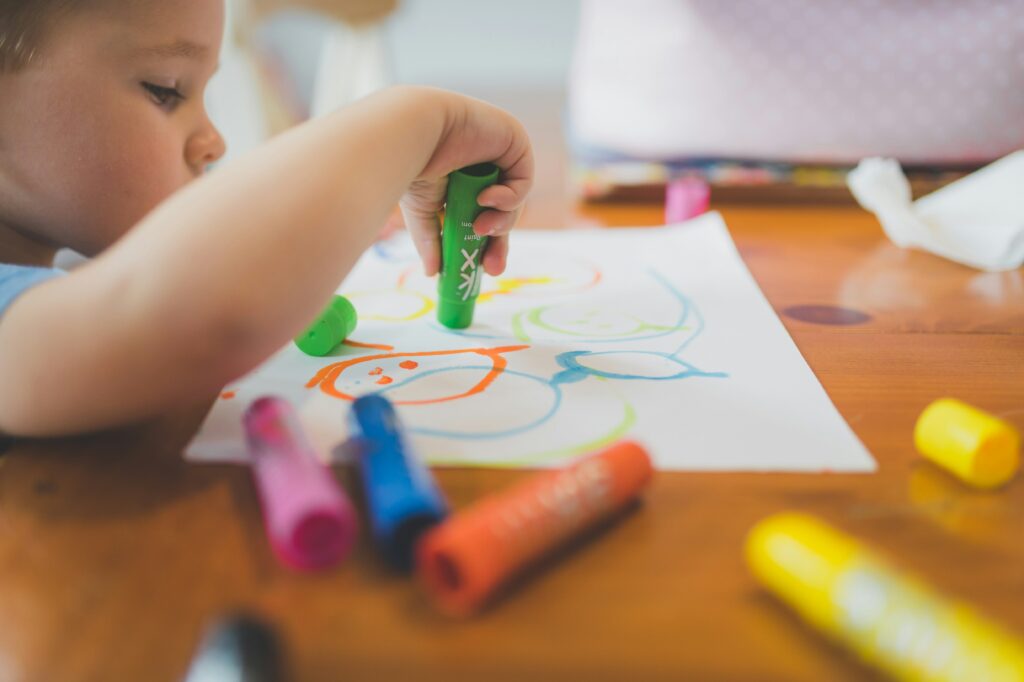
Photo by Stephen Andrews on Unsplash
Every student walks into a classroom carrying a different story. Some learn best through visuals, others through conversation, and others through hands-on activities that let them move and explore. When schools recognize this reality and design spaces around it, something shifts. Students feel seen, engagement rises, and the whole environment becomes a place where growth actually happens.
Building healthier learning environments is not about a single policy or a trendy new framework. It is about a sustained commitment to understanding what different learners need and then making thoughtful, practical changes to meet those needs. (more…)

Simple Ways Teachers Can Integrate AI Ethically in the Classroom
No topic is more discussed in today’s education meetings than the impact of Artificial Intelligence–AI–on teaching and learning. Guest contributor to Ask a Tech Teacher, Tess Dodson, has fresh ideas on how to incorporate AI into your classroom in ways that are moral and principled:

Simple Ways Teachers Can Integrate AI Ethically in the Classroom
Artificial intelligence (AI) is already shaping modern education. From generating lesson ideas to helping students brainstorm essays, AI in the classroom is becoming increasingly common. For educators, this shift presents both exciting opportunities and important responsibilities. Teachers need a thoughtful approach and practical strategies to ethically integrate AI into everyday teaching.
Create Clear Guidelines for AI Use
Students are already using AI, and it is here to stay. A survey of more than 1,100 U.S. students found that 90% have used AI-driven tools in academic settings. As such, it is vital that the first step in using AI in the classroom is setting clear expectations. Students are already experimenting with AI tools, but they may not fully understand when or how to use them appropriately. Without guidance, misuse — intentional or not — becomes more likely.
Teachers should create a simple classroom policy around AI. It can include clear rules on when AI use is allowed for assignments and how students should acknowledge or cite AI use. For example, a teacher might allow AI for information gathering but not for generating final answers. Students may also be required to include a short explanation of how the tool was used.

Strengthen Academic Integrity in an AI-Enabled Classroom
One of the main challenges of using AI in education is the concern that students may use these tools to plagiarize or cheat academically. With tools that can instantly generate essays and solve problems, it has become easier for students to submit work that is not their own. As such, teaching practices must adapt.
Teachers can take a proactive approach by clearly defining what constitutes original work. Instead of banning AI outright, educators can guide students on acceptable use. For example, AI might be allowed for outlining ideas or checking grammar, but not for producing complete work. Another effective strategy is requiring students to document their process by providing draft submissions that show revisions over time and reflection paragraphs explaining how they completed the task. (more…)

Subscriber Special: Double the Discount for Newsletter sign up

Every month, subscribers to our newsletter get a free/discounted resource to help their tech teaching.