
Author: Jacqui

Jacqui Murray has been teaching K-18 technology for 30 years. She is the editor/author of over a hundred tech ed resources including a K-12 technology curriculum, K-8 keyboard curriculum, K-8 Digital Citizenship curriculum. She is an adjunct professor in tech ed, Master Teacher, an Amazon Vine Voice, freelance journalist on tech ed topics, contributor to NEA Today, and author of the tech thrillers, To Hunt a Sub and Twenty-four Days. You can find her resources at Structured Learning.

Tech Tip #62: Email from Word (Or PowerPoint or Excel)

As a working technology teacher, I get hundreds of questions from parents about their home computers, how to do stuff, how to solve problems. I’ll share these with you. They’re always brief and focused. Enjoy!

I was helping one of the faculty at my school. She couldn’t print a document (server problems) so I suggested she email it to herself at home and print it there. She started going online to her Yahoo account and I stopped her. Click the email tool on the Word toolbar. She was so excited–an epiphany! What fun to share that with her. She was so happy about it, I’m going to email it to all the teachers in the school (I’m the tech teacher). (more…)

8 Secrets for Getting into USNA (or a Service Academy)


snowgonavyThe greatest accolade given the Naval Academy was by the North Vietnamese commander Major Bui to captured John Sidney McCain III, USNA class of ’58 when he said, “They have taught you too well, McCain! They have taught you too well.”
You don’t have to be a third generation applicant, son and grandson of a four-star Admiral and future presidential nominee to be one of the 10% of applicants who lands a coveted spot in the Naval Academy, but you do need a plan. That’s the first secret. Plan. Here are eight more:

  1. Compare yourself against the bare bones requirements here. Is that you? Now check the ‘average student’  here. Still in the running? Even if it’s not you right now, could it be in four years? If so, you’re half way there.
  2. Know this is where you want to go. Research your options. A good checklist for comparing schools is available in the book, or create your own. Just do it so when you’ve made a decision, you know it’s right.
  3. Look at the long To Do list and understand they must be done. It includes not just becoming physically/mentally fit, but getting a Congressional nomination, passing a physical examination, working with the Blue and Gold officer, filling out piles of forms, possibly attending several sessions at the Academy to be sure you’re right. Accept that. It may interfere with other High School duties, but that’s the Academy way. They want to see how many balls you can juggle at once and still come out with applause. It’s doable and you can be that person. There’s a checklist in the workbook I used (Building a Midshipman) that makes it easy to complete everything, but be ready: It’s quite long.
  4. Make a resume. Yes, you’re young, but if you don’t start it now, you’ll forget that when you were in eighth grade, you won the Science Fair, and when you were a freshman, you were the #1 violinist at the area orchestra competition. There’s a sample in the book that can help you.
  5. Are you a mix of physical/mental/verbal? You don’t have to be the best in any one category, but a Navy Officer requires all three. You have to be physically fit, mentally sharp and able to communicate your thoughts and ideas. Some schools just want one or two. The Navy challenge: You must have all three.
  6. Keep trying. The Naval Academy values people who follow through even when they’re failing, even when there isn’t enough time (think about preparing for Pearl Harbor–did they have as much time as they needed), especially if it means working under pressure (like every battle America has ever been in). That ability to work through problems and stress is as important as the 4.0 and ASB President that Ivy Leagues want.
  7. Follow through. Once you’re in the application stage, send the information the Admissions Office requests, then follow through to be sure it got there. They have a handy update feature you can check or use the one in the workbook. Your goal is to be sure they think you’re in the same spot you think you are.
  8. Start now.

The biggest secret: Believe you can do it. Anything you can believe and conceive, you can achieve. Set your GPS to ‘USNA’ and get going. (more…)

Tech Tip #47: Tool Tips

As a working technology teacher, I get hundreds of questions from parents about their home computers, how to do stuff, how to solve problems. Each Tuesday, I’ll share one of those with you. They’re always brief and always focused. Enjoy!

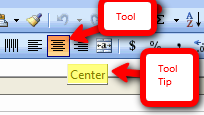
This week’s tip: I’m supposed to find a tool on the toolbar, but there are so many and I have no idea what they are for? It’s just as bunch of pictures to me. Is there an easy way to figure this out?

A: To figure out what a tool does on the toolbar, hover your mouse over the tool (place the mouse above it without clicking). A tool tip will appear with a clue as to what it’s for.

This works in any program with a toolbar or ribbon–MS Office, the internet, Photoshop, and more.

If you’d like to add screentips (tips that appear when you hover over a word in a document), check out this video:

(more…)

April is Financial Literacy Month

Financial Literacy Month is recognized annually in Canada in November, and the United States in April. It’s purpose: to teach how to establish and maintain healthy financial habits.

When kids read America’s almost $40 trillion debt (update by clicking image):

is ‘business as usual’ for many, I wonder how that news will affect their children. Do they understand the consequences of unbalanced budgets? The quandary of infinite wants vs. finite dollars? Or do they think money grows on some fiscal tree that always blooms? The good news is: Half the nation’s schools require a financial literacy course. The bad new is: Only half require a financial literacy course.

If your school doesn’t teach personal economics but would like to, there are many online sites that address the topic as mini-lessons. Some are narrative; others games. Here are some I like. See if one suits you (check here for updates on links):

  1. BizKids–games to teach business and finance
  2. Cash Crunch–games for youngers and olders (HS and college)
  3. Financial Literacy Games for Students
  4. Financial Literacy Quizzes–in a variety of financial topics for high schoolers
  5. General Financial Literacy Course
  6. Living Wage–what’s it cost to survive–by state, cities, counties
  7. Personal Finance for MS
  8. Personal Finance Lab–stock market game
  9. Practical Money Skills
  10. Spent
  11. Stock Market Game

Curriculum

  1. Banzai
  2. Budget Challenge
  3. EverFi–course in financial literacy for high schoolers
  4. Financial Literacy for High School Students–a course
  5. General Financial Literacy Course–an online course in meeting financial literacy needs
  6. Next Gen Personal Finance

Copyright ©2026 askatechteacher.com – All rights reserved.

Here’s the sign-up link if the image above doesn’t work:

https://forms.aweber.com/form/07/1910174607.htm

“The content presented in this blog are the result of creative imagination and not intended for use, reproduction, or incorporation into any artificial intelligence training or machine learning systems without prior written consent from the author.”


Jacqui Murray has been teaching K-18 technology for 30 years. She is the editor/author of over a hundred tech ed resources including a K-12 technology curriculum, K-8 keyboard curriculum, K-8 Digital Citizenship curriculum. She is an adjunct professor in tech ed, Master Teacher, freelance journalist on tech ed topics, and author of the tech thrillers, To Hunt a Sub and Twenty-four Days. You can find her resources at Structured Learning.

Teacher-Authors: What’s Happening on my Writer’s Blog

A lot of teacher-authors read both my Ask a Tech Teacher education blog and my writer’s blog, WordDreams. In this monthly column, I share a popular post from the past month: 

Casey, my beautiful, beloved Labrador is finally four, out of the Terrible Twos and the Threatening Threes. He’s our fourth lab, and by far our most problematic. Here’s what I mean:

At two, he was diagnosed with elbow dysplasia which is like hip dysplasia but in the arms. That requires ongoing treatment which should be mild until he’s older. Then, we’ll see.

[caption id="attachment_38561" align="aligncenter" width="300"] Elbow dysplasia under control–for the moment[/caption]

At three, he developed broken ACLs in both legs. This required four surgeries, big metal plates in both legs, bone grafts in the left, a special diet, a panoply of medications (to treat that and related symptoms), and a whole lot of personalized help with every part of Casey’s day. (more…)

How Teachers and Parents Can Work Together to Support Student Well-Being

One lesson I’ve learned in my long teaching career is that students benefit when teachers and parents work together. They achieve more, get better grades, and experience greater success upon graduation. Not only that, their behavior overall is better, their attendance more reliable, their self-esteem higher, and their social skills soar.

That’s a lot to take in. The Ask a Tech Teacher team breaks this down into bite sized goals:

How Teachers and Parents Can Work Together to Support Student Well-Being

Student well-being is not shaped by one person alone. It grows through daily support, small conversations, and the feeling that the adults in a child’s life are paying attention. When teachers and parents work together, students are more likely to feel understood, supported, and safe. That matters not only for emotional health, but also for learning. The CDC notes that students who feel connected at school are less likely to face certain mental health risks, and that sense of connection can have lasting effects on health and well-being.

It helps to remember that student well-being is not just about preventing crises. It is also about helping children feel steady enough to learn, ask questions, recover from setbacks, and build confidence over time. Some students show stress openly. Others do not. A student may still be getting good grades and quietly feel overwhelmed. That is why strong communication between home and school matters so much. (more…)

Why School Counseling Is Essential in Modern Education Systems

Ask a Tech Teacher discussed school counselors a few years ago–their importance in a student’s career-college choices, how the profession has changed over the years, and more. Their seminal place in the life of students preparing to leave school for their future is more important than ever.

Why School Counseling Is Essential in Modern Education Systems

Modern education systems face constant pressure to support academic success, emotional well-being, and social development at the same time. Students deal with stress, identity challenges, peer pressure, and digital distractions every day. Schools cannot rely only on teachers to handle these complex needs. School counseling fills that gap with structured guidance and personal support. Counselors help students build confidence, manage emotions, and make informed decisions about their future. Strong counseling programs improve school culture and student outcomes. A well-supported student performs better in class and handles challenges with resilience. That reality makes school counseling an essential part of modern education systems.

1. Addressing Emotional and Mental Health Needs

Students today experience rising levels of anxiety, stress, and emotional pressure. School counselors step in to provide direct support through conversations, coping strategies, and structured interventions. They help students understand emotions and respond in healthy ways. This support prevents small struggles from turning into serious issues. Counselors also create safe spaces where students feel heard and respected. When students trust someone in school, they open up more easily. That trust improves emotional stability and focus in class. Strong mental health support leads to better academic performance and fewer behavioral problems. Schools benefit when students feel balanced and supported. (more…)

What to Expect When Studying for Christian Ministry

Those interested in a life of Christian ministry must be prepared to:

  • build a godly character
  • serve faithfully
  • be patient and accountable
  • pursue training.

If this seems like the right path for your college-career goals, here are suggestions from the Ask a Tech Teacher team for what you can expect:

What to Expect When Studying for Christian Ministry

Studying for Christian ministry shapes both the mind and the heart. It calls for discipline, reflection, and a willingness to grow in faith while serving others. Many enter this path with passion, yet the journey demands more than enthusiasm. It requires steady commitment, intellectual curiosity, and emotional maturity. Coursework stretches thinking, while real-life ministry experiences challenge comfort zones. Growth happens through study, prayer, and community engagement. Expectations should remain realistic, since the process takes time and effort. A clear understanding of what lies ahead helps students stay grounded, focused, and ready to embrace both the challenges and the rewards of ministry training.

1. Academic Rigor and Theological Depth

Students often expect spiritual discussions, but the academic intensity surprises many. Courses require critical reading, structured writing, and deep analysis of biblical texts. Professors expect engagement with historical context, language nuances, and theological debates. Assignments push students to form well-supported arguments rather than simple reflections. Time management becomes essential, since reading loads grow quickly. Students must balance intellectual growth with spiritual insight. This combination creates a demanding yet rewarding environment. Consistent effort builds confidence and sharpens understanding. Those who stay disciplined find that their knowledge expands in meaningful ways that support long-term ministry goals and practical leadership. (more…)

I’m Traveling with my Kids March 17-April 13

I’m off to visit my two military children and then my sister. My son is returning from overseas to his next duty station (which I won’t yet mention) while my daughter does what she can to keep the world safe.  After time with them, I’ll go see my sister in rural Marion, Indiana for a recentering and needed family time. As a result, I won’t be around much–a bit, but forgive me if I seem to be ignoring everyone! 

See you-all in a few weeks!

–Comments are closed because I may be on a plane!