Category: Teacher-author

Teacher-Authors: What’s Happening on my Writer’s Blog

A lot of teacher-authors read both my Ask a Tech Teacher education blog and this blog, WordDreams. In this monthly column, I share a popular post from the past month:

National Dog Day is observed and celebrated on the 26th of August every year. In some parts of the world, it is also called International Dog Day. The day celebrates dogs of all kinds and encourages fostering love and kindness through ownership and adoption, regardless of breed. Having a dog is much more than just having a pet. There are many dogs out there who need saving, who need a home to be loved and cared for. National Dog Day serves as a reminder that dogs have every right to live a loving, abuse-free life.
I’m always on the hunt for good books with dogs as the stars. Here are a few I found recently: (more…)
Teacher-Authors: What’s Happening on my Writer’s Blog
A lot of teacher-authors read both my Ask a Tech Teacher education blog and my writer’s blog, WordDreams. In this monthly column, I share a popular post from the past month:
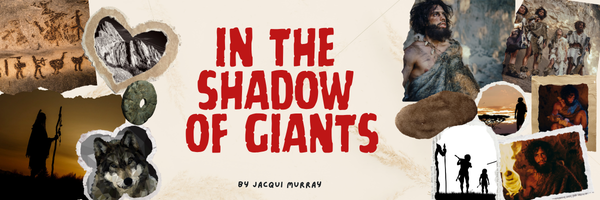
My last trilogy–Savage Land–dealt with a time 75,000 years ago when Neanderthals survived a natural disaster that should have wiped them off the planet. They found safe places around the planet, one of which was Gibraltar where Savage Land concentrates.
My next trilogy–In the Shadow of Giants–addresses their disappearance, when they became so few in number they could no longer sustain themselves as a species. Each book will deal with one way they attempted to cope with that inevitable end, when they were forced to find their future in the shadow of much more powerful human species. (more…)
Teacher-Authors: What’s Happening on my Writer’s Blog
A lot of teacher-authors read both my Ask a Tech Teacher education blog and my writer’s blog, WordDreams blog. In this monthly column, I share a popular post from the past month:

Perception is greater than reality. Give the impression to anyone paying attention that you are intellectual, even before you’re old enough to be one, and it becomes their reality about you. How do you do this if all you’ve got is a brief conversation?
Read the classics. I don’t mean Euripides or Voltaire, well, not only them. I mean the books that people quote, talk about, bring up in educated conversations and assume you have read. Here’s a starter list, compiled by teacher’s across the country: (more…)
Teacher-Authors: What’s Happening on my Writer’s Blog
A lot of teacher-authors read both Ask a Tech Teacher and my writer’s blog, WordDreams. In this monthly column, I share a popular post from the past month:

National Tell A Story Day
National Tell A Story Day is celebrated every year on April 27th. This day is dedicated to the art of storytelling and encourages people to share their stories and connect with others through the power of narrative. This can involve reading a book, listening to a podcast or audiobook, watching a movie or TV show with a great story, or even just having a conversation with someone and sharing personal stories. (more…)
Teacher-Authors: What’s Happening on my Writer’s Blog
A lot of teacher-authors read both my Ask a Tech Teacher education blog and my writer’s blog, WordDreams. In this monthly column, I share a popular post from the past month:

Casey, my beautiful, beloved Labrador is finally four, out of the Terrible Twos and the Threatening Threes. He’s our fourth lab, and by far our most problematic. Here’s what I mean:
At two, he was diagnosed with elbow dysplasia which is like hip dysplasia but in the arms. That requires ongoing treatment which should be mild until he’s older. Then, we’ll see.
[caption id="attachment_38561" align="aligncenter" width="300"] Elbow dysplasia under control–for the moment[/caption]
At three, he developed broken ACLs in both legs. This required four surgeries, big metal plates in both legs, bone grafts in the left, a special diet, a panoply of medications (to treat that and related symptoms), and a whole lot of personalized help with every part of Casey’s day. (more…)
Teacher-Authors: What’s Happening on my Writer’s Blog
A lot of teacher-authors read both my Ask a Tech Teacher education blog and my writer’s blog, WordDreams. In this monthly column, I share a popular post from the past month:

Last year I posted about National Love Your Pet Day and was quickly reminded I’d set my lens too narrow. Good efriend, Anneli Purchase (and editor of my books), came up with the right name for future posts:
National Animals-of-All-Sorts Day
To celebrate today, here’s my dog, Casey. Feel free to attach links to your beautiful animals-of-all-sorts in the comments so we can visit!
[gallery type="rectangular" size="medium" ids="75128,75130,75125,75131,75126,75127,75129,75132"]
Teacher-Authors: What’s Happening on my Writer’s Blog
A lot of teacher-authors read both my Ask a Tech Teacher education blog and my writer’s blog, WordDreams. In this monthly column, I share a popular post from the past month:


-
-
Storytimes with special guests or themes.
-
Craft workshops.
-
Scavenger hunts within the library to familiarize children with the layout and resources.
-
Book giveaways or special library card sign-ups for children.
-
Interactive sessions with authors or illustrators.
-
Educational programs about various subjects like science, art, or history.
-
-
-
It encourages reading for pleasure, which can lead to improved literacy skills.
-
It introduces children to the library environment, fostering a lifelong love for learning.
-
It provides a community space for families to engage together in activities outside of home or school.
-
It exposes kids to technology and other educational tools available at libraries.
-

Copyright ©2026 askatechteacher.com – All rights reserved.

Here’s the sign-up link if the image above doesn’t work:
https://forms.aweber.com/form/07/1910174607.htm
“The content presented in this blog are the result of creative imagination and not intended for use, reproduction, or incorporation into any artificial intelligence training or machine learning systems without prior written consent from the author.”
Jacqui Murray has been teaching K-18 technology for 30 years. She is the editor/author of over a hundred tech ed resources including a K-12 technology curriculum, K-8 keyboard curriculum, K-8 Digital Citizenship curriculum. She is an adjunct professor in tech ed, Master Teacher, webmaster for four blogs, CSTA presentation reviewer, freelance journalist on tech ed topics, contributor to NEA Today, and author of the tech thrillers, To Hunt a Sub and Twenty-four Days. You can find her resources at Structured Learning.
Teacher-Authors: What’s Happening on my Writer’s Blog
A lot of teacher-authors read both my Ask a Tech Teacher education blog and my writer’s blog, WordDreams. In this monthly column, I share a popular post from the past month:

January 1st is Public Domain Day! This is an observance of when copyrights expire and works enter into the public domain–free for all to use. According to Public Domain Review, here are some of the newly available artistic works you might like a/o January 1, 2026:

The picture above is interactive on the website. If you click it, you enter Public Domain Review’s website and can then explore each of these new sources of inspiration, free to use.
A few recently released that caught my attention:


Here’s the sign-up link if the image above doesn’t work:
https://forms.aweber.com/form/07/1910174607.htm
“The content presented in this blog are the result of creative imagination and not intended for use, reproduction, or incorporation into any artificial intelligence training or machine learning systems without prior written consent from the author.”
Jacqui Murray has been teaching K-18 technology for 30 years. She is the editor/author of over a hundred tech ed resources including a K-12 technology curriculum, K-8 keyboard curriculum, K-8 Digital Citizenship curriculum. She is an adjunct professor in tech ed, Master Teacher, freelance journalist on tech ed topics, and author of the tech thrillers, To Hunt a Sub and Twenty-four Days. You can find her resources at Structured Learning.

Teacher-Authors: What’s Happening on my Writer’s Blog
A lot of teacher-authors read my WordDreams blog. In this monthly column, I share a popular post from the past month:

This post is for Alex Cavanaugh’s Insecure Writers Support Group (click the link for details on what that means and how to join. You will also find a list of bloggers signed up to the challenge that are worth checking out. The first Wednesday of every month, we all post our thoughts, fears or words of encouragement for fellow writers.
This month’s question — What are your thoughts on using AI, such as GPChat, Raptor, and others with your writing? Would you use it for research, storybible, or creating outlines\beats?
I use AI sparingly, mostly because it pops up in something else I’m doing. For example, I use AutoCrit to review my manuscripts as I finish up. AutoCrit will do an AI summary of the book, the chapter, give story ideas (plot threads that need work or can be carried over into sequels), marketing ideas, and more. I found them useful albeit vanilla. To activate them effectively requires a personal touch and voice only the author can add.
I use Grok to provide ideas on what something I’ve never experienced before looks/feels like. Grok adds lots of sensory detail I didn’t expect and provides sources I can click through to for more.
[gallery type="square" columns="2" size="medium" ids="73753,73754"]I’m looking forward to reading other ideas, see what I’m missing.
For more on what others shared on this topic, click through to Alex Cavanaugh’s website. (more…)
Teacher-Authors: What’s Happening on my Writer’s Blog
A lot of teacher-authors read my writers blog. In this monthly column, I share a popular post from the past month:

There are many unethical practices (much to my dismay), but one caught my attention recently. Wiley, a 217-year-old scientific publisher–arguably the gold standard for scientific researchers and one I’ve submitted to–retracted more than 11,300 compromised articles and closed 19 scientific journal because of fraudulent data and materials. They did this because leaving such false research out in the world as legitimate under cover of the well-respected Wiley name threatened not only their legitimacy but the nearly $30 billion academic publishing industry.
Delving into Wiley’s problem unearthed many causes. One all agreed was a critical culprit was fake scientific papers from so-called “Paper Mills”, companies scientists use to appear reputable. Why is this so important? Money for one, but also a University requirement that their professors “publish or perish”.
When neuropsychologist Bernhard Sabel put his new fake-paper detector to work, he was “shocked” by what it found. After screening some 5000 papers, he estimates up to 34% of neuroscience papers published in 2020 were likely made up or plagiarized; in medicine, the figure was 24%. Science.org 2023
I’m not sure when it happened, but today, the questionable ethics of scientific publications has become “too big to ignore”. In fact, there’s an entire website devoted to tracking this. Check out Retraction Watch if you’re interested or just feeling too positive some day.
In this increasingly politicized world where everything comes down to “he said/she said”, I used to rely on science as my true north. I guess that changed.