Year: 2025

Tech Tip #88: Use Shortkeys with Students

In these 169 tech-centric situations, you get an overview of pedagogy—the tech topics most important to your teaching—as well as practical strategies to address most classroom tech situations, how to scaffold these to learning, and where they provide the subtext to daily tech-infused education.
TODAY’S TIP
Q: When tech gets difficult, my students stop trying. What do I do?
A: After well over a decade of teaching K-12, I know kids will try harder if it’s fun. The challenge for us teachers: How to make a multi-step skill that they may rarely use ‘fun’.
The answer is keyboard shortcuts–aka shortkeys. My students love them. I start in kindergarten with easy ones–like Alt+F4 to exit a program–and build each year. Throw in a few quirky ones and you’ve won their hearts and minds. Here’s a starter list:

Sign up for a new tip each week or buy the entire 169 Real-world Ways to Put Tech into Your Classroom.
What’s your favorite tech tip in your classroom? Share it in the comments below.

Photoshop Skills–Custom Shapes
 The program that says ‘pro’ more than any other is Adobe Photoshop. Believe it or not, there are a whole list of skills easy enough for a fifth grader (maybe even fourth, but I haven’t had time to test it on them yet).
Here are the basic skills fifth graders can learn in Photoshop if you’ve prepared them with basic computer skills. I’ve provided links but they aren’t live until publication:
- Photoshop artwork–already live
- Photoshop actions–already live
- Photoshop basics
- Photoshop filter and rendering tools
- Photoshop starters–auto-correct with the auto-correction tools–those quick fixes that make a photo look cleaner (coming up)
- Photoshop crop tool–with the lasso and the magic wand
- Photoshop clone tool– within a picture and to another picture
- Photoshop–change the background (put yourself in front of the Eiffel Tower or on top of Hoover Dam)
- Photoshop tools–add custom shapes
- Photoshop–start with Word (a little dated but still useful)
Get started
Custom shapes are great fun in Photoshop, and one of the simplest skills to learn. (more…)

What You Might Have Missed in June–What’s up in July

Here are the most-read posts for the month:
- #4: Photoshop for Fifth Graders: The First Step is Word
- World Environment Day: Living Responsibly with Nature
- Online Summer Educational Activities
- How to Inspire High School Students to Pursue a Career in Software Engineering
- June is Internet Safety Month
- K-8 Digital Citizenship Curriculum
- Need Summer Activities? Try These
- 7 tips for Netiquette
- Preparing for the College Interview
- Tech Ed Resources–K-12 Tech Curriculum

Here’s a preview of what’s coming up (we slow down in summer so you find less articles): (more…)

We Honor July 4th in America

Like every year, I exuberantly celebrate America’s birthday. I’d say times are tough here in the US, but that seems to be true everywhere in the world. So, I won’t complain. I will enjoy the love of America as all of my international friends love their homeland.
[youtube https://www.youtube.com/watch?v=Ke4gRMowvQg]
This one–Chris Stapleton–10 Million views since Super Bowl 2023:
[youtube https://www.youtube.com/watch?v=tcs6HLKz_aQ][youtube https://www.youtube.com/watch?v=k4OsP4BsATw]
[youtube https://www.youtube.com/watch?v=p4kJ9sMDhaY]
[youtube https://www.youtube.com/watch?v=_ds3MvMUdNk]

Subscriber Special: Free Hour of Code bundle

Every month, subscribers to our newsletter get a free/discounted resource to help their tech teaching.
July 2-5th
Buy the K-8 curriculum; get the 59-page Hour of Code bundle for $.99
Perfect if you’re doing Hour of Code to teach coding, programming, and problem solving to your K8 students. Here’s what you do:
- buy the K-12 Tech Curriculum, the K-8 curriculum, the K-8 student workbooks, or the K-5 Curriculum (on the curriculum page)
- once it’s in your basket, add the Hour of Code bundle. It’ll show up in your basket for $.99 instead of $.9.99
What’s in the Hour of Code bundle?
 30 K-8 coding activities, organized by grade
138 images
aligned with ISTE and Common Core
lots of options to differentiate for student needs
Questions? Ask Jacqui Murray at askatechteacher at gmail dot com.

Here’s the sign-up link if the image above doesn’t work:
https://forms.aweber.com/form/07/1910174607.htm
“The content presented in this blog are the result of creative imagination and not intended for use, reproduction, or incorporation into any artificial intelligence training or machine learning systems without prior written consent from the author.”
Jacqui Murray has been teaching K-18 technology for 30 years. She is the editor/author of over a hundred tech ed resources including a K-12 technology curriculum, K-8 keyboard curriculum, K-8 Digital Citizenship curriculum. She is an adjunct professor in tech ed, Master Teacher, freelance journalist on tech ed topics, and author of the tech thrillers, To Hunt a Sub and Twenty-four Days. You can find her resources at Structured Learning.

Need a New Job? Here’s What You Do

You’ve been teaching for five years and love what you’re doing. You consider yourself darn lucky to be working with colleagues that are friends and a boss who always puts your needs first. Most of the teachers at your school have been there years — even decades — and you have no doubt that, too, will be you. So, you don’t bother to keep your resume up-to-date or expand your teaching skills other than what is required for your position. In short, you found the square hole that fits your square peg.
Until the day that changes. There are dozens of reasons, from new bosses who want to shake things up to your husband gets a job in a different state. The only good news: Your boss told you already, giving you time to job hunt for the new school year. For many schools, if they’re going to make staffing changes, early Spring is when they start looking for the new people. For you as a job hunting educator, this becomes the best time of year to find a job.
Digital portfolio sites
Rather than a two-page printed document that can be lost and serves only one user, a digital portfolio posts your resume online, in an easy-to-understand format. This makes it more available, transparent, robust, and quickly updated. This tells future bosses you can use technology as a tool and can give you an edge in a competitive job market. It organizes your qualifications, evidence, and background in one easy-to-reach online location. Interested parties can check it without bothering you and decide if the fit is good. You do nothing — which can save the disappoint of sending out a resume and getting nothing but silence back.
Here are suggestions for digital portfolio sites:

Teacher-Authors: What’s Happening on my Writer’s Blog–Online Images
A lot of teacher-authors read my WordDreams blog. In this monthly column, I share the most popular post from the past month. I last published on this topic on my ed blog in 2017. A lot has changed since then so it’s time for an update:

When I teach professional development classes, by far the topic that surprises attendees the most is the legal use of online images. And they’re not alone. On my blog, in teacher-author forums, and in the virtual meetings I moderate, there is much confusion about what can be grabbed for free from online sites and what must be cited with a linkback, credit, author’s name, public domain reference, or specific permission from the creator. When I receive guest posts that include pictures, many contributors tell me the photo can be used because they include the linkback.
That’s not always true. In fact, the answer to the question…
“What online images can I use?”
typically starts with…
It depends…
To try to understand this topic in a five-minute blog post or thirty-minute webinar is a prescription for failure. It is too big. Instead, I’ll summarize the top topics and if your interest is piqued, dig deeper.

Summer Reading on Education

Summer is a great time to reset your personal pedagogy to an education-friendly mindset and catch up on what’s been changing in the ed world while you were teaching eight ten hours a day. My X friends gave me great suggestions, but first:
A comment on the selections: I did get more than I could list so I avoided books with hot-button subjects teachers are divided on and focused on positive and uplifting reading. Yes, there is a lot wrong with education around the world but I wanted a selection of books that would send me — and you — back to teaching in the fall with a can-do attitude for how to accomplish miracles with your next class of students.
Having said that, here’s a granular list of teacher-approved books to keep you busy this summer:
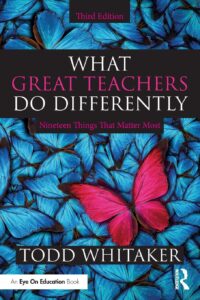
by Todd Whitaker
What are the beliefs and behaviors that set great teachers apart? In this internationally renowned bestseller, Todd Whitaker reveals 19 keys to becoming more effective in the classroom.
This essential third edition features new sections on why it’s about more than relationships, how to focus on a consistent, engaging learning environment, and the importance of choosing the right mode―business, parent, child―to improve your classroom management.
Perfect for educators at any level of experience, for independent reading or for schoolwide book studies, this practical book will leave you feeling inspired and ready to do the things that matter most for the people who matter most―your students.
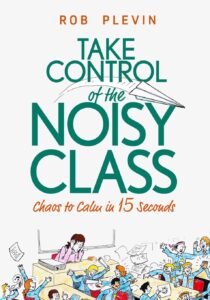
by Rob Plevin
You’ll discover:
- The simple six-step plan to minimise & deal with classroom behaviour problems
- How to gain trust & respect from tough, hard-to-reach students
- How to put an end to power struggles & confrontation
- How to have students follow your instructions… with no need to repeat yourself
- The crucial importance of consistency (and how to achieve it)
- Quick and easy ways to raise engagement and enjoyment in your lessons
- The ‘Clean Slate’ – a step by step method you can use to ‘start over’ with that particularly difficult group of students who won’t do anything you say.

Legal Risks and Obligations for Schools Using AI Tutors

Legal Risks and Obligations for Schools Using AI Tutors
AI tutors are quickly changing how students learn, offering personalized support across different subjects and formats. But as these tools become more common in schools, serious questions about their legal impact arise.
Who is responsible if an AI gives bad advice or shares sensitive student data? What happens when these systems enter specialized areas like medical training or behavioral support?
Many educators and administrators feel unprepared to manage these legal and ethical challenges effectively. Schools must now balance innovation with compliance, oversight, and long-term accountability.
This article will explore the legal risks and obligations schools face when integrating AI tutors into education. (more…)

Tech Ed Resources–K-12 Tech Curriculum
I get a lot of questions from readers about what tech ed resources I use in my classroom. I take time every summer to review them with you. Some are edited and/or written by members of the Ask a Tech Teacher crew. Others, by tech teachers who work with the same publisher I do. All of them, I’ve found, are well-suited to the task of scaling and differentiating tech skills for age groups, scaffolding learning year-to-year, offering inclusive solutions to the issue of tech tools–taking into account the perspectives of stakeholders, with appropriate metrics to ensure learning is organic and granular.
Today: K-12 Technology Curriculum
Overview
The K-12 Technology Curriculum is Common Core and ISTE aligned, and outlines what should be taught when so students have the necessary scaffolding to use tech for grade level state standards and school curriculum. You can purchase just the teacher manuals or student workbooks to serve a 1:1 environment, Google Classroom, and hybrid teaching situations.
Each grade-level PDF or print book (both are available) is between 175 and 252 pages and includes lesson plans, assessments, domain-specific vocabulary, problem-solving tips, Big Idea, Essential Question, options if primary tech tools not available, posters, reproducibles, samples, tips, enrichments, entry and exit tickets, and teacher preparation. Lessons build on each other kindergarten through 5th grade. Middle School and High School are designed for semester or quarter grading periods typical of those grade levels with topics like programming, robotics, writing an ebook, and community service with tech.
Most (all?) grade levels include keyboarding, digital citizenship, problem solving, digital tools for the classroom, and coding.
The curriculum is used worldwide by public and private schools and homeschoolers.
Who needs this
Tech teachers, tech coordinators, library media specialists, curriculum specialists
Classroom grade level teachers if your tech teacher doesn’t cover basic tech skills.