Tag: tutoring

The Homework Loop I Built With Claude Code So My Students Never Wait for Feedback
I love sharing the personal experiences of educators. We all do things differently, in good ways, providing lots of options for diversity among students who don’t get the first or second way we teach a lesson. Brandon Collis, electrical engineer turned private tutor, founder of ClassQuill (https://classquill.com) has ideas on tutoring using AI.

The Homework Loop I Built With Claude Code So My Students Never Wait for Feedback
There’s a specific kind of frustration in tutoring that never shows up in the marketing material: a student sits a test on a Tuesday, gets it back on Thursday, and doesn’t see me again until the following Tuesday. Whatever they got wrong has had a full week to calcify into a bad habit before we even talk about it. Multiply that by twenty students and the gap between “made a mistake” and “someone addressed it” becomes the real bottleneck in how fast anyone improves — not talent, not effort, just timing.
So I built a way to close that gap without it costing me any extra time. I hand Claude Code a student’s test — marked or unmarked, I never touch an answer sheet either way — along with the worked solutions, and it reads both, marks anything I haven’t already marked myself, and tells me exactly what kind of mistake each wrong answer was — a simple slip, the wrong method applied, or a concept they haven’t actually grasped yet. From there it writes a fresh set of practice questions targeting those specific gaps. The real value isn’t faster marking. It’s walking into every session already knowing exactly where a student is weak, with tailored material waiting, without me having spent an hour figuring that out myself.
I built this as a small automated loop out of tools I already had open every day. No custom software, no developer team — just Claude Code pointed at a folder.

Legal Risks and Obligations for Schools Using AI Tutors

Legal Risks and Obligations for Schools Using AI Tutors

AI tutors are quickly changing how students learn, offering personalized support across different subjects and formats. But as these tools become more common in schools, serious questions about their legal impact arise.
Who is responsible if an AI gives bad advice or shares sensitive student data? What happens when these systems enter specialized areas like medical training or behavioral support?
Many educators and administrators feel unprepared to manage these legal and ethical challenges effectively. Schools must now balance innovation with compliance, oversight, and long-term accountability.
This article will explore the legal risks and obligations schools face when integrating AI tutors into education. (more…)

Blending Montessori and Technology: Finding the Right Balance in Early Childhood Education

Blending Montessori and Technology: Finding the Right Balance in Early Childhood Education
These days, it seems that all toddlers master how to swipe across a screen before they learn to tie their shoes. Technology is everywhere and is not leaving anytime soon. For parents and educators who follow or are interested in the Montessori approach, which emphasizes hands-on activity, self directed learning, and natural curiosity, this article will come in handy. Can the Montessori ideology and technology coexist? Is it possible for children to continue using tablets, phones, etc. without losing that tangible, earthy learning process?
The quick answer is yes. But it takes thoughtfulness, balance, and a profound grasp of why Montessori works in the first place.

What Montessori Is Really About
First and foremost, we must understand a bit more about the Montessori approach and where its heart is. Dr. Maria Montessori’s belief was in child-directed learning. Rather than being told what to learn and how to do it, children find out about their world through materials that are fashioned to meet their needs at various levels of development.
Montessori materials, most commonly known as Montessori toys, are hands-on tools used in many Montessori classrooms. These tools are not noisy or flashy, most of the time these are materials made of wood. They’re meant to help develop fine motor skills, improve concentration, problem solving skills, and help a child be self sufficient. While these materials can be entertaining, that is more of a bonus than their main purpose. For example a knobbed cylinder or a bead chain, each material has a unique function that guides a child to master a skill through repetition and exploration.
Technology should compliment and never replace these moments of learning. (more…)

How to Leverage AI Tutors for Effective Learning Tips for Parents, Educators, and Students
Generative AI is all anyone in education talks about anymore so the Ask a Tech Teacher team wanted to provide a collection of tips for using AI as a tutor. Rather than us introducing this article, we thought we’d like Grok do it himself:
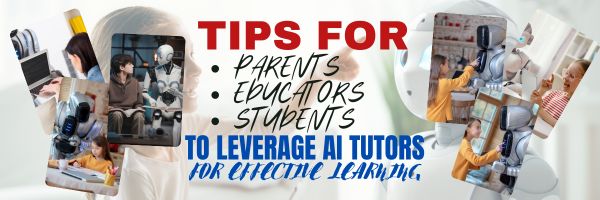
How to Leverage AI Tutors for Effective Learning: Tips for Parents, Educators, and Students
AI tutors transform learning. They generate instant feedback and personalized lessons. While they are powerful tools, they don’t replace traditional classroom instruction. Instead, they can complement such. Students, parents, and teachers must be proactive in using AI to maximize its benefits.
The key lies in the balance. Use AI to enhance learning, not replace critical thinking or human interaction. Smart learning assistants are powerful allies. The challenge is knowing when to trust the technology and when to step back and think for yourself. (more…)

How to Choose the Right Online Tutor for Your Child
With the increased popularity of online tutors, the Ask a Tech Teacher team has come up with some guidelines to help you select the right one for your child:

How to Choose the Right Online Tutor for Your Child
As many as a third of kids are given a leg up in their learning efforts by professional tutors, so there’s a high chance you’re considering this option for your child. Whether they are having trouble getting to grips with core concepts, or they need a little extra assistance with exam prep, there are all sorts of reasons to take this route.
What matters most in this context is picking a tutor who’s a suitable fit for the unique requirements of your youngster. With that in mind, here are some factors to weigh up as your search for an online tutor gets underway in earnest. (more…)

Equipment You Need for Online Tutoring
Teaching during the pandemic has turned the iconic job of education on its head. Should you teach at home or in school–or with a hybrid approach? How can you be effective with the new rules required to ensure safety while maximizing the students’ educational journey? Is it safe to enter the classroom? You’ve never taught remotely before–how do you do that and still meet your school’s education standards and curricula?
Many teachers are turning to homeschool co-ops or tutoring programs as reasonable approaches to pursuing a job they love in a way that allows students to succeed. If this is a choice you are making, here are suggestions from one of our Ask a Tech Teacher contributors for equipment you’ll need to succeed in this new approach:
8 Props and Pieces of Equipment for Tutoring Students Online
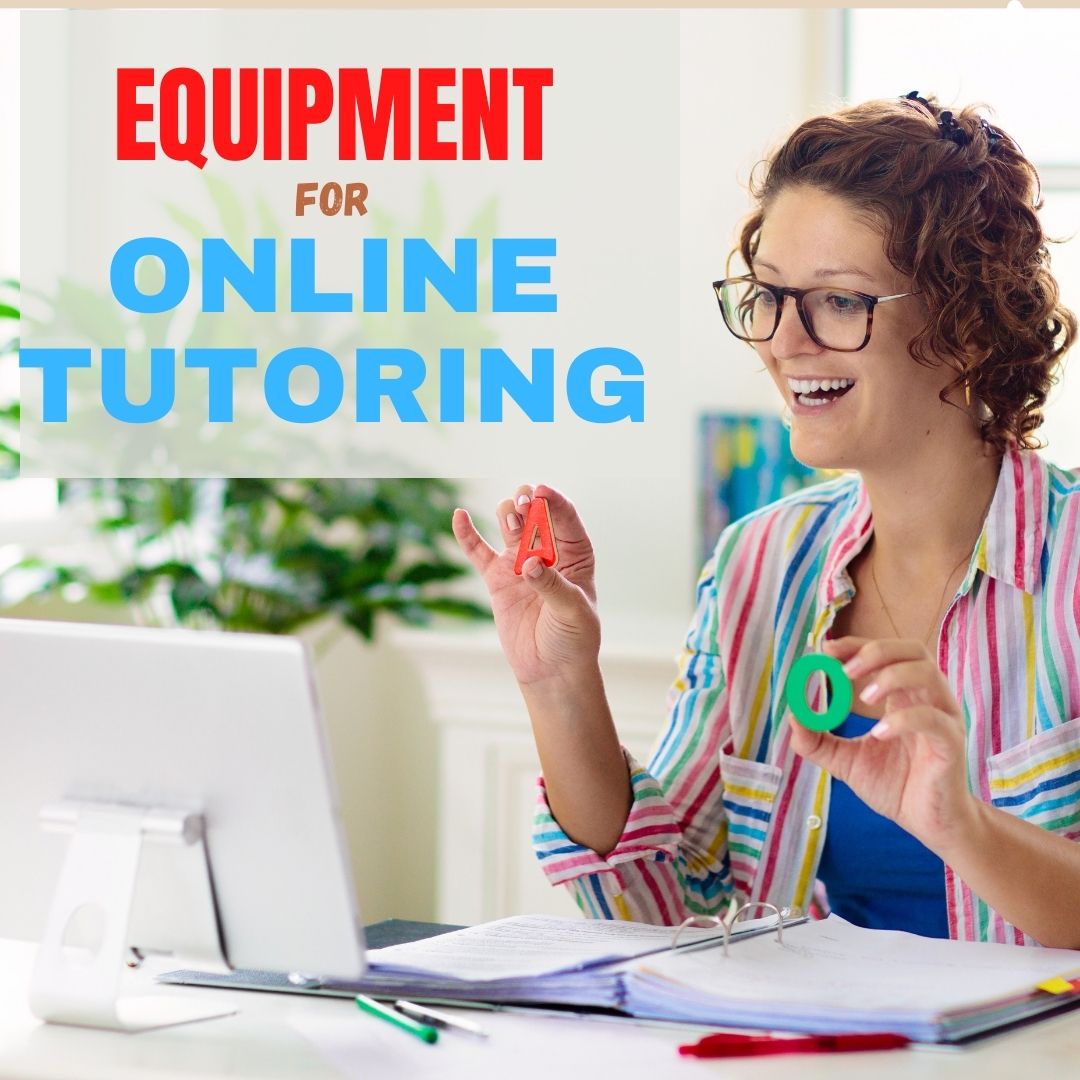 The equipment and props you use when teaching your students online can make all the difference when it comes to how successful you are.
They can affect how engaging your lessons are, how much your students enjoy them, and even how professional you appear.
Choosing the right equipment and teaching tools is not just essential – your decisions can make or break your online teaching career.
Most online teaching platforms have basic requirements, like a high-quality headset, web tools, and a reliable internet connection, but there are other things you need to take into account before you start teaching online – things like good lighting and visual teaching aids can go a long way.
Here are eight things you’ll need to become a successful online teacher.
1. A Background
Most online teaching centers require their tutors to have some kind of professional backdrop behind them – this can be a blank wall that you’ve decorated with relevant classroom posters.
You can also set up a bulletin board behind you with your name and some interesting items that say something about your personality, like trinkets and souvenirs that relate to your hobbies. Setting up your virtual classroom can also be a great way to unleash your creativity!
You can also incorporate flags, ABCs, or a reward system into your bulletin board to keep your students more engaged.