Tag: summer school

6 Tech Activities for Your Summer School Program
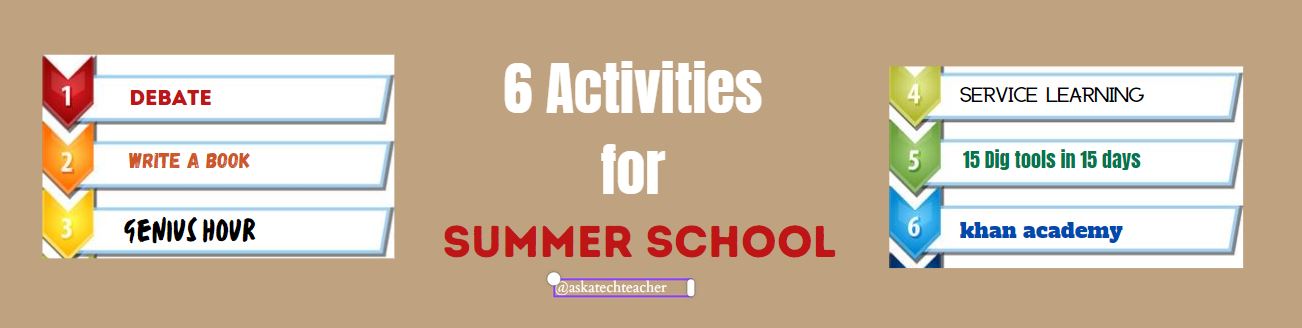
With the growing interest in tech comes a call for summer school programs that supersize student enthusiasm for technology. If you’ve been tasked (or voluntold) to run this activity, here are six activities that will tech-infuse participants:
Debate
Working in groups, students research opposite sides of an issue, then debate it in front of class. They tie arguments to class reading, general knowledge as well as evidence from research. They take evidence-based questions and look for information that will convince them which side is right. This is an exercise as much for presenters as audience, and is graded on reading, writing, speaking and listening skills.
Debates help students grasp critical thinking and presentation skills, including:
- abstract thinking

- analytical thinking
- citizenship/ethics/etiquette
- clarity
- critical thinking
- distinguishing fact from opinion
- establishing/defending point of view
- identifying bias
- language usage
- organization
- perspective-taking
- persuasion
- public speaking
- teamwork
- thinking on their feet—if evidence is refuted, students must ‘get back into game’
- using research authentically
Basics

With JotForm, Summer Camp Registration Couldn’t Be Easier
Every school I know offers a summer camp. Sometimes, these are for just their students but often, the community is invited in an effort to provide a safe, fun summer learning environment for all kids.
The biggest problem with summer camp has nothing to do with picking interesting subjects or lining up teachers. It’s organizing enrollees. JotForm has the camp registration solution.
If you’re not familiar with JotForm, it is the gold standard for form creation whether on PCs, Macs, or mobile devices. For your summer camp, it can be used to sign up volunteers, get feedback on events, enroll people into classes, collect payments, and more. Its drag-and-drop interface makes building a form intuitive, and quick. With a wide variety of summer camp-themed templates, it’s easily adaptable to your school or camp colors and logo. Once the form is completed, it can be shared via a link or social media, or integrated into DropBox, Google Docs, and many other popular platforms.

6 Tech Activities for Your Summer School Program
With the growing interest in coding comes a call for after school tech camps that supersize student enthusiasm for technology. If you’ve been tasked (or volunteered) to run this activity, here are five activities that will tech-infuse participants:
- Debate
- Write an ebook
- Genius Hour
- Service Learning
- 15 Digital Tools in 15 Days
- Khan Academy
Debate
Working in groups, students research opposite sides of an issue, then debate it in front of class. They tie arguments to class reading, general knowledge as well as evidence from research. They take evidence-based questions and look for information that will convince them which side is right. This is an exercise as much for presenters as audience, and is graded on reading, writing, speaking and listening skills.
Debates help students grasp critical thinking and presentation skills, including:
- abstract thinking
- analytical thinking
- citizenship/ethics/etiquette
- clarity
- critical thinking
- distinguishing fact from opinion
- establishing/defending point of view
- identifying bias
- language usage
- organization
- perspective-taking
- persuasion
- public speaking
- teamwork
- thinking on their feet—if evidence is refuted, students must ‘get back into game’
- using research authentically
Basics

6 Summer School Tech Activities
 With the growing interest in coding comes a call for after school tech camps that supersize student enthusiasm for learning technology. If you’ve been tasked (or volunteered) to run this activity, here are five activities that will tech-infuse participants:
Debate
Working in groups, students research opposite sides of an issue, then debate it in front of class. They tie arguments to class reading, general knowledge as well as evidence from research. They take questions. Listeners must ask evidence-based questions, look for information that will convince them which side is right. This is an exercise as much for presenters as audience, and is graded on reading, writing, speaking and listening skills.
Debates help students grasp critical thinking and presentation skills, including:
- abstract thinking
- analytical thinking
- citizenship/ethics/etiquette
- clarity
- critical thinking
- distinguishing fact from opinion
- establishing/defending point of view
- identifying bias
- language usage
- organization
- perspective-taking
- persuasion
- public speaking
- teamwork
- thinking on their feet—if evidence is refuted, students must ‘get back into game’
- using research authentically
Basics