




Author: Jacqui

Jacqui Murray has been teaching K-18 technology for 30 years. She is the editor/author of over a hundred tech ed resources including a K-12 technology curriculum, K-8 keyboard curriculum, K-8 Digital Citizenship curriculum. She is an adjunct professor in tech ed, Master Teacher, an Amazon Vine Voice, freelance journalist on tech ed topics, contributor to NEA Today, and author of the tech thrillers, To Hunt a Sub and Twenty-four Days. You can find her resources at Structured Learning.

We Landed on the Moon July 20 1969

On July 20, 1969, Neil Armstrong was the first man to place foot on the moon. Commemorate that this year with an exciting collection of websites and apps that take your students to the Moon. Here are some you’ll like:

  1. Apollo 11: Countdown to Launch via Google Earth
  2. Apollo 11 VR
  3. Google Moon–see the Moon in 3D with your Google Earth app
  4. How we are going to the Moon–video
  5. If the Moon Were Only One Pixel…
  6. JFK Challenge — takes kids to the Apollo 11
  7. NASA Educator Guide to the Moon (for teachers)
  8. NASA’s Musical Playlist–88 million viewers of 188 songs
  9. Moon Phase Simulation Viewed from Earth and Space (interactive, elementary and middle school)—and associated Lesson Plan
  10. Observing the Moon in the Sky (interactive, elementary)
  11. Moonrise to Moonset (media gallery, elementary)

More on space

  1. DIY Sun Science
  2. Earth Song (video)
  3. GoSkyWatchP–Easily and quickly identify and locate stars, planets, constellations and more by simply pointing to the sky
  4. Mars
  5. Mars is a Real Place–visit via VR
  6. NASA Kids Club
  7. NASA Selfies
  8. Planet sizes–compared
  9. Samorost—problem solving
  10. Satellites—build a satellite
  11. The  Scale  of  the  universe
  12. The Size of Space
  13. Solar system
  14. Solar system–3D
  15. Space–explore it
  16. Space sounds
  17. Space station game
  18. Space Websites
  19. Space—write your name in galaxies
  20. Spacesuits–clickable
  21. Stardate Online
  22. The Flame Trench via Google Earth (when a rocket launches)
  23. To Scale: The Solar System–a video
  24. We Are Go for Launch via Google Earth
Copyright ©2023 askatechteacher.com – All rights reserved.

Here’s the sign-up link if the image above doesn’t work:

https://forms.aweber.com/form/07/1910174607.htm


Jacqui Murray has been teaching K-18 technology for 30 years. She is the editor/author of over a hundred tech ed resources including a K-12 technology curriculum, K-8 keyboard curriculum, K-8 Digital Citizenship curriculum. She is an adjunct professor in tech ed, Master Teacher, webmaster for four blogs, an Amazon Vine Voice, CSTA presentation reviewer, freelance journalist on tech ed topics, contributor to NEA Today, and author of the tech thrillers, To Hunt a Sub and Twenty-four Days. You can find her resources at Structured Learning.

How to Become a Citizen Scientist

Citizen scientists come from all walks of life and have made invaluable contributions to scientific knowledge and understanding. Consider:

  1. Charles Darwin: Darwin often relied on the observations of amateur naturalists and enthusiasts during his research
  2. Mary Anning: a fossil collector in the early 19th century
  3. William Herschel: an astronomer who discovered the planet Uranus
  4. E. O. Wilson: an influential biologist and conservationist who promoted citizen science initiatives such as the “School of Ants”
  5. Margaret and Geoffrey Leaney: husband-and-wife team who developed methods for rearing insects

Are you interested? Here’s what you should know:

Becoming a Citizen Scientist: What You Should Know 

Human scientific endeavors have consistently expanded in scope and complexity over the last two centuries. From pondering over simple natural processes such as the transitions between day and night to complex genomic studies, science has come a long way. 

Apart from careful studies conducted in complex laboratories, science also runs on data collection, observations, and statistical analysis. The extension of scope has led to larger experiments that need vast groups of individuals to be involved in the process. This is where citizen science comes in. 

Scientists are often strapped for time, they are cognitively overloaded and stretched thin due to the already demanding nature of their professions. They often require extra sets of eyes to help them carry out a variety of scientific tasks such as data collection, data processing, collation, and even statistical studies. 

Citizen science allows the common public to participate in important scientific studies, partnering with scientists and helping them with work crucial to the enhancement of human knowledge. It allows participants right from young children to retirees to participate in important scientific work. A classic example of teamwork, citizen science is a community effort that brings together both professionals and novices to help bring about change for the greater good. 

(more…)

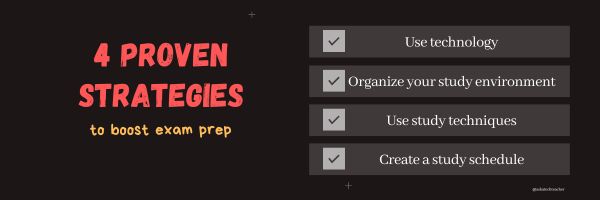
4 Proven Strategies To Boost Exam Preparation

Preparing for exams requires a systematic approach to ensure you cover all the necessary material and feel confident on test day. Here are some effective strategies to help you prepare from the Ask a Tech Teacher crew:

The 4 Proven Strategies To Boost Your Exam Preparation

One of the most stressful periods in a person’s life is when exams are looming. Whether it is for the SATs in high school, or for finals in college, when the time comes, you will feel a lot of pressure to do well. This pressure can actually hurt your chances of doing well on the exams. Stress can dramatically affect your thinking process and ability to concentrate.

This means that you have to find a way to eliminate the stress and pressure from the equation so you can study well. Preparation is the best way to not feel stressed and go into the exams with a clear mind. The better prepared you are, the better your chances at success. In this article, we will go over some proven strategies to help you prepare for exams.

1 – Use technology

Pretty much everything is digital these days so we rely on software and technology to even basic tasks. This is good news for exam preparation, however. There are a lot of apps and software programs that can help you study and be prepared in a way that fits best with your schedule and also your learning style.

Using technology can help you pack studying into your schedule to make sure you get the most out of your time. For instance, a mobile application can help you study while you are commuting on the train, or even getting your morning coffee. You can use an extra twenty or thirty minutes to pack in some studying without having to set yourself up ahead of time.

Software and online tools can also help you break down the materials into a better form for you to understand. For instance, NotesEdu gives you practice tests, guided solutions, and detailed explanations to help you grasp complex concepts better. To see how these resources could improve your study sessions, learn more about NotesEdu’s comprehensive test packs on their website.

There are many educational platforms that offer courses so you can expand on your knowledge by using some of them in addition to your other study materials. From basic algebra to advanced quantum physics, you can find resources suitable for all levels. They use interactive videos, quizzes, and peer discussions to make learning engaging and effective. (more…)

The Influence of Literature on the Formation of the Personalities of Students

No one questions whether literature influences the formation of student personalities. It enhances cognitive abilities, emotional intelligence, moral and ethical development, identity formation, communication skills, social awareness, and creativity. It helps students to grow into well-rounded individuals with a deeper understanding of themselves and the world around them.

One of our Ask a Tech Teacher contributors has a more in-depth analysis of this seemingly benign causative influence:

The Influence of Literature on the Formation of the Personalities of Students

The Influence of Books

Literature is a separate area that plays a significant role in the formation of a personality. It can be different. Fiction, essays, science. Children’s literature, memoir, poetry. Starting from early childhood, we have the opportunity to immerse ourselves in the fascinating adventure or scientific world of books. After all, fiction includes novels, short stories, and novellas. Essays convey the author’s thoughts and analysis of a particular topic. Scientific literature includes scientific articles and publications in academic journals. Poetry uses language and rhythm to express feelings and emotions. Memoirs tell about the life and experiences of the author. Children’s literature includes fairy tales, adventures, and educational literature. Religious literature explores religious issues, ethics, and morality.

All of the above is very relevant for students. For they are in a period of self-determination and search for their place in the world. Studying literature does not just broaden students’ horizons. It influences their intensive personal development, and thus their personal growth. Let’s take a closer look at the impact of literature on the formation of students’ personalities, in particular, on the example of The Distance Between Us.

(more…)

Tips to Writing a Comprehensive Review

Writing a comprehensive review is harder than it sounds! Authors must be sensitive to the particulars of the tasks, who the audience will be, and their overall purpose in sharing ideas. The Ask a Tech Teacher crew put together a basic guide for accomplishing this in a balanced, clear manner:

Tips and Tricks to Write a Comprehensive Review

Students working on research papers are well aware of the significance of a review. But evaluating a piece of work can be quite tough for those new to the field. ‘What is a review?’ is the first question that comes to your mind. Simply put, a review is an assessment of an article’s worth.

That being said, it is clear that writing such pieces will not be a cakewalk. Websites like MyAssignmenthelp.com have samples that can help you learn how to write one. However, students generally skip such samples and leave after availing of their cheap essay writing services.

What does one imply when they say ‘write a comprehensive review’? Cambridge University defines a comprehensive review as “a systematic, scientifically designed review of a defined literature base that employs the rigor of original research in an effort to limit outcome bias.”

This post aims to take a deep dive into the concept along with some expert tips to write a remarkable comprehensive review.

(more…)

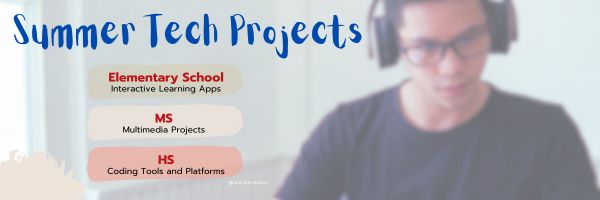
3 Fun Tech Classroom Projects for Summer

Here are great ideas from the Ask a Tech Teacher crew on how to keep tech fresh this summer.

3 Fun Ways to Use Tech in the Classroom in the Run-Up to Summer

Summer is right around the corner and as a teacher, you might be in search of creative ways to leverage technology to ensure your classroom remains an entertaining, engaging and educational space.

Fear not, we’ve got you covered! Buckle up and join us on this delightful journey through tech-savvy classrooms – from elementary school to high school – we’ll unlock a treasury of innovative ideas guaranteed to amuse the young minds while also preparing them for their future. Let’s dive in!

(more…)

Step-by-Step Guide to Edit a Video

Many educators–and students–would like to use video to share ideas, but can’t master the skills required to edit out parts they don’t want. One of our Ask a Tech Teacher contributors has a simple way to accomplish this:

How to Cut Unwanted Parts of a Video: a Step-By-Step Guide

Video editing is a powerful tool that enables you to refine your footage, eliminate unwanted sections, and produce professional-looking content. One crucial aspect of video editing is the ability to remove unnecessary parts from your videos. 

You can use this editing technique for different purposes, like correcting errors, trimming lengthy scenes, removing distractions, or improving your old videos. Here, you can find out how to digitize old video recordings.

In this step-by-step guide, you will discover the process of cutting unwanted parts from your videos using video editing software. You will be able to create concise and captivating videos that keep your audience engaged.

(more…)

The Supreme Court in America

When you think of the Supreme Court, you think of old people in black robes that dispassionately determine the fate of the country’s laws. That’s all true, but there’s more to maintaining law and order than a podium and a gavel. The Supreme Court is the apex of one of three branches in the American government:

  • The Legislative (the House and the Senate) passes laws
  • The Executive (the President) executes the laws
  • The Judicial (all courts in the United States) judges whether laws abide by the Constitution

The Supreme Court consists of nine individuals who are nominated by the President and voted in by the Senate. Once approved, they serve for life, the hope being that this allows them to judge apolitically, based on the merits of the case rather than political leaning. These guidelines are not without controversy but are critical to a healthy, democratic environment.

(more…)

High School and Personalized Learning

In this article, discover how high school education is shifting towards personalized learning. Gain insight into the strategies administrators are using to meet the changing needs of teen students.

The Future of High School Education: Navigating the Shift to Personalized Learning

High school – a time of excitement, curiosity, exploration and growth. The world is filled with endless possibilities! Students have never been so empowered to explore their true potential and find paths that work for them. However, there’s no doubt that the high school experience has changed drastically in recent years. Technology advances and education evolves at an unprecedented pace.

Educational trends have been changing towards personalized learning approaches. We’ve thus seen a fundamental shift in how high school students learn within the classroom setting. But what exactly does this mean for the future of our educations? In this blog post, we’ll dive into the evolution of high school teaching styles to get an idea of just how far these changes can go!

What is personalized learning and how it is different from traditional schooling

If you’re a student who can’t seem to thrive in a traditional classroom setting, then personalized learning may just be your ticket to success. Personalized learning is an approach that tailors education to each individual’s strengths and weaknesses. Unlike traditional schooling, which often relies on one-size-fits-all teaching methods, personalized learning takes into account diverse learning styles and interests. With the rise of technology, this future highschool is leaning towards this modern approach to education.

Another way in which learning has evolved

Another benefit of adaptative learning is that students don’t fear getting help anymore. Gone are the days when getting help was stigmatized. Today, students have a handy tool up their sleeves: the Edubirdie writing service. This content writing service is a lifesaver for students who need help with their research paper on nursing or different coursework about any other topic. With a reputation that precedes it, EduBirdie has become a go-to for students looking for high-quality writing assistance.

Whether you’re struggling to get started or just need a second pair of eyes to proofread your work, EduBirdie has got you covered. Thank goodness for technology! Read more for more benefits.

Benefits of personalizing education for high school student

Personalized education may be just what you need! Not sure? Here are five benefits.

  1. Boosted Confidence. Once you start receiving education tailored to your individual learning style, you’ll gain a newfound confidence in your academic abilities.
  2. Targeted Learning. Personalized education allows for teachers to focus specifically on each student’s areas of weakness. This can help them build up to their full potential.
  3. Improved Performance. Students tend to perform better on assessments and standardized tests. It’s a proven fact!
  4. Passion-Oriented Education. Got a passion? Personalized education can help you pursue it! Teachers can work with students to incorporate their interests into their coursework.
  5. Increased Engagement. Are you tired of being bored in class? Personalization can help with that! When students feel that their unique needs are being met, they are more likely to be engaged and stay focused in class.

Obstacles with such strategy in the classroom setting

Picture it – a high school of the future, where every student has a tailored learning experience to fit their unique needs and interests. Sounds nice, right?

Indeed. But nothing comes without challenges. In fact, technology can have both positives and negatives. It allows us to individualize instruction but it also requires significant investment and upkeep.

Then there’s the challenge of teacher preparation. We need to ensure educators are equipped to facilitate this type of learning environment. Plus, monitoring progress and assessment can become more complex as time goes by. That’s when students are all working on different tasks.

And last but not least, there’s the issue of equity. We need to ensure that personalized learning doesn’t perpetuate disparities.

How technology can support personalized learning in the classroom

With the increasing advancement in technology, personalized learning can be implemented quite easily in this so-called highschool of the future. AI-driven content is quickly becoming a reliable and robust alternative to traditional textbooks. Students can absorb information that caters to their personal learning styles. Furthermore, with VR technology, students can experience interactive and immersive learning experiences. VR adds a whole new dimension to learning that is both exciting and educational.

Plus, adaptive learning platforms and interactive whiteboards are also available to support this. Teachers can also use learning management systems to provide students with individualized assignments and assessments. Thus, while augmented reality can transport students to new and exciting learning environments. And let’s not forget about gamification! This is where game-based learning can motivate and engage students while providing them with immediate feedback.

***

The future of high school education is looking quite promising as we navigate the shift to personalized learning. No longer do we have to sit through lectures and activities that don’t appeal to our interests or learning styles. Instead, we’re able to take control of our education and tailor it to our unique needs. It’s like having a personal trainer for our brain! Plus, we can expect to see even more exciting changes in the years to come. So let’s buckle up, embrace the shift, and get ready for a high school experience that is truly personalized and fulfilling.

–image from Deposit Photo

Copyright ©2023 askatechteacher.com – All rights reserved.

Here’s the sign-up link if the image above doesn’t work:

https://forms.aweber.com/form/07/1910174607.htm


Jacqui Murray has been teaching K-18 technology for 30 years. She is the editor/author of over a hundred tech ed resources including a K-12 technology curriculum, K-8 keyboard curriculum, K-8 Digital Citizenship curriculum. She is an adjunct professor in tech ed, Master Teacher, webmaster for four blogs, an Amazon Vine Voice, CSTA presentation reviewer, freelance journalist on tech ed topics, contributor to NEA Today, and author of the tech thrillers, To Hunt a Sub and Twenty-four Days. You can find her resources at Structured Learning.

How Much Screen Time is Okay for Kids on the Evenings and Weekends?

Screen time for kids is a huge discussion among parents and teachers. The American Academy of Pediatrics recommends:

  • Ages 0-18 months: No screen time at all, except for video chatting.
  • Ages 18-24 months: One hour of high-quality, interactive screen time per day, such as educational programming or video chatting.
  • Ages 2-5: One hour of screen time per day, with a focus on high-quality, interactive content.
  • Ages 6-12: Two hours of screen time per day, with a focus on educational and prosocial content.
  • Ages 13-18: Three hours of screen time per day, with a focus on educational and prosocial content.

But other experts vary considerably in their recommendations. In the end, it’s up to parents to make those decisions, based on what’s right for their child. Here are the critical factors to consider when making those decisions:

How Much Screen Time is Okay for Kids on the Evenings and Weekends? 

In today’s fast-paced world, modern-day kids have unprecedented access to electronic devices that can serve as valuable tools in their learning journey. However, despite the numerous benefits these devices offer, it’s important to acknowledge the potential negative consequences of their excessive use. 

As such, parents should be mindful of regulating their child’s screen time, especially during evenings and weekends, to ensure their overall well-being and balance between digital engagement and other aspects of life. In this article, we’ll explore the effects of too much screen time as well as the best ways to regulate screen time, especially during weekends and holidays. 

(more…)