Search Results for: common core

Why and How Students Can Blog
 Blogging is a popular tool used in education to not only practice writing, but reinforce collaboration, perspective taking, speaking/listening skills, and a lot more. It’s grown up from its pedestrian start as a journaling platform, where writers share daily activities and don’t stress over spelling and grammar. Look at these reasons why teachers incorporate blogging across all academic topics and lesson plans:
Collaboration
Students collaborate by commenting on the posts of others and/or co-writing a blog themed to a particular topic, taking turns posting articles.
Developing a profile
Blog profiles–often found at the top of the sidebar–summarize what the blog will address in just a few sentences. They must be pithy, concise, and clear. This is a great way for students to think through the purpose of their blog and share it in a way suited to the task, audience, and purpose. I am constantly reworking my own as I figure out a better way to communicate the gist of what I am doing.

15 Good Replacements for ScreenChomp
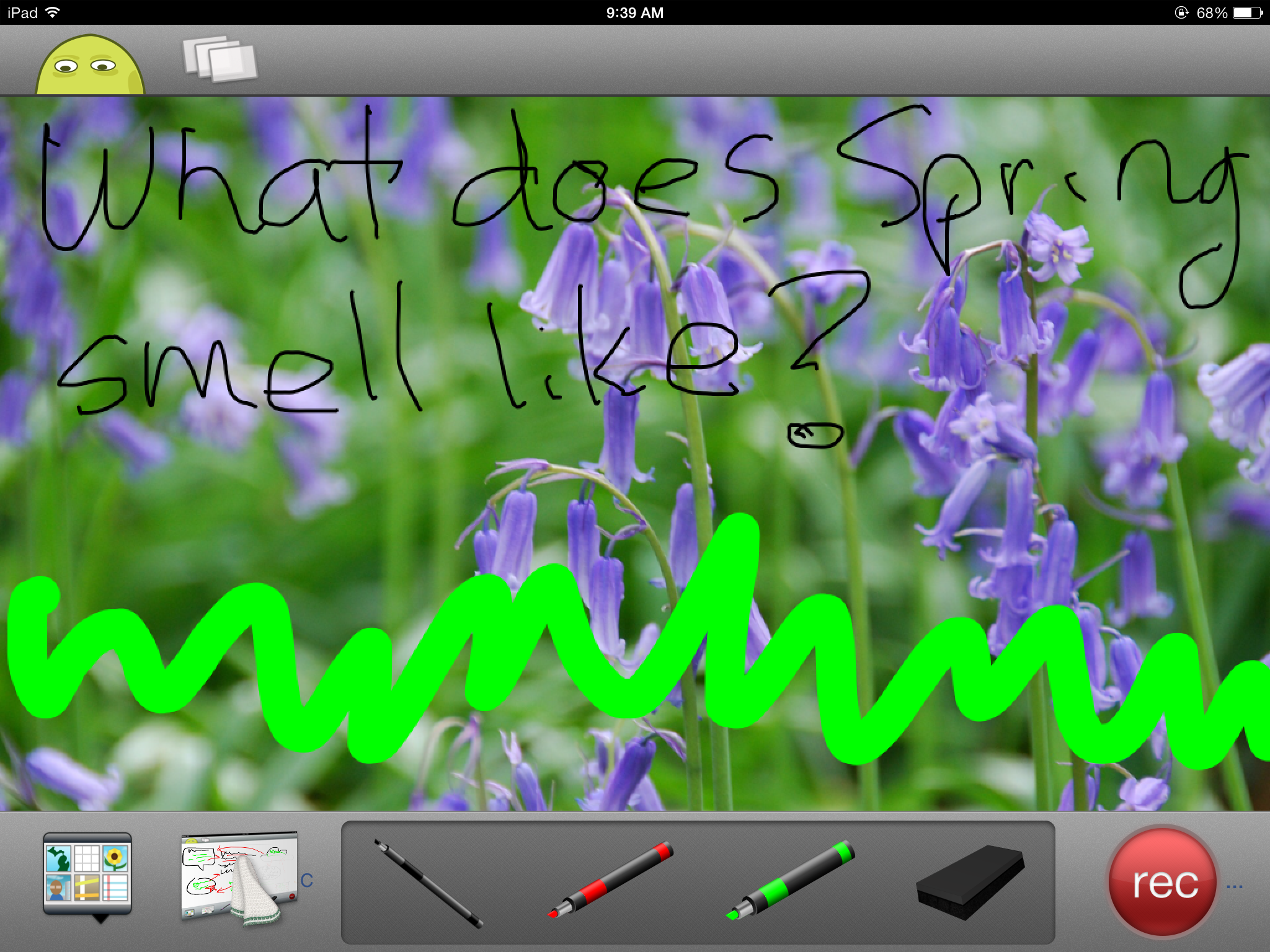 For years, TechSmith’s ScreenChomp app has been my go-to resource for whiteboard drawings, screencasts, and for an uncluttered online art platform for students using iPads. ScreenChomp did a masterful job of making everything needed for each of these activities intuitive even for young users. For older students, ScreenChomp made it easy to provide personalized feedback by writing or recording comments directly onto their digital work and then sharing it back to them.
There are more uses, but none of them matter right now because ScreenChomp has been retired. According to TechSmith, it no longer fits their larger business goals. I’m not here to judge those; what matters for teachers is that we must now fill the hole left by the loss of ScreenChomp. Like Kerpoof, thousands of educators are scrambling to replace a fundamental tool that was to be an integral part of their 2016-17 lesson plans.
Let me help you with that. Here are options for the most common four activities (art, picture annotation, screencast, and whiteboard) you probably used ScreenChomp for. Since it was an iPad app, I’ve limited the replacement options to that platform:
Art
Create a drawing by fingerpainting, adding stamps, and inserting text. You can even connect with a friend to draw together over the Internet. Price: Free

3 Apps Disguised as Games to Help Bolster Learning
Education has changed. Teachers don’t lecture from the front of the classroom. Work isn’t an individual effort. Drills no longer hold pride of place in lesson plans. Now, teachers expect students to engage: be part of the solution, not a passive recipient of the process.
Does this sound boring? Not if you’re a kid. Then, you call it ‘games’ and choose it for free time, as a study break, and with friends. Look at Minecraft where millions of kids voluntarily learn geology, work in virtual groups, and seek out knowledge to build a virtual world.
Here are three apps that gamify education:
 Kahoot
Kahoot is a response system that has taken over classrooms all over the country to assess student learning. Using a gameshow format, students compete against classmates, themselves (in Ghost Mode), or any student group around the world, to answer questions based on a specific theme. It is fast-paced, energetic, with scintillating music and a real-time scoreboard that shows student progress. It’s more like the games students love than the tests and quizzes traditionally taken at school.
Kahoot is simple to use. The teacher creates a quiz or survey on the Kahoot website. S/he invites students to join with a game pin, which they enter into pretty much any digital device used in the classroom (smart phones, Chromebooks, iPads, or another). They read the questions off the class screen and answer on their device. Points are earned not only for right answers, but speed of play.
Pros
Kahoot works on any device with an internet connection. The learning curve is negligible: no player accounts, no set-up, just the join code.

13 Changes in Tech-in-Ed in Just Three Years
 School’s back and it’s more important than ever to integrate technology into your curriculum. Why? Consider these thirteen changes to technology-in-education since 2013:
- Windows has updated their platform—again.
- IPads have been joined by Chromebooks as a common classroom digital device.
- There is a greater reliance on internet-based tools than software. This underscores the importance of teaching digital citizenship to even the youngest learners.
- Student work is often collaborative and shared.
- Student work is done anywhere, not just the classroom and home, meaning it must be synced and available across multiple platforms, multiple devices.
- Keyboarding skills are more important than ever, often critical to summative year-end testing for PARC, SB, and other formats.
- Technology in the classroom is the norm, but teacher training isn’t.
- Education is focused on college and career with tech an organic, transformative tool.
- Teachers have moved from ‘sage on the stage’ to ‘guide on the side’.
- Students have been raised on digital devices. They want to use them as learning tools.
- Using technology is no longer what ‘geeky’ students do. It’s what all students want to do.
- Printing is being replaced with sharing and publishing.
- More teachers are willing to try technology when used authentically.

11 Ways to Wrap Up the School Year
 It’s the end of school. Everyone’s tired, including you. What you want for these last few weeks are activities that keep the learning going, but in a different way. You want to shake things up so students are excited and motivated and feel interested again.
Change your approach to teaching. Provide some games, simulations, student presentations–whatever you don’t normally do in your classroom. If you’re doing PowerPoints, use the last few weeks for presentations. Make them special–invite teachers. Invite parents. If you never serve food in your lab, do it for these presentations.
Here are five of my favorite year-end Change-up activities:
6 Webtools in 6 Weeks
Give students a list of 10-15 webtools that are age-appropriate. I include Prezi, Google MapMaker, Scratch, Voice Thread, Glogster, and Tagxedo, These will be tools they don’t know how to use (and maybe you don’t either). They work in groups to learn the tool (using help files, how-to videos, and resources on the site), create a project using the tool (one that ties into something being discussed in class), and then teach classmates. Challenge students to notice similarities between their chosen tools and others that they know how to use. This takes about three weeks to prepare and another three weeks to present (each presentation takes 20-30 minutes). Students will be buzzing with all the new material and eager to use it for summer school or the next year.
Designed for grades 3-12. Need ideas on web tools? Contact me at askatechteacher@gmail.com.

20 Sites for Authentic Assessments
 Here’s a good collection for both summative and formative assessments:
- Class badges
- Grading automatically w G. Docs–Flubaroo
- Hollywood Sq/Jeopardy Templates
- Jeopardy Labs
- No Red Ink–track student learning, create quizzes, CC-based–free sign-up
- Online quizzes that you create, online grades
- PollDaddy
- Puzzle maker
- Quizbean–make and take quizzes online
- Quizdini
- Rubrics I
- Rubrics II
- Rubrics III
- Rubrics/Assessments—create–KSchrock
- Rubrics—for CCSS
- Socrative
- Technology use survey—interactive
- Test creator—online
- Tests—create fill-in-the-blanks
- Padlet

What’s Tomorrow’s Student Look Like
 Just as the teacher’s job has changed from ‘sage on the stage’ to ‘guide on the side’, so too has the student’s job. Take a peek into the near future at tomorrow’s student. Today, you’d call this child the ‘techie’ minority. Tomorrow, s/he’ll be the majority.
S/he is no longer a passive observer of his/her educational journey, expecting a teacher to impart knowledge that will shape his/her future. Tomorrow’s student takes charge of their learning, sifts through available options and selects what works for them, spirals up or down when required, asks for scaffolding when it’s lacking, accepts accountability for their progress as a stakeholder in the process, adapts to change as needed. They look for rigor in their learning environment and rise to the challenge when required.
These future students expect to collaborate, share, publish, contribute, and participate in a community of learners.
In some cases, the future has already arrived
What’s all that mean? Let’s add detail.

3 Problems to Address Before Blogging at Your School
 Dear Otto is an occasional column where I answer questions I get from readers about teaching tech. For your privacy, I use only first names.
Here’s a great question I got from Molly:
I really enjoyed your article on students blogging. It seems like a great way to get them writing willingly since they love to be online. I was wondering, what are some of the problems you have run into and how did you solve them? What pitfalls can teachers watch out for long-term?
Three big–not necessarily ‘problems’ as much as issues to address:
Digital rights and responsibilities
You don’t want to roll out blogging in your classroom without a sturdy program educating students on digital citizenship–privacy, profiles, footprints, safety, fair use/copyrights. I have lots of information on those topics on my blog. Another good resource is Common Sense Media.

Chinese Class vs. American Class
 An efriend and former NYC teacher, Steve Koss taught in China (winner of a top spot on the annual PISA best-education-in-the-world) for part of his career and was not surprised China came out with some of the best test scores in the world. He shared his experience while teaching there. Compare what he saw to what we have here in America keeping in mind that we languish somewhere below middle on that international PISA test.
- Every classroom was a bare, cinder-block-walled enclosure, no heat in the winter, no cooling in the early summer, virtually nothing decorating the walls. Students spent their entire school day in the same room – teachers came to them.
- Every classroom held 48 – 50 students, lined up in traditional, ramrod-straight rows. Textbooks and workbooks for students’ full set of the day’s classes were piled on and under their desks – no one had a locker.
- Teachers lectured from a dais at the front of the room. Students sat quietly at their desks and listened, took notes, occasionally recited in unison or responded, standing, to a direct question from the teacher. Questions from students were a rarity.
- Many, if not most, lectures were straight from students’ texts, sometimes nothing more than
- teachers simply reading from the textbook.
- Teachers appeared at students’ classrooms just before lessons began, departing back to their subject area offices immediately upon finishing their lessons. Casual student-teacher interaction was minimal at best. Teachers spent much of their office time (they only taught two class periods per day) playing video games and reading the daily newspaper.
- Copying of assignments was rampant – and tolerated. As, all too often, was cheating on exams. Scores counted more than how they were achieved.
- I saw no evidence of what in the U.S. we would call “student projects.” Classroom activity appeared to be the same lecture and recitation style every day.
- Students were actively discouraged from asking questions. I was told on more than one occasion that students’ parents could actually be called into the school so that a teacher could complain that the child was disrupting lessons because he/she was asking too many questions.
- Schools had no clubs or activities and minimal if any organized sports teams. One school where I worked claimed to have two or three interscholastic sports teams, but only for boys.
- Students typically took seven or eight classes each semester, leaving no time for activities even outside of school.
- Never once among the hundreds of students I saw and taught did I see a student with a physical handicap or a visible learning disability. I don’t know where those students were, or if they were even still permitted to attend school by high school age, but if so, there was no inclusion.
- Physical education consisted mostly of lining students up in straight rows and performing low-impact calisthenics and movement.
- The last semester of senior year is dedicated nearly exclusively to preparation for the gaokou, the national, three-day-long, college entrance examination.
- Schools were evaluated, and principals and teachers rewarded, according to their students’ standardized exam results.
- Teachers earn extra income from tutoring. They are allowed to accept money from their own students (or gifts from those students’ parents), a sure-fire disincentive to effective teaching in the classroom setting.
- There was no parent involvement in the schools whatsoever. Parents visited a school for only one of two reasons: to be roundly chastised for their child’s behavior/performance, or to present a gift for extra tutoring services rendered.

11 Ways to be an Inquiry-based Teacher
 It’s hard to run an inquiry-based classroom. Don’t go into this teaching style thinking all you do is ask questions and observe answers. You have to listen with all of your senses, pause and respond to what you heard (not what you wanted to hear), keep your eye on the Big Ideas as you facilitate learning, value everyone’s contribution, be aware of the energy of the class and step in when needed, step aside when required. You aren’t a Teacher, rather a guide. You and the class find your way from question to knowledge together.
Because everyone learns differently.
You don’t use a textbook. Sure, it’s a map, showing you how to get from here to there, but that’s the problem. It dictates how to get ‘there’. For an inquiry-based classroom, you may know where you’re going, but not quite how you’ll get there and that’s a good thing. You are no longer your mother’s teacher who stood in front of rows of students and pointed to the blackboard. You operate well outside your teaching comfort zone as you try out the flipped classroom and the gamification of education and are thrilled with the results.
And then there’s the issue of assessment. What your students have accomplished can’t neatly be summed up by a multiple choice test. When you review what you thought would assess learning (back when you designed the unit), none measure the organic conversations the class had about deep subjects, the risk-taking they engaged in to arrive at answers, the authentic knowledge transfer that popped up independently of your class time. You realize you must open your mind to learning that occurred that you never taught–never saw coming in the weeks you stood amongst your students guiding their education.
Let me digress. I visited the Soviet Union (back when it was one nation) and dropped in on a classroom where students were inculcated with how things must be done. It was a polite, respectful, ordered experience, but without cerebral energy, replete of enthusiasm for the joy of learning, and lacking the wow factor of students independently figuring out how to do something. Seeing the end of that powerful nation, I arrived at different conclusions than the politicians and the economists. I saw a nation starved to death for creativity. Without that ethereal trait, learning didn’t transfer. Without transfer, life required increasingly more scaffolding and prompting until it collapsed in on itself like a hollowed out orange.